Sep 9, 2026| JD Technology
From AI Models to the Physical World: Highlights from JDDiscovery 2026
AI is often discussed through models, benchmarks and digital productivity. At JDDiscovery 2026 in Beijing, JD.com focused on what AI can accomplish in the physical world from warehouses and delivery routes to retail, healthcare, smart homes, industrial supply chains and beyond.
Under the theme “JoyAI: Leaping into the Physical World,” JD.com outlined its goal to build the “World’s Largest Operational Platform for the Physical World”. As Cao Peng, Chairman of JD.com’s Technology Committee and President of JD Cloud, noted, JD.com’s AI was not born only in research papers. It has been refined “order by order” across production lines, warehouses, delivery stations and the full supply chain process.
Here are three highlights from JDDiscovery 2026 that show how JD.com is putting AI to work.
World Models Move AI Closer to the Physical World
An optimal route for hundreds of millions of parcels, calculated in seconds. A mechanical component designed through a simple conversation and turned into a 3D-printed prototype. A medical imaging agent that can proactively examine a scan. These examples show what becomes possible when AI moves beyond the screen and into real-world operations.
Behind them is JD.com’s JoyAI foundation model portfolio, which spans speech, image, video, real-time interaction, world models and embodied AI.
At JDDiscovery, the company added its new world model, JoyAI-Echo WM, an interactive audiovisual model that combines native audio-video generation with user control. It takes AI-generated content beyond something users simply watch, transforming it into virtual environments they can enter, interact with and explore.
JD.com also showcased industry-specific models and AI agent applications. JINGDONG Logistics’ Meta Brain 3.0 coordinates decision-making across warehousing, transport and delivery, reducing the time needed to calculate optimal routes for hundreds of millions of parcels from minutes to seconds.
JoyIndustrial 2.0, meanwhile, allows engineers to describe a mechanical design in everyday language and turn it into a physical prototype through 3D printing. In healthcare, JoyAI-Med 3.0 brings medical imaging, research, clinical documentation and multidisciplinary consultation into a unified model that is already being used across JINGDONG Health services.
AI Moves into Everyday Life: Shopping, Health and the Home
Of course, AI is not limited to robots on warehouse floors. It can also help someone choose a washing machine, collect a blood pressure reading with healthcare services, or allow devices across the home to respond more intelligently.
With the release of JD.com app ver.16.0 on 9 September, users can now access “Dongdong”, JD.com’s AI shopping assistant, throughout the shopping journey.
Instead of simply returning search results, Dongdong is designed to understand what customers are trying to accomplish. It can break down broad or unclear requests and match them with relevant products and services across JD.com’s ecosystem.
Users can also interact with Dongdong through voice and video. Someone looking for furniture or an appliance, for example, can show the assistant their available space, interior style or a problem they want to solve. Dongdong can then use that visual context to provide more relevant and practical suggestions.
In healthcare, JINGDONG Health introduced its first end-to-end specialist AI agent, designed to reproduce the diagnostic logic and clinical expertise of leading doctors. JINGDONG Health is also linking AI with devices and services.
In the home, JoyInside gives connected devices an “AI brain”, helping them move from responding individually to providing more proactive, whole-home services. The technology has already been adopted through partnerships with more than 200 brands across appliances, home products, toys and robotics.
From Prototype to Scale: Building the Infrastructure for Robotics
Building a robot is difficult. Turning it into a product that can be manufactured, deployed and maintained at scale is harder. JD.com’s new Physical AI Acceleration Plan is designed to address that challenge across the full robotics lifecycle.
The plan begins with one of the industry’s biggest constraints: training data. JD Cloud aims to build the world’s largest embodied AI data collection centre, gathering more than 10 million hours of video from real-world human activities over the next two years.
JINGDONG Property plans to establish more than 80 RoboBase robotics industry hubs across China over the next five years, creating the world’s largest network of robotics industry bases. The hubs will integrate product demonstration and delivery, R&D, pilot assembly, data collection, manufacturing, maintenance and product iteration.
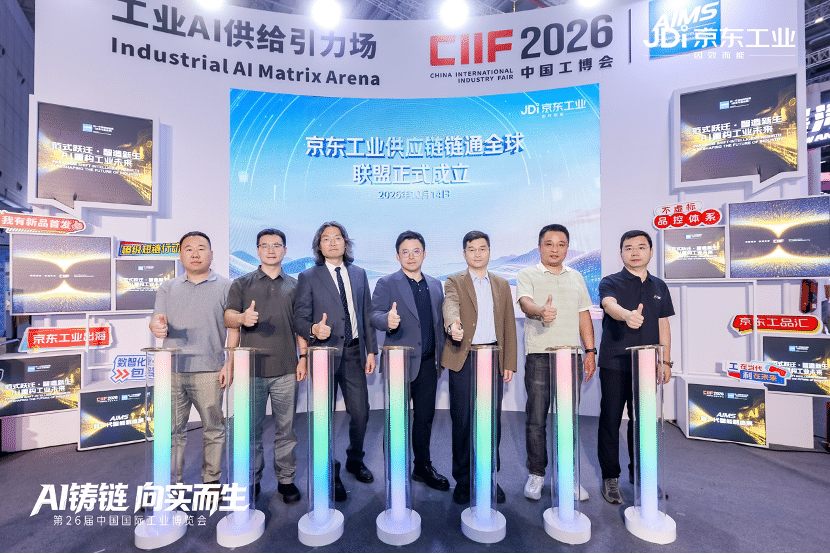
JINGDONG Industrials has launched an alliance connecting robot manufacturers with component suppliers, supporting its goal to become the world’s largest supplier of robotics components.
JINGDONG Retail plans to commit RMB 10 billion in resources by 2028. It aims to become the world’s largest robotics retail channel by helping 100 robotics brands each achieve RMB 1 billion in independent sales and reaching 10 million users.
Logistics already provides a significant proving ground. JINGDONG Logistics aims to build the world’s largest-scale application of embodied robots and advance autonomous operations across the entire logistics process.
The increasing use of robotics will also require support after deployment. JINGDONG Logistics currently operates eight repair centres in China and plans to extend its robotics after-sales capabilities and support the creation of more than 100,000 jobs for robotics service engineers, over the next five years.
Sep 8, 2026| JD Health
Beyond the Chatbot: How JD Health Is Bringing AI Into Doctors’ Everyday Work
A doctor reviewing a complex case may need to search through medical literature, check the latest clinical guidelines, assess drug interactions, interpret test results and bring together years of patient information, often under significant time pressure.
This is where Zhiyi (知医) comes in. Developed by JINGDONG Health (also known as JD Health), Zhiyi is an evidence-based AI assistant built specifically for healthcare professionals. Its Chinese name fittingly brings together the ideas of “professional knowledge” (知) and “doctor” (医).
Launched in January 2026, Zhiyi brings AI into the everyday workflow of doctors in China, supporting clinical decision-making, medical research, patient management and other professional tasks. It has integrated more than 50 million medical papers, clinical guidelines and authoritative journal resources, together with information from more than 160,000 pharmaceutical product instructions. The platform has already served over one million doctors and supported more than 20 million clinical decision-making interactions.

From Finding Information to Understanding the Evidence
Searching for medical information is one thing. Turning it into useful evidence for a particular patient or clinical situation is much harder.
Zhiyi is designed to help doctors move beyond simple search. Its Deep Thinking mode can break down complex questions, assess different levels of evidence and provide structured references for doctors to consider, including in cases involving multiple conditions or medications.
A good example is oncology. Zhiyi has integrated the China Anti-Cancer Association (CACA) Guidelines for Holistic Integrative Management of Cancer, which cover 29 cancer types and 72 diagnostic and treatment technologies. By making this body of specialist knowledge searchable and actionable through AI, Zhiyi can help doctors access relevant evidence when they need it, rather than requiring them to navigate lengthy reference materials separately.
Zhiyi also offers more than 200 medical calculators, covering areas such as disease assessment, risk stratification, medication dosage and cardiovascular risk, with AI providing evidence-based interpretation of the results. Its research assistant extends these capabilities into academic work, supporting literature reviews, patient education materials and presentations.
The aim is simple: reduce the time doctors spend navigating information so they can focus more of their expertise on understanding the patient and making clinical decisions.
Making AI Fit the Way Doctors Actually Work
Clinical information rarely arrives as a perfectly structured prompt.
It may be a laboratory report, prescription, medical image, PDF document or information collected across previous consultations. Zhiyi’s multimodal capabilities allow doctors to upload and analyze different types of clinical materials, reducing the need for manual entry and page-by-page review.
More importantly, Zhiyi is designed to show doctors where its conclusions come from. Its dynamic evidence-location capability can identify the original text supporting a clinical point, allowing doctors to trace AI-generated information back to the underlying evidence.
That distinction matters in healthcare. A useful medical AI assistant should not simply produce an answer; it should help a professional understand the evidence behind it.

When “Sounds Right” Isn’t Good Enough
Generative AI can produce convincing answers. In medicine, however, convincing is very different from reliable.
JD Health has therefore built dedicated evaluation systems around Zhiyi. Its MedScope framework evaluates AI outputs across evidence quality, content accuracy, appropriate expression and practical usefulness, supported by evaluation sets spanning 46 major clinical specialties.
A separate MedSafety framework evaluates 26 categories of high-risk medical scenarios, including medication contraindications and complication warnings. High-risk outputs that cross defined safety boundaries do not pass the evaluation.
This reflects an important principle behind JD Health’s approach: AI is there to support medical professionals, not to replace their experience, judgment or responsibility.
One AI Foundation, Different Healthcare Supports
Zhiyi is part of a broader AI healthcare architecture JD Health has been developing.
Underneath it is Jingyi Qianxun (京医千询), JD Health’s proprietary medical large language model. Rather than positioning the model itself as the final product, JD Health is applying its capabilities to specific healthcare workflows, including evidence retrieval, clinical support, patient follow-up and medical research. Zhiyi is one example of how that underlying AI capability is translated into a practical professional tool.
On the patient-facing side, Dawei (大为), JD Health’s AI doctor, applies AI to another part of the healthcare journey. JD Health has also launched more than 1,500 AI agents based on specialist doctors, alongside solutions developed for hospitals and specific disease areas.
Together, they illustrate a broader strategy: rather than building one AI assistant for every healthcare problem, JD Health is developing specialized AI tools around the needs of different users and healthcare scenarios.

Taking Medical AI Beyond Major Hospitals
Perhaps one of the most meaningful tests of medical AI is whether it can make high-quality tools more widely accessible.
In August, JD Health formed a strategic partnership with PICA Health (Yunqueyi), one of China’s largest digital platforms serving primary-care doctors. Zhiyi has been integrated into the PICA Health app, making its upgraded capabilities, including Deep Thinking, medical calculators and research assistance, available free of charge to the platform’s registered primary-care doctors serving. PICA Health connects around three million registered primary-care doctors serving China’s grassroots.
The significance is not simply putting AI into more hands. A doctor working in a smaller community can use the same AI tool to access medical literature, clinical guidelines and evidence-based decision support that would otherwise be more difficult or time-consuming to obtain.
And this is where JD Health brings another capability into the picture: supply chain infrastructure.
JD Health’s pharmaceutical supply chain reaches more than one million villages in China, while same- or next-day delivery coverage has reached 87.1% across county-level areas covered by its network.
This creates an interesting connection between medical intelligence and healthcare access: AI can help doctors find and interpret the right evidence, while supply chain capabilities can help turn a clinical decision into access to the medicines and healthcare products patients need.

Building AI Around Healthcare, Not Healthcare Around AI
There is no shortage of discussion about how powerful the next generation of medical AI models will become. JD Health’s experience with Zhiyi suggests that model capability is only part of the equation.
Healthcare AI also needs trusted medical evidence, safety mechanisms, integration into real clinical workflows and a way to reach the doctors and patients who can benefit from it.
That is why Zhiyi is particularly illustrative of JD Health’s broader approach. The technology begins with a medical large language model, but extends into authoritative resources such as the CACA Guidelines, professional tools for doctors, partnerships such as PICA Health, patient-facing services such as Dawei, and JD Health’s wider healthcare and supply chain infrastructure.
Doctors’ experience, judgment and responsibility remain at the center. The role of AI is to help those capabilities go further by making trusted knowledge easier to reach, complex information easier to navigate and everyday clinical work more efficient.
The more meaningful question for healthcare may therefore be not whether AI can become a doctor, but how AI can help every doctor do more for every patient.
(vivian.yang@jd.com)
Stay up to date on the latest news from JD.com
Enter your email address to subscribe to this blog and receive notifications of new posts by email.


In-depth Report: To Make Solutions of Rare Diseases Not Rare