Sep 30, 2026|
JINGDONG Property to Establish Advanced Logistics Facility in KEZAD
Abu Dhabi, UAE – 28 September 2026 – JINGDONG Property, the infrastructure investment and asset management arm of JD.com, Inc., has signed an agreement with KEZAD Group, one of the largest operators of integrated and purpose-built economic zones in the region, to establish an advanced logistics facility in KEZAD Area A – KEZAD Al Ma’mourah.
The project will be developed into approximately 150,000 square metre of warehousing facilities, with delivery expected in 2028. It will provide premium warehousing solutions and integrated logistics infrastructure, designed to support local and international enterprises, enhance supply chain efficiency and facilitate the seamless movement of goods across regional and global markets. Leveraging JINGDONG Property’s strengths in high-standard warehousing, intelligent operations and green building, the project will continue to introduce smart automated warehousing systems and digital operations technologies, while offering flexible, customised development services to customers.
The company will develop the facility to further strengthen Abu Dhabi’s position as a leading logistics and trade hub. Once operational, it is expected to create approximately 1,000 direct jobs across logistics, distribution and administration functions, while generating additional indirect employment opportunities in upstream and downstream sectors, including manufacturing, retail, transportation, and support services. The construction phase will also contribute to local job creation and economic activity.
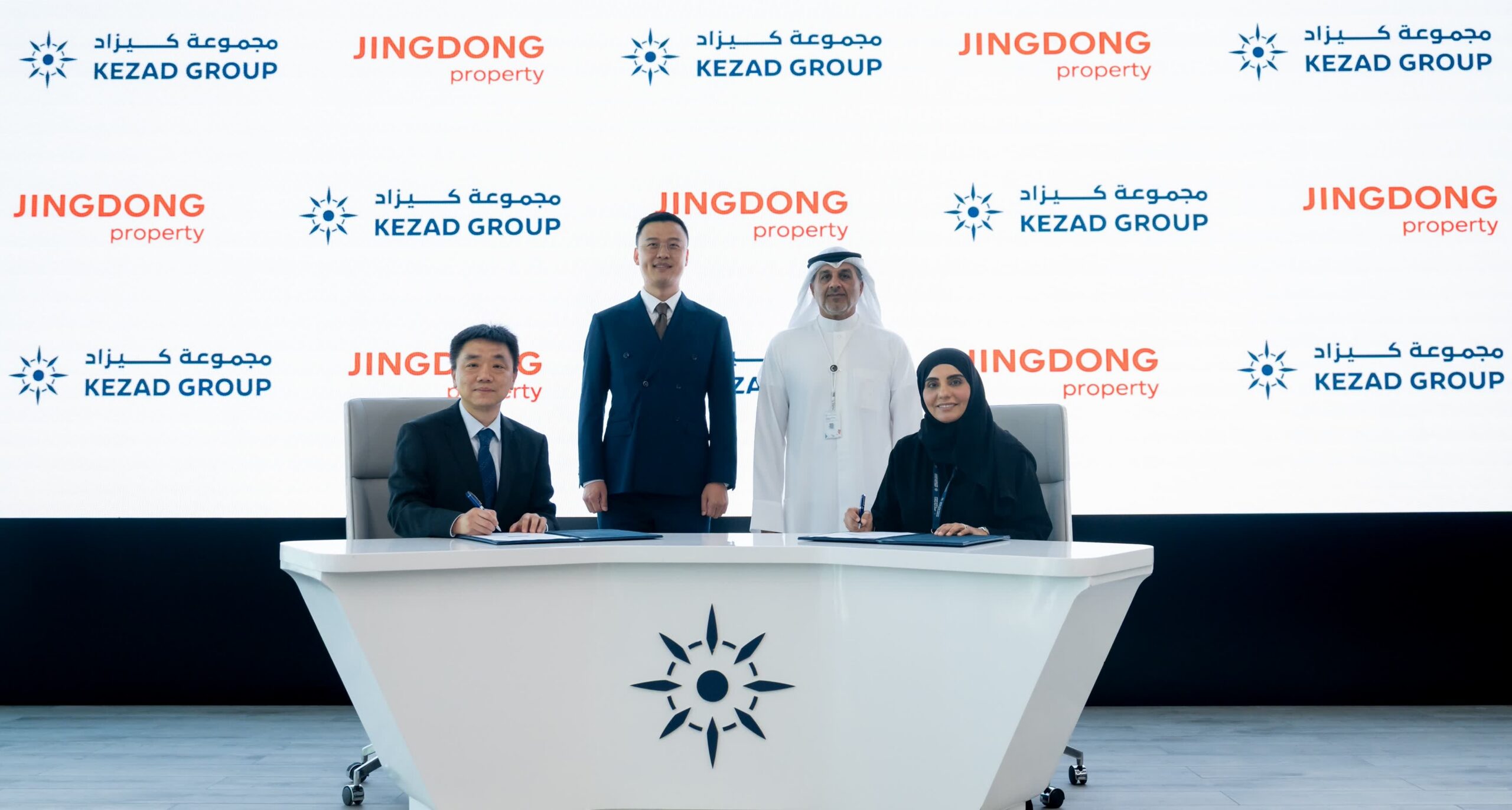
Mohamed Al Khadar Al Ahmed, CEO, KEZAD Group, said: “The establishment of this advanced logistics facility reflects the growing confidence of international investors in Abu Dhabi’s economic ecosystem and highlights the pivotal role played by KEZAD in driving industrial growth through its economic zones. Our agreement with JINGDONG Property will enhance KEZAD’s logistics capabilities, further cementing its position as a gateway for regional and global trade, while advancing economic diversification, industrial expansion and sustainable development.”
Feng Guo, CEO of JD.com Middle East, said: “This milestone logistics facility in KEZAD represents a critical step in JINGDONG Property’s UAE expansion strategy. By leveraging KEZAD’s strategic location and world-class infrastructure, the facility will deliver seamless multimodal logistics solutions tailored to the demands of fast-moving supply chains. We are thrilled to be contributing to the UAE’s continued growth as a global trade hub while deepening our footprint in Abu Dhabi.”
JINGDONG Property manages more than 300 infrastructure assets globally, covering over 28 million square metres of gross floor area, with over USD 16 billion in assets under management. The company specialises in the investment, development and management of high standard and green logistics parks, business parks and data centres, serving customers across e-commerce, third-party logistics, manufacturing, retail and other emerging industries.
The development underscores KEZAD’s commitment to advancing Abu Dhabi’s logistics and industrial capabilities, in line with Abu Dhabi Industrial Strategy and the objectives of Operation 300Bn. By enabling investors with access to world-class infrastructure, multimodal connectivity and an integrated ecosystem, KEZAD continues to attract foreign direct investment, drive economic growth, and strengthen the emirate’s role as a global hub for trade, logistics and supply chain innovation.
|
Trust and Reliability Put JD.com at No. 2 in Inside Retail’s Asia Brand Conviction Index
We are pleased to be ranked No. 2 among Asia’s Top 100 retailers and No. 1 in China in Inside Retail’s inaugural Brand Conviction Index, which measures how strongly consumers choose, recommend and intend to continue buying from retail brands.
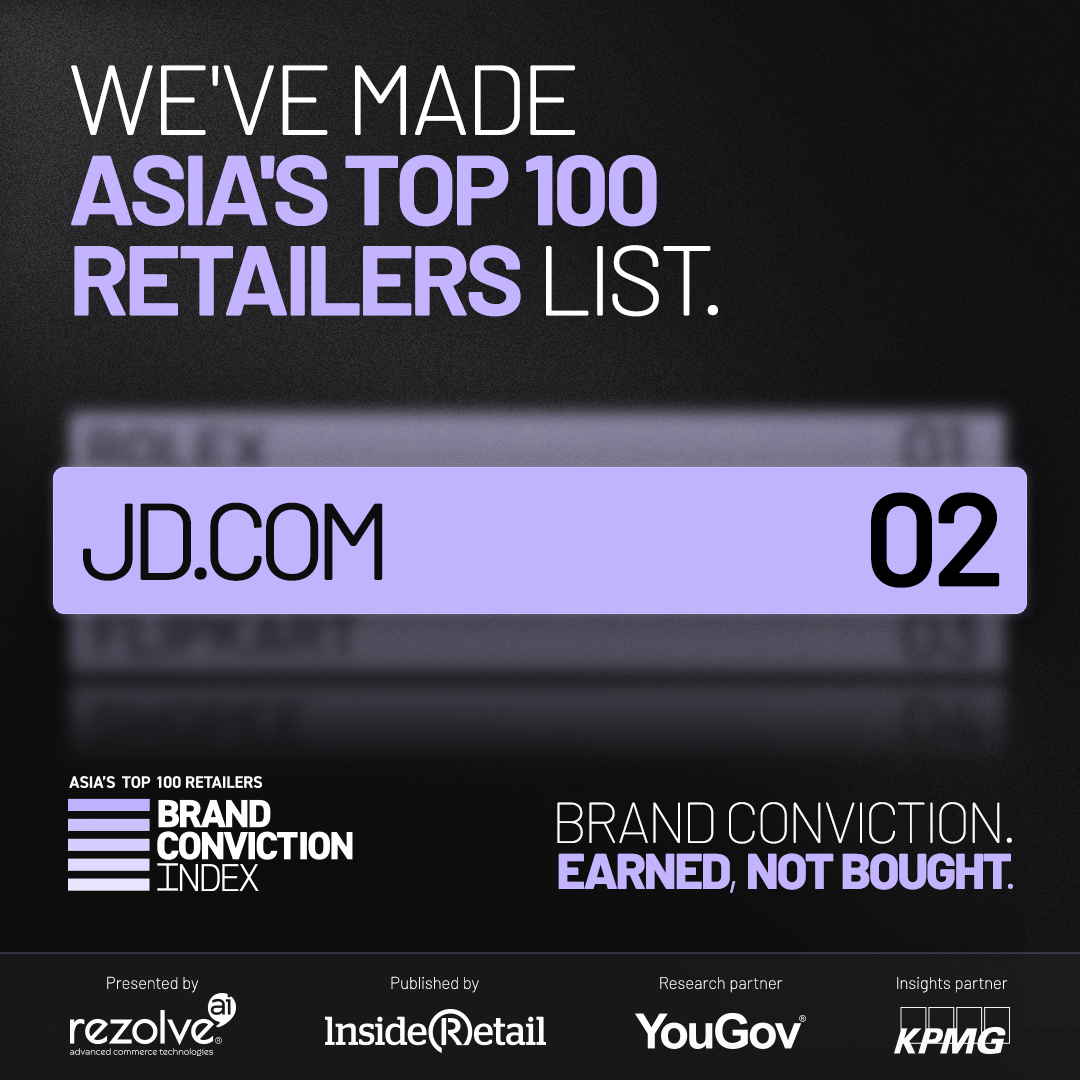
Released on September 29, the index draws on more than 70,000 consumer interviews across 11 Asian markets and 12 months of YouGov BrandIndex data. Rather than focusing on size or market share, the ranking looks at the strength of the relationship between the retailer and its customers.
What stood out to us was Inside Retail’s focus on trust and reliability in its assessment of JD.com.
“JD earns conviction by turning reliability into a reason to return,” Inside Retail wrote, highlighting our focus on genuine products, dependable delivery, installation and responsive after-sales service. It also noted that these capabilities help reduce uncertainty throughout the purchase journey, particularly in categories where trust can matter more to consumers than simply finding a lower price.
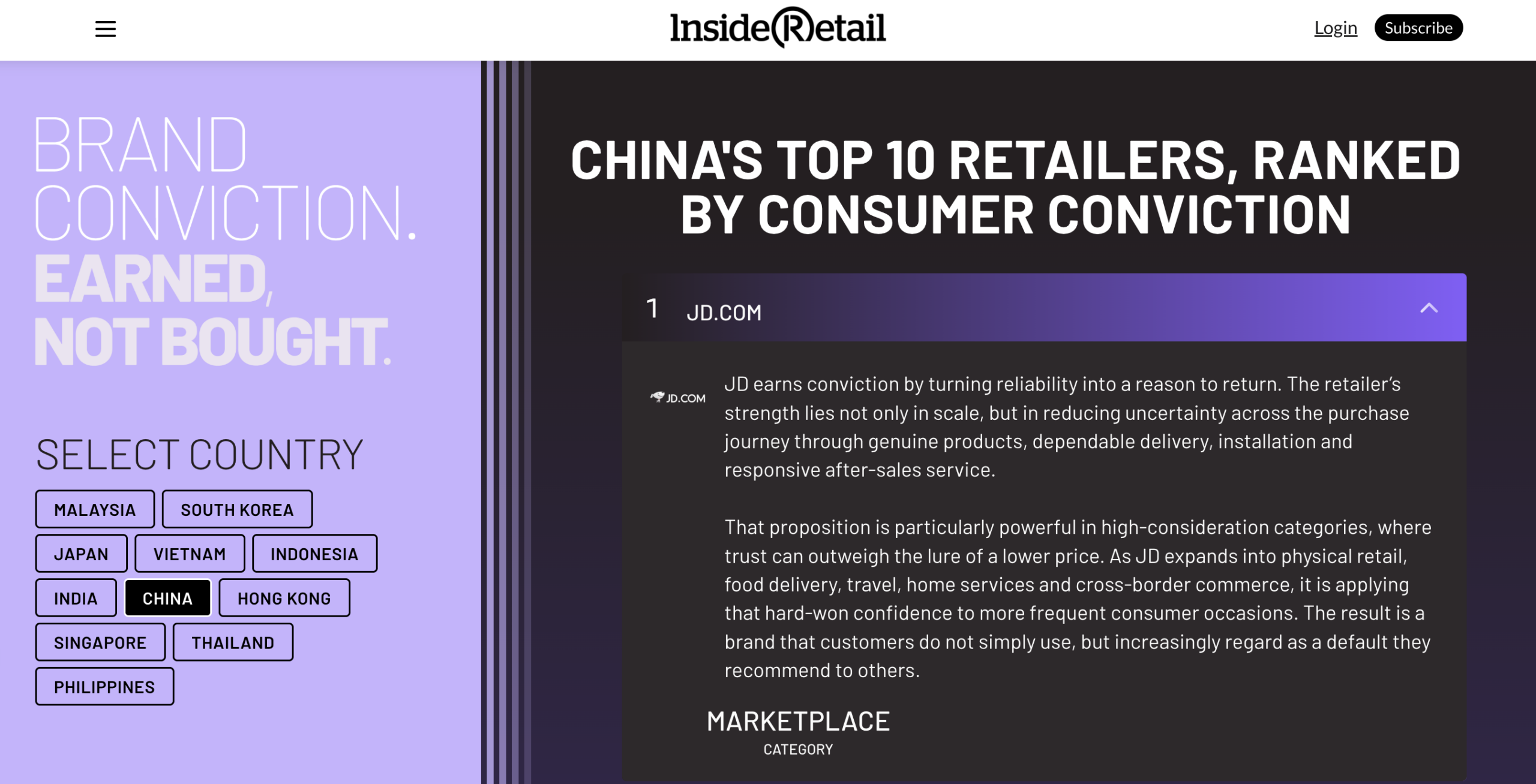
In a separate feature on JD.com, Inside Retail captured this idea particularly well:
“In a market where another discount is always waiting elsewhere, JD stands out by making trust valuable enough that consumers do not judge every purchase on price alone.”
That observation resonates with us. We have spent years investing in the experience behind each purchase, from product authenticity and supply chain capabilities to delivery and after-sales service. As our business expands into more retail and service scenarios, we want customers to know that the same reliability they have come to expect from JD.com will remain at the heart of their shopping experience.
Inside Retail described this as “hard-won confidence” that is extending into more frequent consumer occasions. For us, the recognition is a meaningful reminder that trust is not simply about completing a transaction. It is about giving customers the confidence to come back and to recommend JD.com to others.
Read more from Inside Retail Asia:JD.com trades on the value of trust
(vivian.yang@jd.com)
 JD Logistics CEO on Chinese National TV: Technology Innovation as a Catalyst for High Quality Economic Development in China