Oct 9, 2020|
JD.com’s Smart Home Solution Arms Tujia’s B&B Properties
by Yuchuan Wang
Tujia (途家, literally means Homes on the Way), China’s leading B&B booking platform, inked a partnership with JD.com in smart home on September 30th. Under the partnership, JD.com will leverage its IoT platform to make Tujia’s B&B rooms intelligent. The first four Tujia B&B rooms in Chengdu, the capital of southwestern China’s Sichuan province, have already been equipped with JD’s smart home IoT solution.
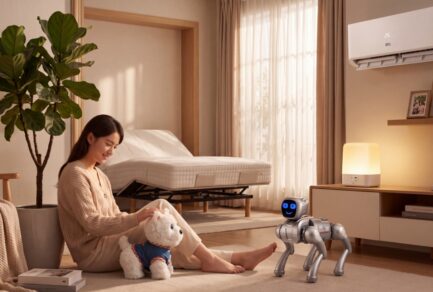
When entering Tujia’s B&B rooms powered by JD’s technology, the entryway light will turn on automatically, curtains will close and music will play. Customers can also prompt the TV to play designated shows through voice control, after which the lighting will immediately be adjusted to a designated entertainment model. At bedtime, water heated to a set temperature will trigger a voice reminder for a shower. The mattress will be adjusted to a proper sleeping angle while lights are set for bedtime.

JD.com operates China’s largest smart home ecosystem, which serves over 25 million homes, encompassing more than 4,000 different products from 1,000 brands. Consumers can easily control their smart home products via the app JD Whale and smart speakers powered by JD’s IoT technology.
“Smart home solutions have already been widely applied in daily life of families, but there is still potential in the market for hotels, guest houses and office buildings.” said a JD IoT spokesperson. “The growing guest house market and increasing number of young consumers provides fertile soil for the market to grow. By partnering with Tujia, we hope to build an innovative ‘smart B&B’ model to provide smart life experiences for tourists.”
According to the China Tourism Guest House Development Report published this July, revenue of China’s B&B market in 2019 reached RMB 20.09 billion yuan, increasing 38.92% YOY. As of September 30, 2019, there were around 169,800 guest houses in China, triple the number (50,000) in 2016. Guest house users under age of 35 account for 83% of all users.
Nov 12, 2026|
From Tokens to AI-Powered Shopping: How JD.com Brings AI into Singles’ Day 2026
Artificial intelligence is playing an increasingly important role in e-commerce, transforming not only how consumers discover and purchase products, but also how merchants operate and how goods reach customers.
During JD.com’s 2026 Singles’ Day Grand Promotion, more than 50 million AI products were sold. Behind the figure is a growing range of real-world AI applications. From the world’s largest virtual try-ons, to AI shopping assistants, merchant tools and intelligent logistics, JD.com put AI to work across its retail ecosystem during the festival.
Here is a closer look at how JD.com put AI into action during Singles’ Day 2026.
AI Becomes Something Consumers Can Buy
As AI tools become increasingly embedded in everyday work and life, demand for access to AI models and services is growing.
During this year’s Singles’ Day promotion, searches for “Token” on JD.com increased more than 13-fold compared with the preceding period, while sales volumes of LLM token packages grew more than tenfold over the same comparison period.
To make these services more accessible, JD.com launched dedicated marketplaces for AI tokens and software subscriptions, allowing individuals and developers to compare models, purchase tokens and subscribe to AI services in one place.
The marketplaces bring together offerings from leading AI providers, including JD.com’s own JINGDONG Cloud, DeepSeek, Zhipu GLM, ByteDance’s Seed, MiniMax, Kimi and Alibaba’s Qwen, among others. Zhipu AI has also established a self-operated flagship store on JD.com, offering subscriptions including CodingPlan.
During a livestream on November 2, more than one billion AI tokens were given away within the first hour, while sales of AI model token packages during the two-hour livestream increased 20-fold compared with the preceding period.
JD.com also introduced a “Buy a PC, Get AI Tokens” initiative. Customers purchasing selected Dell and Alienware laptops receive a JINGDONG Cloud token starter package, providing access to mainstream open-source AI models and AI agent development capabilities.
Beyond AI software and services, consumers are increasingly embracing AI-enabled hardware. During the Singles’ Day promotion, transaction value across categories including AI PCs, AI workstations, AI cameras, AI glasses and AI recording devices increased by more than 100% year on year.
JD.com is extending AI capabilities into connected devices through JoyInside, its AI technology solution for hardware. As of November 11, JoyInside had recorded more than 70 million cumulative interactions, reaching over one million households.
Making Online Shopping More Interactive and Personalised
With a single uploaded photograph, shoppers can visualise how different clothing items might look on them. AI-powered outfit recommendations and sizing assistance further help consumers find products suited to their preferences and needs.
JD.com’s proprietary Oxygen TryOn model now supports more than 70 million products across over 100,000 fashion stores, making it one of the most extensive AI-powered virtual try-on offerings by product coverage. Fashion brand UR, for example, has enabled the feature for almost its entire product range on JD.com.
This Singles’ Day, JD.com also extended virtual try-on capabilities to eyewear, allowing shoppers to see how different frames might look on their faces within seconds.
Beyond fashion, AI is also simplifying everyday purchases beyond fashion. At 9 p.m. on November 11, Lin Yue, a mother caring for her baby, realised she was running low on diapers. Instead of searching through products and comparing prices, she started a video call with the “Dr. Joy” AI assistant in JD.com’s JoyAI App. While chatting with the assistant, she simply pointed to the product and said, “Help me restock these diapers.” Within seconds, her order was placed.
Such interactions are helping make AI a more practical part of everyday shopping. During the promotion, peak daily active users of the JoyAI App exceeded five times typical levels.
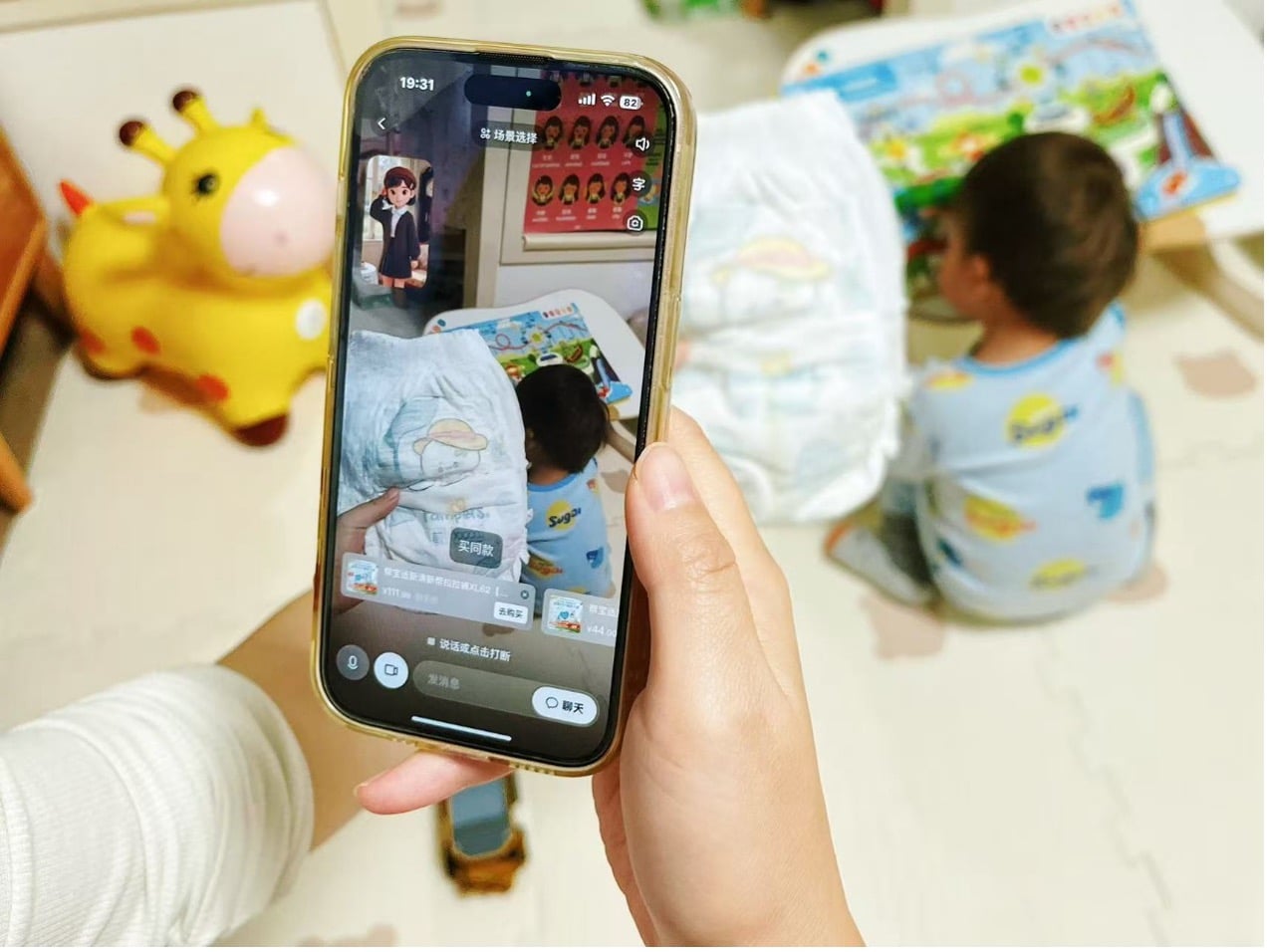
During this Singles’ Day, JD.com also upgraded Dongdong, its AI shopping assistant integrated directly to the JD.com app. Dongdong helps consumers discover products, compare prices, navigate promotional offers and access after-sales services. Together with JD.com’s AI shopping advisory tools, AI shopping consultation services attracted nearly 80 million active users, an increase of more than 200% year on year.
AI is also finding applications in healthcare. During the festival, consultation orders for JINGDONG Health’s AI doctor, “Dawei”, increased by more than 500% year on year, reflecting growing consumer engagement with AI-powered health advisory services.
Helping Merchants Work Smarter with AI
For merchants, AI is becoming an increasingly practical tool for running their businesses, from preparing product listings, managing shop operations and creating marketing content to analysing performance and serving customers. During Singles’ Day, JD.com’s Jingmai AI Merchant Operations Centre made dozens of AI tools available to merchants, covering product selection, listings, marketing, fulfilment and after-sales services.
By making advanced digital capabilities more accessible, these tools are helping merchants of different sizes manage their businesses more efficiently. Jingmai AI tools have helped 80% of new merchants significantly improve operational efficiency, while providing 96% of merchants with day-to-day operational support and business recommendations. JD.com’s Jingdiandian AI design agent can reduce content production costs by up to 99% and improve overall operational efficiency more than tenfold.
One merchant in the health appliance category saw sales generated through its product detail pages increase by more than 20% after 14 days of using JD.com’s AI content creation tools, compared with the preceding period.
For business diagnostics, AI can identify issues across areas such as advertising performance, product fundamentals, competitive positioning and keyword rankings, and provide targeted recommendations for improvement.
AI-powered livestreaming is another growing application, helping merchants and brands engage customers more consistently and efficiently. At 10 p.m. on November 11, a digital avatar representing Lancôme China’s e-commerce president hosted a special promotional livestream on JD.com’s app. During this year’s Singles’ Day, JD.com’s JoyAvatar digital avatar technology supported more than 100,000 merchants, generating over RMB 1.8 billion in GMV across more than 14 million hours of livestreaming. Digital avatar livestreams also handled more than 3.6 million orders during the late-night or early-morning hours, helping merchants maintain sales around the clock.
Bringing Intelligence into Logistics Operations
The impact of AI extends beyond the shopping app and merchant operations to the logistics network that supports fast fulfilment during Singles’ Day.
JINGDONG Logistics is using its MetaBrain 3.0 logistics LLM to forecast regional order volumes, optimise resource allocation and dynamically coordinate delivery capacity across its nationwide network. Under its coordination, robots and other intelligent systems can work collaboratively across different stages of the supply chain.
The scale of AI-supported operations was particularly evident during this year’s festival. By 11 p.m. on November 11, MetaBrain had performed 320.7 billion order-location checks during the promotion, supporting the coordination of logistics operations at scale.
Meanwhile, robotic arms within JINGDONG Logistics’ proprietary LangzuTech smart logistics solutions had handled a cumulative 15.53 million parcels since their introduction. Across its broader robotics fleet, the volume of orders processed during the festival increased 45% year on year.
Sep 9, 2026|
From AI Models to the Physical World: Highlights from JDDiscovery 2026
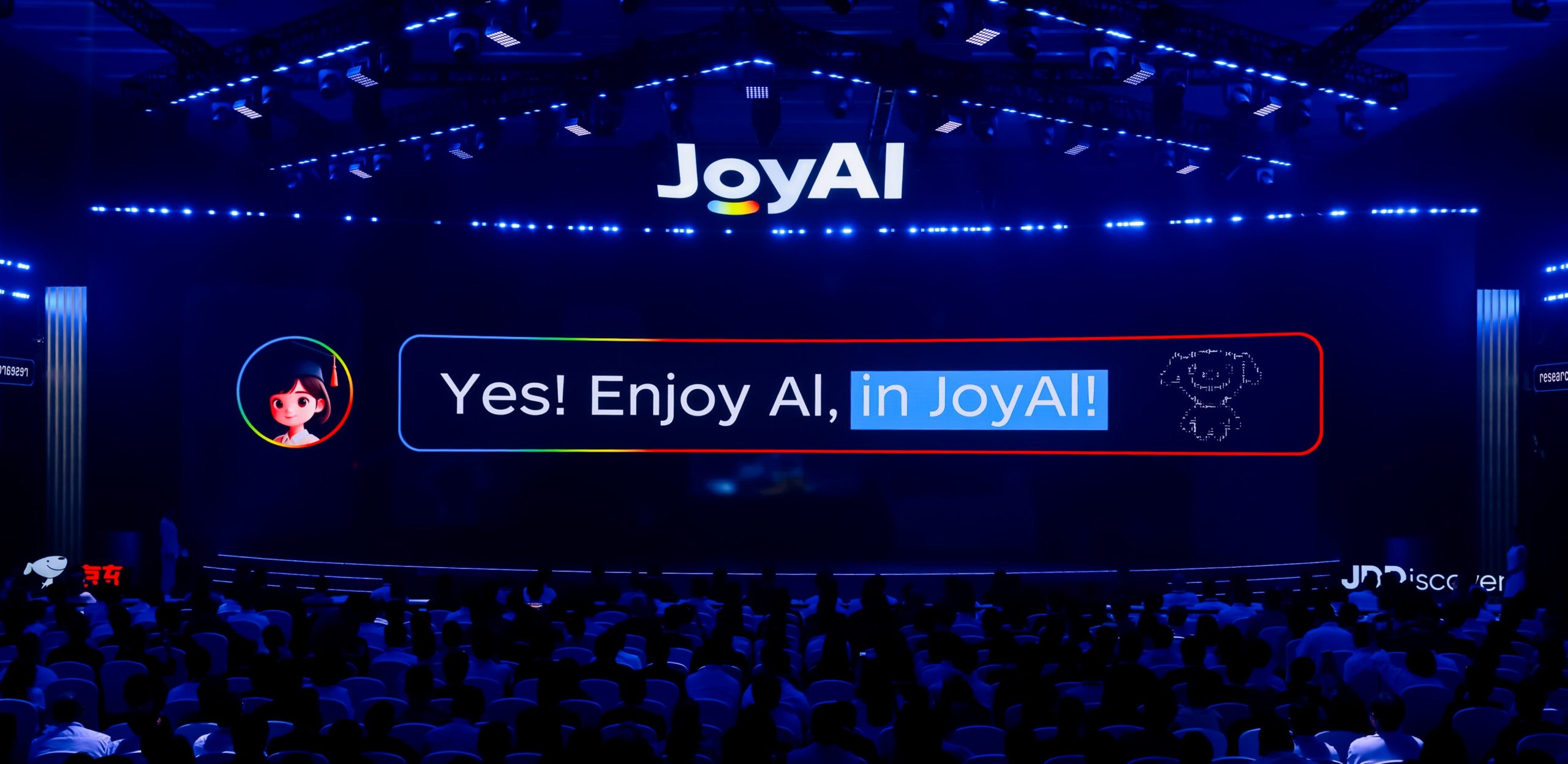
AI is often discussed through models, benchmarks and digital productivity. At JDDiscovery 2026 in Beijing, JD.com focused on what AI can accomplish in the physical world from warehouses and delivery routes to retail, healthcare, smart homes, industrial supply chains and beyond.
Under the theme “JoyAI: Leaping into the Physical World,” JD.com outlined its goal to build the “World’s Largest Operational Platform for the Physical World”. As Cao Peng, Chairman of JD.com’s Technology Committee and President of JD Cloud, noted, JD.com’s AI was not born only in research papers. It has been refined “order by order” across production lines, warehouses, delivery stations and the full supply chain process.
Here are three highlights from JDDiscovery 2026 that show how JD.com is putting AI to work.
World Models Move AI Closer to the Physical World
An optimal route for hundreds of millions of parcels, calculated in seconds. A mechanical component designed through a simple conversation and turned into a 3D-printed prototype. A medical imaging agent that can proactively examine a scan. These examples show what becomes possible when AI moves beyond the screen and into real-world operations.
Behind them is JD.com’s JoyAI foundation model portfolio, which spans speech, image, video, real-time interaction, world models and embodied AI.
At JDDiscovery, the company added its new world model, JoyAI-Echo WM, an interactive audiovisual model that combines native audio-video generation with user control. It takes AI-generated content beyond something users simply watch, transforming it into virtual environments they can enter, interact with and explore.
JD.com also showcased industry-specific models and AI agent applications. JINGDONG Logistics’ Meta Brain 3.0 coordinates decision-making across warehousing, transport and delivery, reducing the time needed to calculate optimal routes for hundreds of millions of parcels from minutes to seconds.
JoyIndustrial 2.0, meanwhile, allows engineers to describe a mechanical design in everyday language and turn it into a physical prototype through 3D printing. In healthcare, JoyAI-Med 3.0 brings medical imaging, research, clinical documentation and multidisciplinary consultation into a unified model that is already being used across JINGDONG Health services.
AI Moves into Everyday Life: Shopping, Health and the Home
Of course, AI is not limited to robots on warehouse floors. It can also help someone choose a washing machine, collect a blood pressure reading with healthcare services, or allow devices across the home to respond more intelligently.
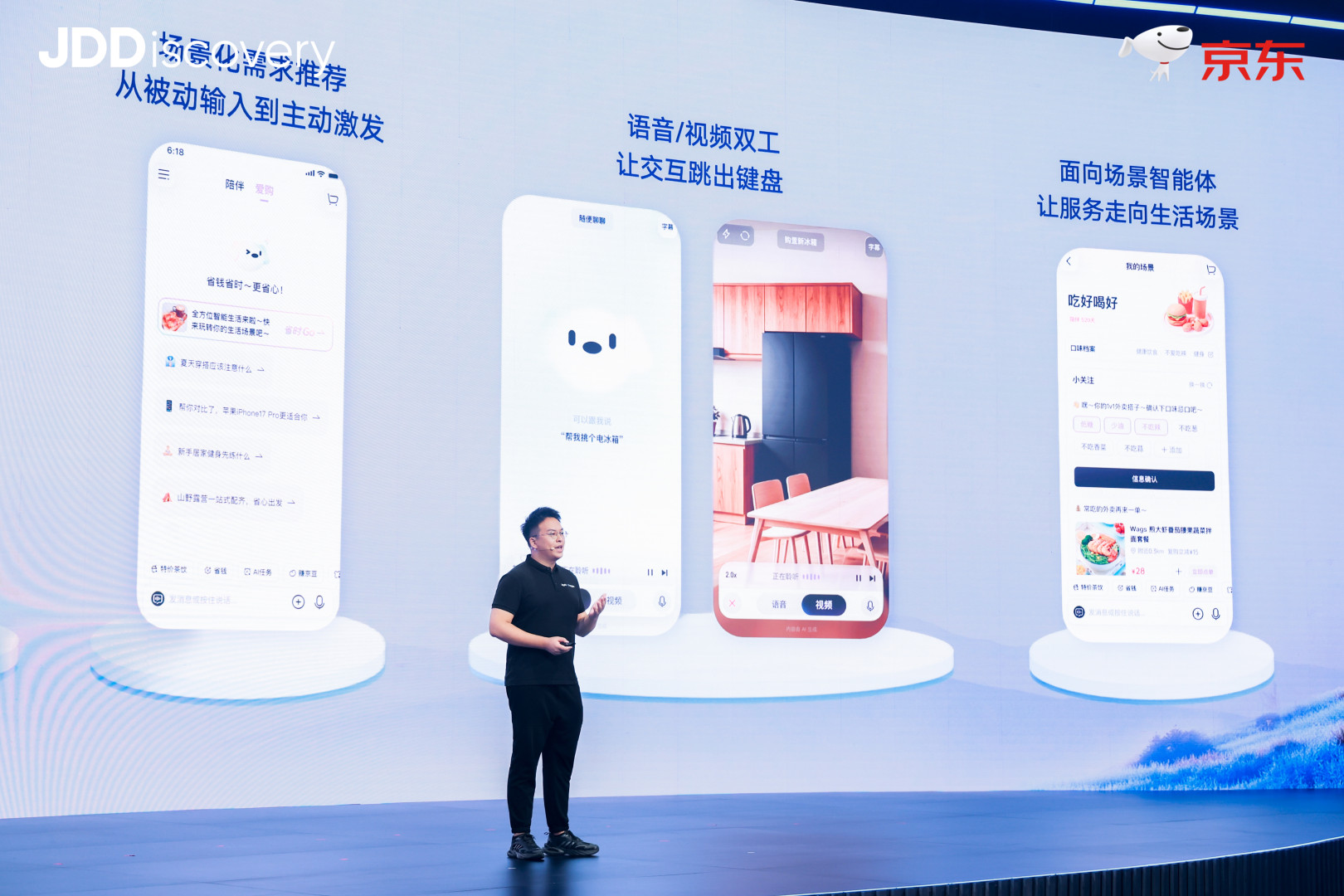
With the release of JD.com app ver.16.0 on 9 September, users can now access “Dongdong”, JD.com’s AI shopping assistant, throughout the shopping journey.
Instead of simply returning search results, Dongdong is designed to understand what customers are trying to accomplish. It can break down broad or unclear requests and match them with relevant products and services across JD.com’s ecosystem.
Users can also interact with Dongdong through voice and video. Someone looking for furniture or an appliance, for example, can show the assistant their available space, interior style or a problem they want to solve. Dongdong can then use that visual context to provide more relevant and practical suggestions.
In healthcare, JINGDONG Health introduced its first end-to-end specialist AI agent, designed to reproduce the diagnostic logic and clinical expertise of leading doctors. JINGDONG Health is also linking AI with devices and services.
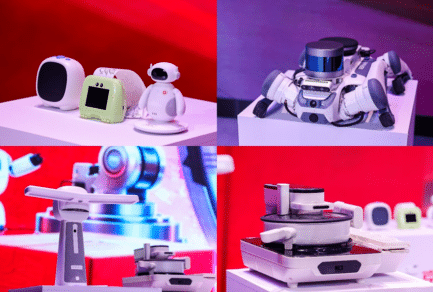
In the home, JoyInside gives connected devices an “AI brain”, helping them move from responding individually to providing more proactive, whole-home services. The technology has already been adopted through partnerships with more than 200 brands across appliances, home products, toys and robotics.
From Prototype to Scale: Building the Infrastructure for Robotics
Building a robot is difficult. Turning it into a product that can be manufactured, deployed and maintained at scale is harder. JD.com’s new Physical AI Acceleration Plan is designed to address that challenge across the full robotics lifecycle.
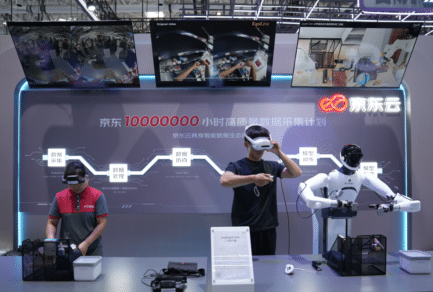
The plan begins with one of the industry’s biggest constraints: training data. JD Cloud aims to build the world’s largest embodied AI data collection centre, gathering more than 10 million hours of video from real-world human activities over the next two years.
JINGDONG Property plans to establish more than 80 RoboBase robotics industry hubs across China over the next five years, creating the world’s largest network of robotics industry bases. The hubs will integrate product demonstration and delivery, R&D, pilot assembly, data collection, manufacturing, maintenance and product iteration.
JINGDONG Industrials has launched an alliance connecting robot manufacturers with component suppliers, supporting its goal to become the world’s largest supplier of robotics components.
JINGDONG Retail plans to commit RMB 10 billion in resources by 2028. It aims to become the world’s largest robotics retail channel by helping 100 robotics brands each achieve RMB 1 billion in independent sales and reaching 10 million users.
Logistics already provides a significant proving ground. JINGDONG Logistics aims to build the world’s largest-scale application of embodied robots and advance autonomous operations across the entire logistics process.
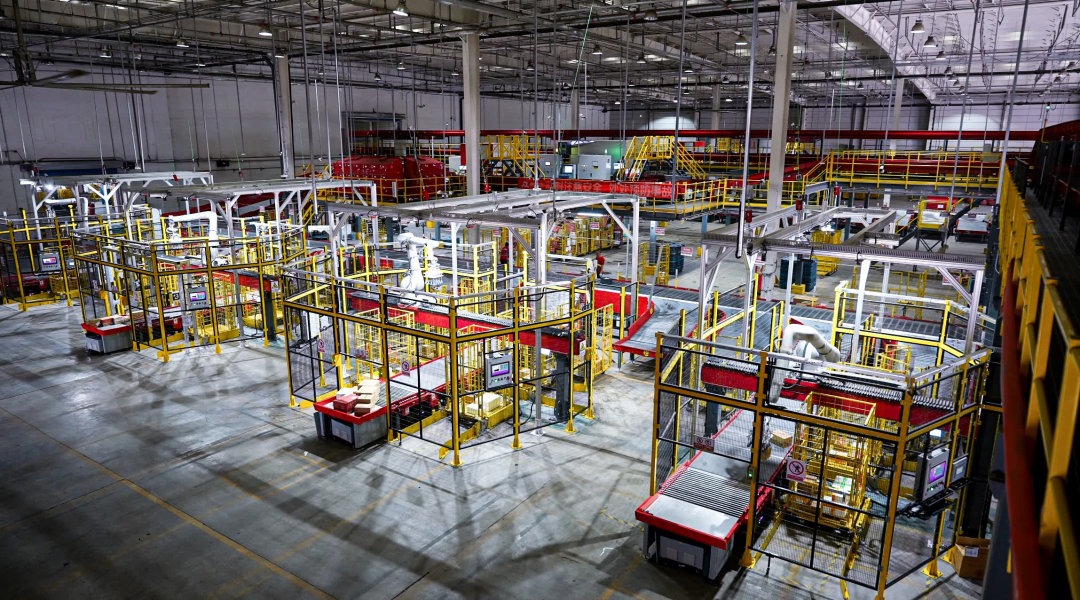
The increasing use of robotics will also require support after deployment. JINGDONG Logistics currently operates eight repair centres in China and plans to extend its robotics after-sales capabilities and support the creation of more than 100,000 jobs for robotics service engineers, over the next five years.
 Airline Sold for RMB 800 Million Yuan on JD Auction