Aug 22, 2022|
JD Health Joins Hands with Charitable Foundations
by Vivian Yang
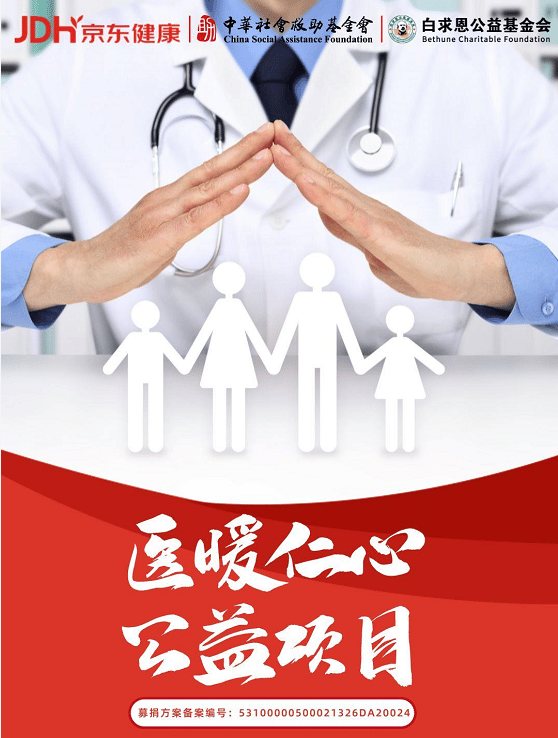
On the fifth annual Chinese Doctors’ Day on August 19th, JD Health launched a charitable project known as “Doctors‘ Warm Hearts” (医暖仁心) in collaboration with the China Social Assistance Foundation and Bethune Charitable Foundation, in which a range of healthcare support will be initiated, including providing free online and offline medical consultations, promoting health knowledge to the public and assisting needy patients with living expenditures.
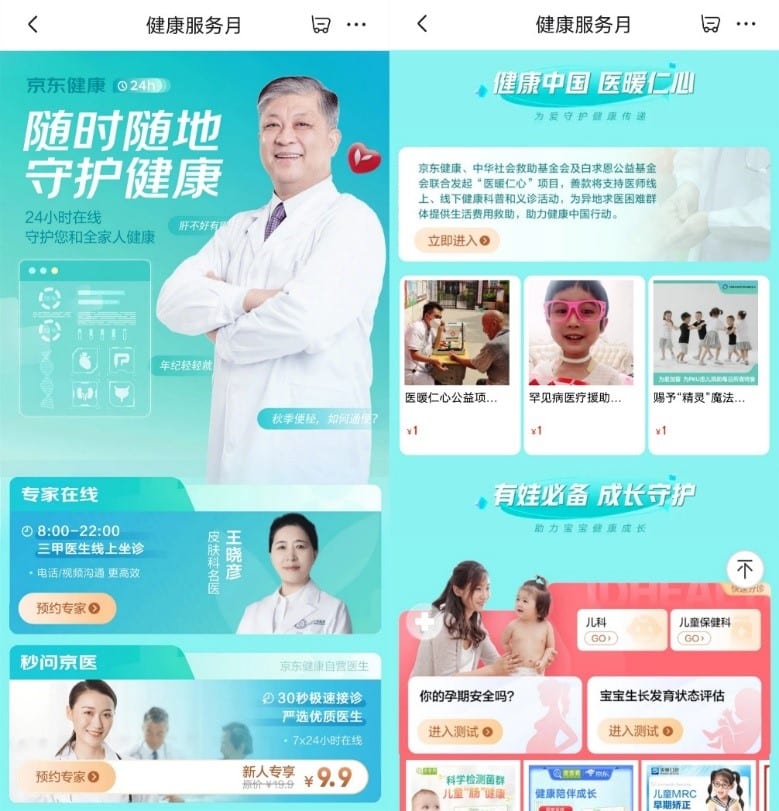
As China’s medical capabilities and treatment quality see significant improvement over the years, challenges still exist in uneven distribution of medical resources, especially for people in remote areas. JD Health’s telemedicine model that integrates both online and offline resources helps create a more convenient and trustworthy solution for patients to access medical treatment regardless where they live.
The project also raises funds through public and corporate donations that will be used to support the living expenditures of patients in various predicaments, especially those who need to relocate themselves in pursuit of medical treatment.
Free online medical consultations and donations under the project can be easily reached in a dedicated portal in JD Health’s App.
Sep 30, 2026|
Trust and Reliability Put JD.com at No. 2 in Inside Retail’s Asia Brand Conviction Index
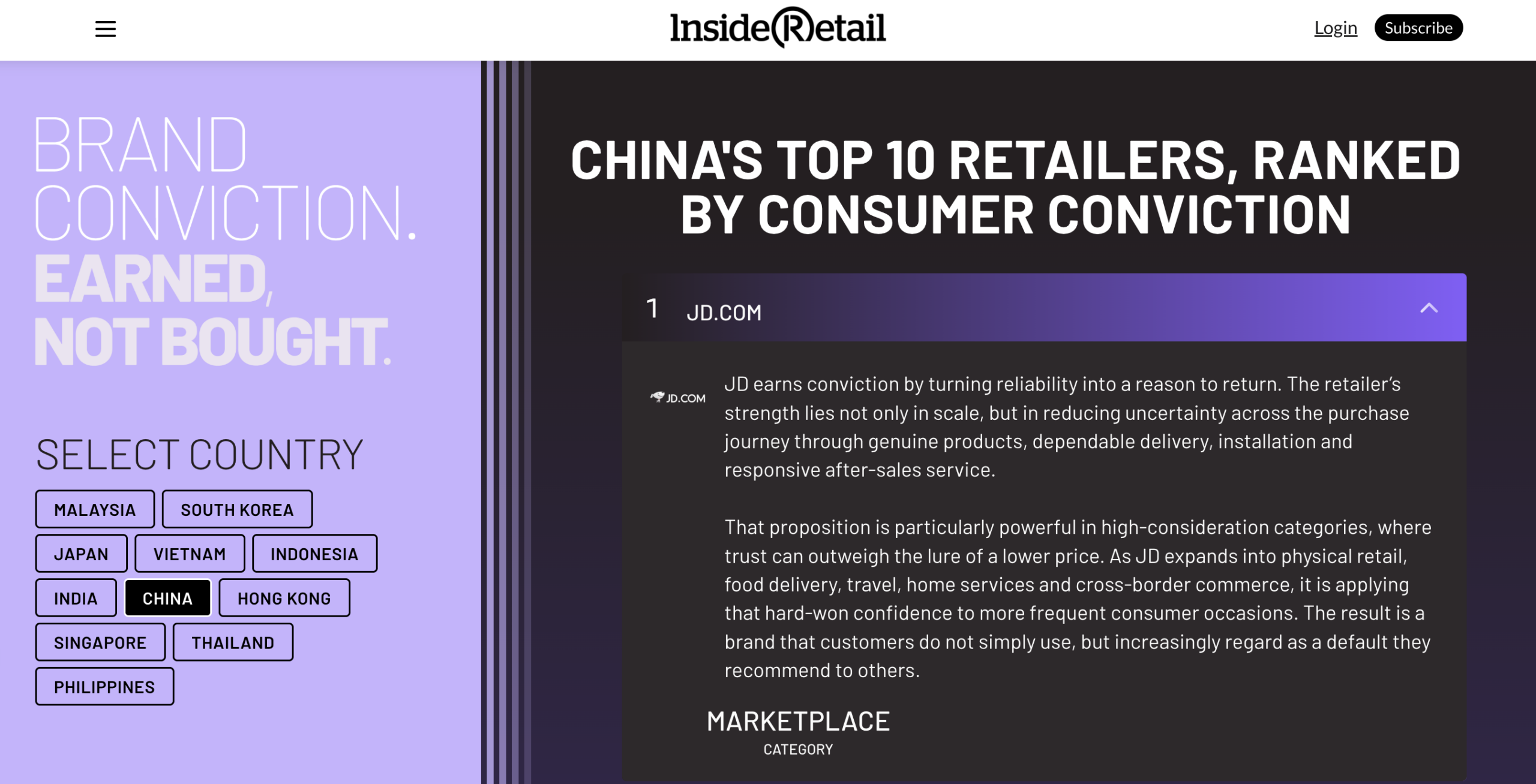
We are pleased to be ranked No. 2 among Asia’s Top 100 retailers and No. 1 in China in Inside Retail’s inaugural Brand Conviction Index, which measures how strongly consumers choose, recommend and intend to continue buying from retail brands.

Released on September 29, the index draws on more than 70,000 consumer interviews across 11 Asian markets and 12 months of YouGov BrandIndex data. Rather than focusing on size or market share, the ranking looks at the strength of the relationship between the retailer and its customers.
What stood out to us was Inside Retail’s focus on trust and reliability in its assessment of JD.com.
“JD earns conviction by turning reliability into a reason to return,” Inside Retail wrote, highlighting our focus on genuine products, dependable delivery, installation and responsive after-sales service. It also noted that these capabilities help reduce uncertainty throughout the purchase journey, particularly in categories where trust can matter more to consumers than simply finding a lower price.
In a separate feature on JD.com, Inside Retail captured this idea particularly well:
“In a market where another discount is always waiting elsewhere, JD stands out by making trust valuable enough that consumers do not judge every purchase on price alone.”
That observation resonates with us. We have spent years investing in the experience behind each purchase, from product authenticity and supply chain capabilities to delivery and after-sales service. As our business expands into more retail and service scenarios, we want customers to know that the same reliability they have come to expect from JD.com will remain at the heart of their shopping experience.
Inside Retail described this as “hard-won confidence” that is extending into more frequent consumer occasions. For us, the recognition is a meaningful reminder that trust is not simply about completing a transaction. It is about giving customers the confidence to come back and to recommend JD.com to others.
Read more from Inside Retail Asia:JD.com trades on the value of trust
(vivian.yang@jd.com)
Sep 8, 2026|
Beyond the Chatbot: How JD Health Is Bringing AI Into Doctors’ Everyday Work
A doctor reviewing a complex case may need to search through medical literature, check the latest clinical guidelines, assess drug interactions, interpret test results and bring together years of patient information, often under significant time pressure.
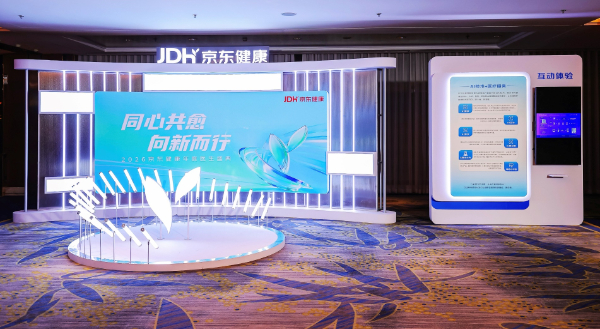
This is where Zhiyi (知医) comes in. Developed by JINGDONG Health (also known as JD Health), Zhiyi is an evidence-based AI assistant built specifically for healthcare professionals. Its Chinese name fittingly brings together the ideas of “professional knowledge” (知) and “doctor” (医).
Launched in January 2026, Zhiyi brings AI into the everyday workflow of doctors in China, supporting clinical decision-making, medical research, patient management and other professional tasks. It has integrated more than 50 million medical papers, clinical guidelines and authoritative journal resources, together with information from more than 160,000 pharmaceutical product instructions. The platform has already served over one million doctors and supported more than 20 million clinical decision-making interactions.
From Finding Information to Understanding the Evidence
Searching for medical information is one thing. Turning it into useful evidence for a particular patient or clinical situation is much harder.
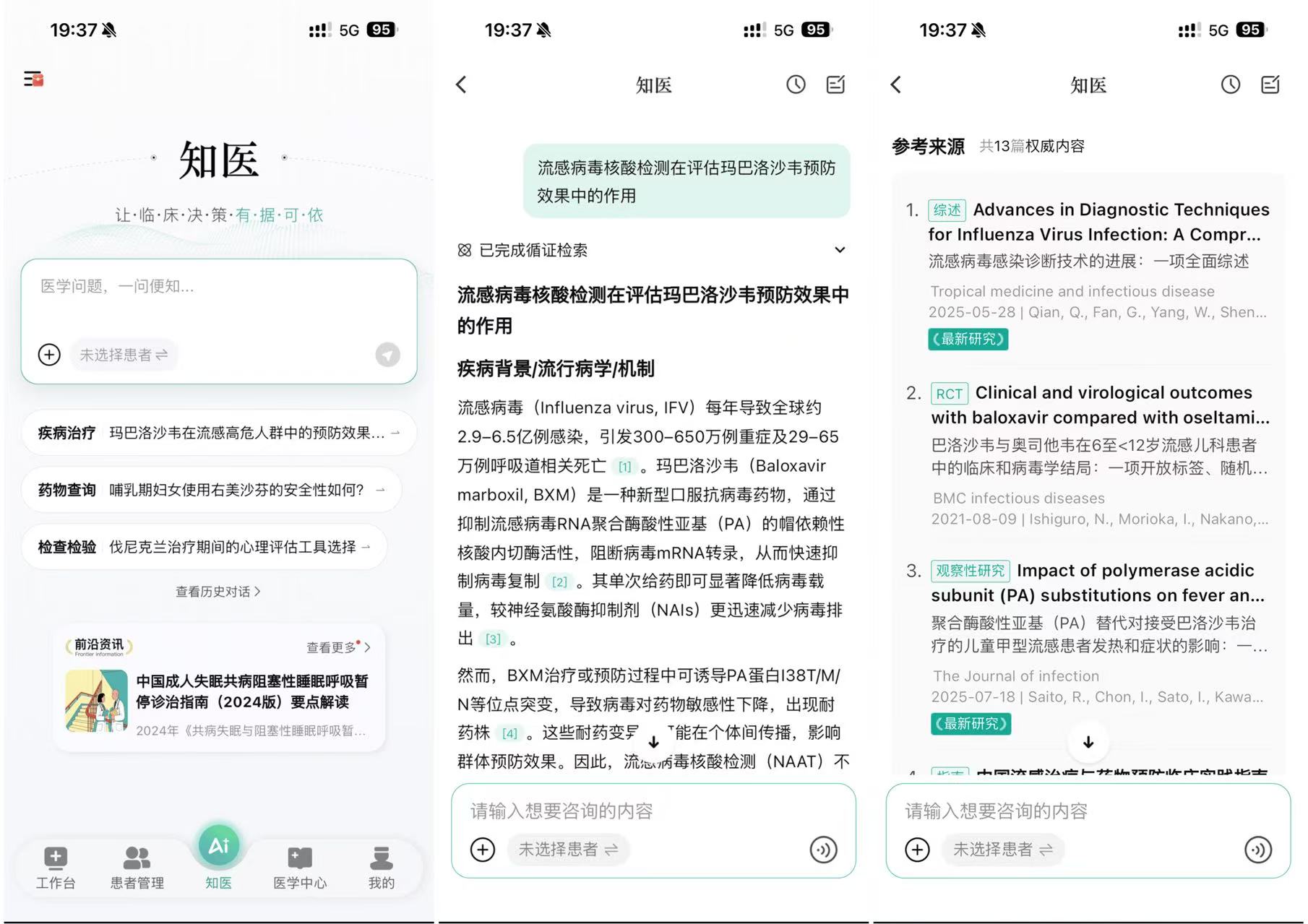
Zhiyi is designed to help doctors move beyond simple search. Its Deep Thinking mode can break down complex questions, assess different levels of evidence and provide structured references for doctors to consider, including in cases involving multiple conditions or medications.
A good example is oncology. Zhiyi has integrated the China Anti-Cancer Association (CACA) Guidelines for Holistic Integrative Management of Cancer, which cover 29 cancer types and 72 diagnostic and treatment technologies. By making this body of specialist knowledge searchable and actionable through AI, Zhiyi can help doctors access relevant evidence when they need it, rather than requiring them to navigate lengthy reference materials separately.
Zhiyi also offers more than 200 medical calculators, covering areas such as disease assessment, risk stratification, medication dosage and cardiovascular risk, with AI providing evidence-based interpretation of the results. Its research assistant extends these capabilities into academic work, supporting literature reviews, patient education materials and presentations.
The aim is simple: reduce the time doctors spend navigating information so they can focus more of their expertise on understanding the patient and making clinical decisions.
Making AI Fit the Way Doctors Actually Work
Clinical information rarely arrives as a perfectly structured prompt.
It may be a laboratory report, prescription, medical image, PDF document or information collected across previous consultations. Zhiyi’s multimodal capabilities allow doctors to upload and analyze different types of clinical materials, reducing the need for manual entry and page-by-page review.
More importantly, Zhiyi is designed to show doctors where its conclusions come from. Its dynamic evidence-location capability can identify the original text supporting a clinical point, allowing doctors to trace AI-generated information back to the underlying evidence.
That distinction matters in healthcare. A useful medical AI assistant should not simply produce an answer; it should help a professional understand the evidence behind it.
When “Sounds Right” Isn’t Good Enough
Generative AI can produce convincing answers. In medicine, however, convincing is very different from reliable.
JD Health has therefore built dedicated evaluation systems around Zhiyi. Its MedScope framework evaluates AI outputs across evidence quality, content accuracy, appropriate expression and practical usefulness, supported by evaluation sets spanning 46 major clinical specialties.
A separate MedSafety framework evaluates 26 categories of high-risk medical scenarios, including medication contraindications and complication warnings. High-risk outputs that cross defined safety boundaries do not pass the evaluation.
This reflects an important principle behind JD Health’s approach: AI is there to support medical professionals, not to replace their experience, judgment or responsibility.
One AI Foundation, Different Healthcare Supports
Zhiyi is part of a broader AI healthcare architecture JD Health has been developing.
Underneath it is Jingyi Qianxun (京医千询), JD Health’s proprietary medical large language model. Rather than positioning the model itself as the final product, JD Health is applying its capabilities to specific healthcare workflows, including evidence retrieval, clinical support, patient follow-up and medical research. Zhiyi is one example of how that underlying AI capability is translated into a practical professional tool.
On the patient-facing side, Dawei (大为), JD Health’s AI doctor, applies AI to another part of the healthcare journey. JD Health has also launched more than 1,500 AI agents based on specialist doctors, alongside solutions developed for hospitals and specific disease areas.
Together, they illustrate a broader strategy: rather than building one AI assistant for every healthcare problem, JD Health is developing specialized AI tools around the needs of different users and healthcare scenarios.

Taking Medical AI Beyond Major Hospitals
Perhaps one of the most meaningful tests of medical AI is whether it can make high-quality tools more widely accessible.
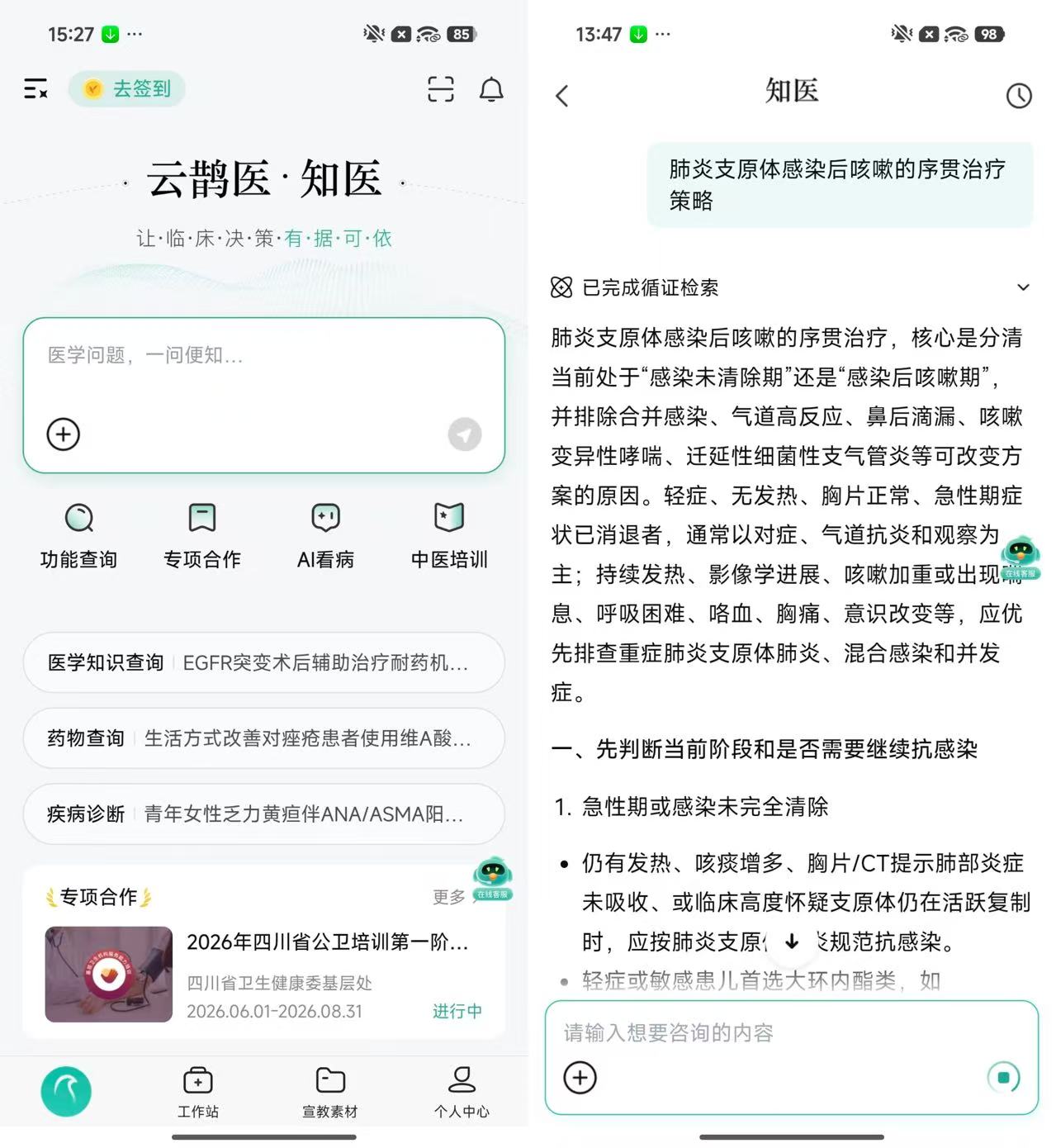
In August, JD Health formed a strategic partnership with PICA Health (Yunqueyi), one of China’s largest digital platforms serving primary-care doctors. Zhiyi has been integrated into the PICA Health app, making its upgraded capabilities, including Deep Thinking, medical calculators and research assistance, available free of charge to the platform’s registered primary-care doctors serving. PICA Health connects around three million registered primary-care doctors serving China’s grassroots.
The significance is not simply putting AI into more hands. A doctor working in a smaller community can use the same AI tool to access medical literature, clinical guidelines and evidence-based decision support that would otherwise be more difficult or time-consuming to obtain.
And this is where JD Health brings another capability into the picture: supply chain infrastructure.
JD Health’s pharmaceutical supply chain reaches more than one million villages in China, while same- or next-day delivery coverage has reached 87.1% across county-level areas covered by its network.
This creates an interesting connection between medical intelligence and healthcare access: AI can help doctors find and interpret the right evidence, while supply chain capabilities can help turn a clinical decision into access to the medicines and healthcare products patients need.
Building AI Around Healthcare, Not Healthcare Around AI
There is no shortage of discussion about how powerful the next generation of medical AI models will become. JD Health’s experience with Zhiyi suggests that model capability is only part of the equation.
Healthcare AI also needs trusted medical evidence, safety mechanisms, integration into real clinical workflows and a way to reach the doctors and patients who can benefit from it.
That is why Zhiyi is particularly illustrative of JD Health’s broader approach. The technology begins with a medical large language model, but extends into authoritative resources such as the CACA Guidelines, professional tools for doctors, partnerships such as PICA Health, patient-facing services such as Dawei, and JD Health’s wider healthcare and supply chain infrastructure.
Doctors’ experience, judgment and responsibility remain at the center. The role of AI is to help those capabilities go further by making trusted knowledge easier to reach, complex information easier to navigate and everyday clinical work more efficient.
The more meaningful question for healthcare may therefore be not whether AI can become a doctor, but how AI can help every doctor do more for every patient.
(vivian.yang@jd.com)
 JD.com and Samsung Electronics China Outline Joint Push on IoT