Sep 23, 2026|
JINGDONG Industrials Highlights AI and Local Supply Chains at World Economic Forum ASEAN Digital Economy Dialogue
JINGDONG Industrials (also known as JD Industrials), the industrial supply chain technology and service provider under JD.com, joined government and business leaders in Manila on September 19 for the World Economic Forum’s Business Dialogue on ASEAN’s Digital Economy 2026. The event offered an opportunity to share perspectives on how AI, localized supply chains and talent development can support the region’s digital transformation.
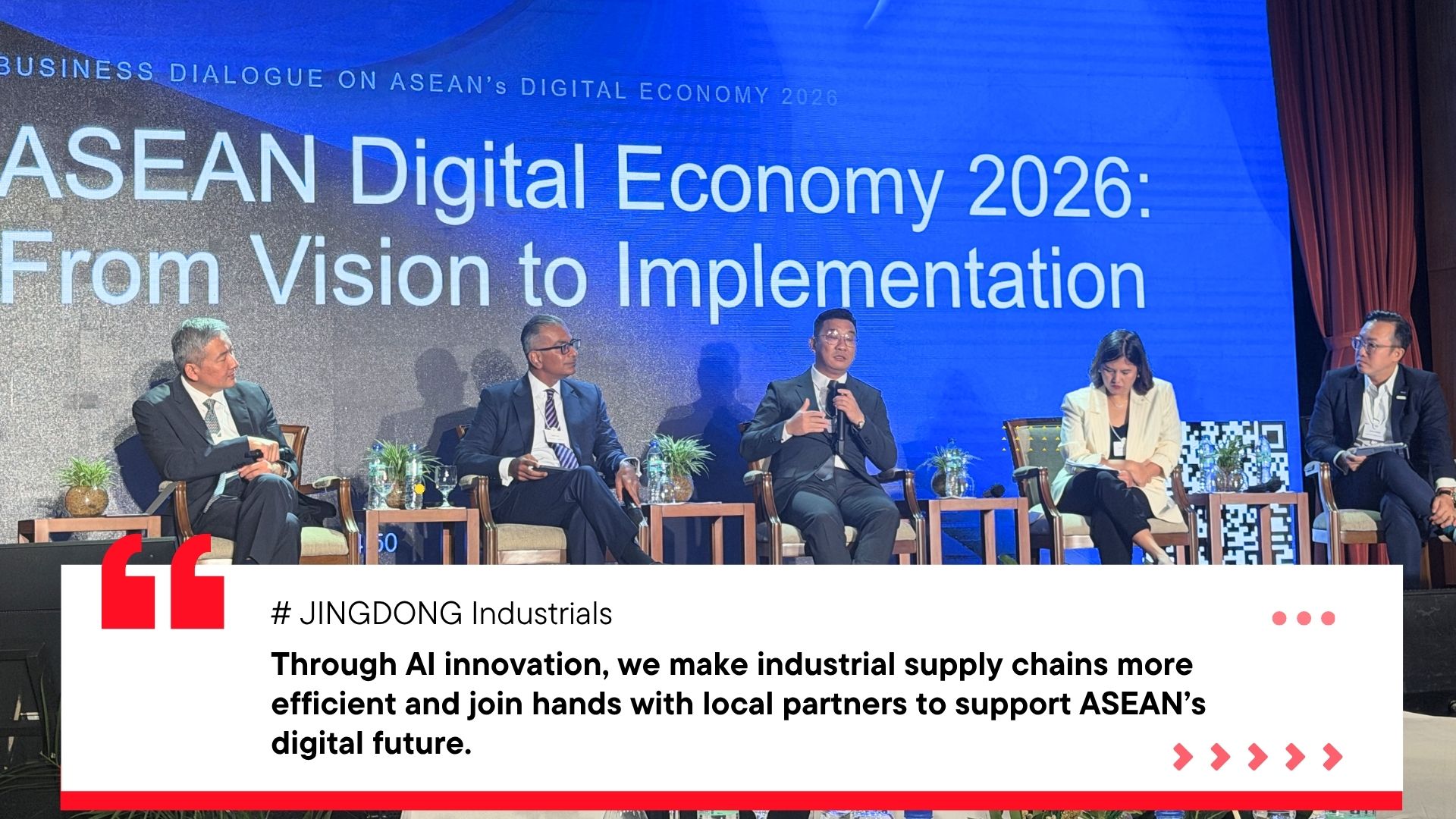
Peter Chen, Head of JINGDONG Industrials Asia Pacific, participated in the high-level panel “ASEAN Digital Economy 2026: From Vision to Implementation”. The discussion explored how public- and private-sector collaboration can translate ASEAN’s digital ambitions into tangible outcomes for businesses and the wider economy. His main argument was that technology brings the most value when it is applied to real-world problems. AI becomes meaningful when it reaches warehouses, customs processes, small businesses and other everyday parts of the economy.
Chen also exchanged perspectives with senior government and business representatives during the programme on the development of ASEAN’s digital economy and opportunities for deeper regional collaboration.
Bringing AI into Real-World Supply Chains
For JINGDONG Industrials, the value of AI lies not simply in advances in model capabilities, but in how effectively the technology can be integrated into real business operations.
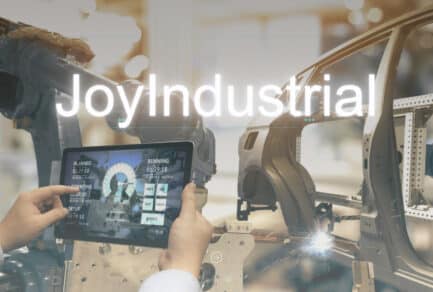
The company is applying AI across industrial supply chain scenarios including procurement, production planning, equipment maintenance, warehousing, transportation and quality management. Its recently upgraded JoyIndustrial 2.0 industrial foundation model supports an AI application framework spanning different stages of procurement, helping businesses improve decision-making and operational efficiency.
As AI is increasingly woven into industrial operations, Chen noted that technology needs to work alongside supply chain expertise and a strong understanding of local business environments. “Localization is not about simply replicating a model from another market. It is about building capabilities with local partners, developing local talent and strengthening local supply chains, while improving the transparency and connectivity of the broader network,” he said.
Building Supply Chains Around Local Needs
JINGDONG Industrials has been expanding its local supply chain and service capabilities across Southeast Asia, including Thailand, Indonesia, Malaysia and Vietnam, serving businesses in sectors such as automotive manufacturing, electronics, electrical equipment, energy and automotive components.
In Thailand, for example, the company has developed multiple fulfillment models to accommodate different procurement needs. Locally sourced products can be delivered through local supply channels, while longer-cycle procurement can draw on a broader sourcing network. For more time-sensitive requirements, locally stocked inventory can support delivery within two to three days. Its inventory facility in the Laem Chabang port area also provides proximity to key industrial areas, with materials able to reach Rayong in around one hour and the Bangkok area in around two hours.
This localized approach extends beyond logistics and fulfillment. JINGDONG Industrials is also working to strengthen local partnerships and develop local teams as its business grows across the region.
“As we grow internationally, our goal is to become part of the local business ecosystem,” Chen said. “That means working with local partners, building local supply chain and fulfillment capabilities, and investing in local talent. Southeast Asia has an impressive pool of young talent, and developing those capabilities locally will be important for the region’s long-term industrial growth.”
Contributing to ASEAN’s Digital Economy Dialogue
The World Economic Forum’s Manila dialogue brought together around 150 senior representatives from governments, businesses, international organizations, civil society and academia to explore how ASEAN can turn its digital ambitions into practical outcomes. The programme also featured the launch of the ASEAN Digital Economy Outlook 2026 and discussions on the implementation of the ASEAN Digital Economy Framework Agreement (DEFA), AI and digital trade, MSME participation, interoperability and digital trust, with a broader focus on strengthening regional connectivity and building a more integrated and inclusive digital economy.
JINGDONG Industrials’ participation reflects its continued focus on Southeast Asia as an important long-term market and its commitment to engaging in regional conversations on digitalization, supply chains and industrial development.
As ASEAN moves from digital ambition toward implementation, JINGDONG Industrials will continue to engage with local businesses, partners and stakeholders, while investing in local capabilities, partnerships and technology applications that respond to the practical needs of businesses across the region.
(vivian.yang@jd.com)
Aug 28, 2026|
AI-Powered, ESG-Embedded Industrial Supply Chain Innovation Earns JINGDONG Industrials 2026 Sedex Technoical Innovation Award
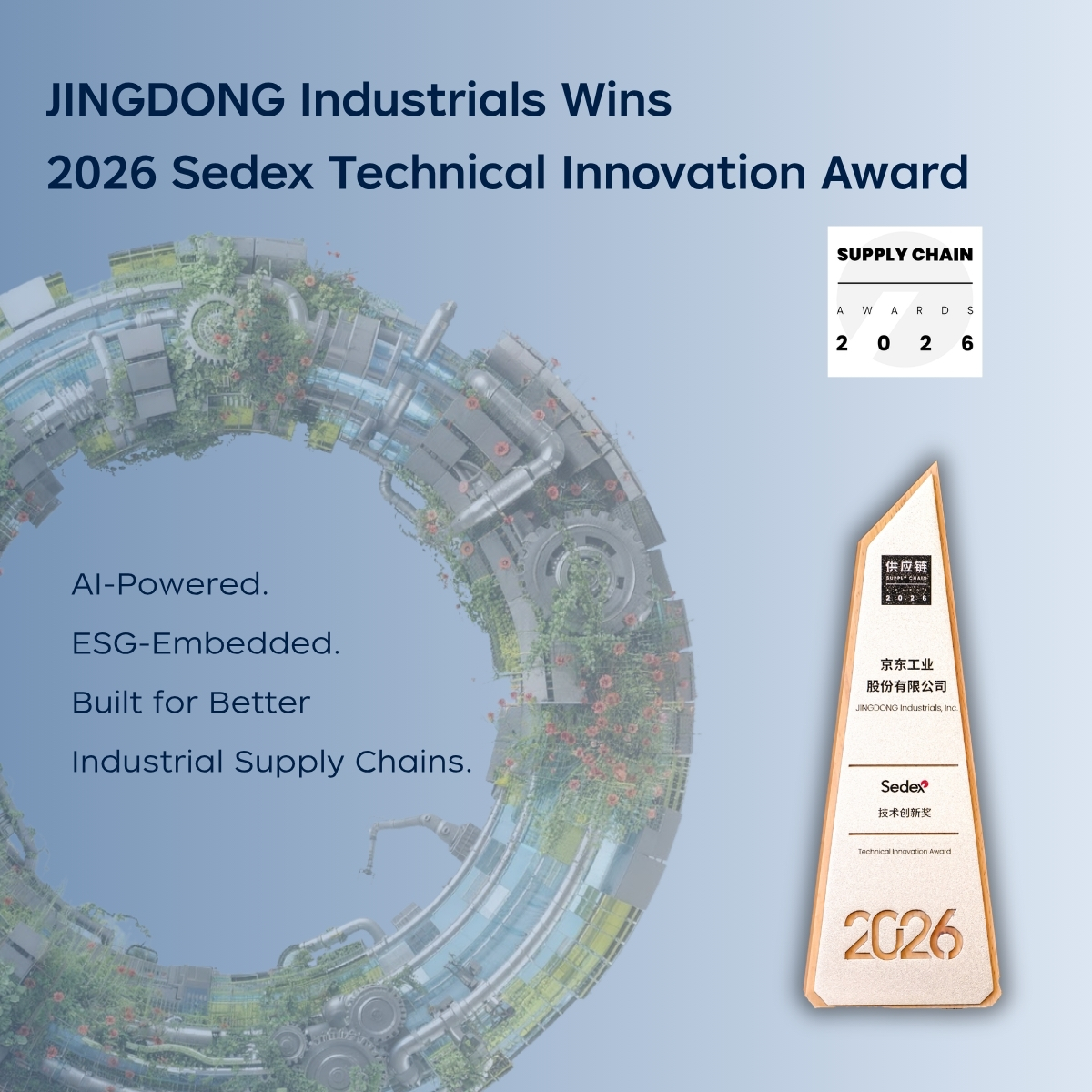
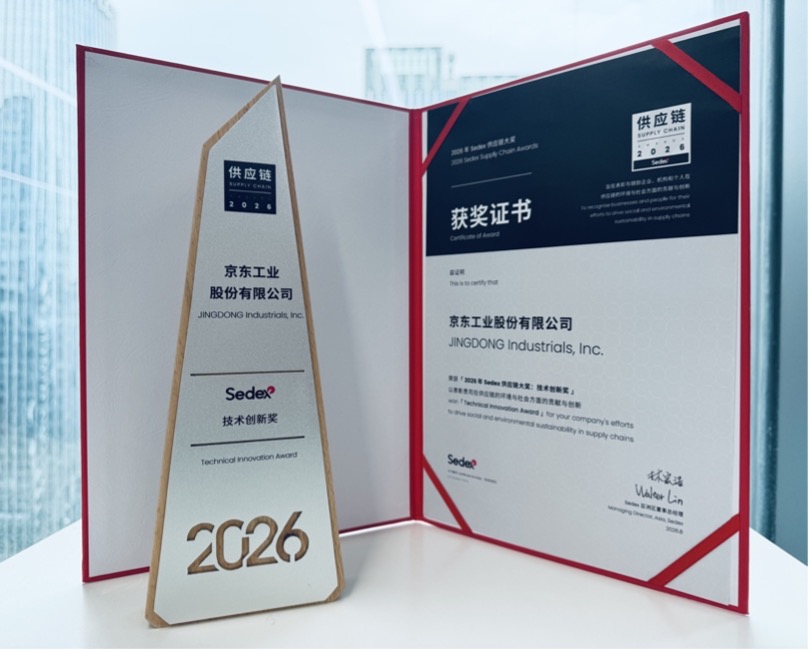
BEIJING, 27 August 2026 — JINGDONG Industrials, a leading industrial supply chain technology and service provider under JD.com, has won the Technical Innovation Award among the 2026 Sedex Supply Chain Awards, recognising its use of AI and technical solutions to embed ESG capabilities into industrial supply chain operations. The company was also nominated for the Social Impact Award.
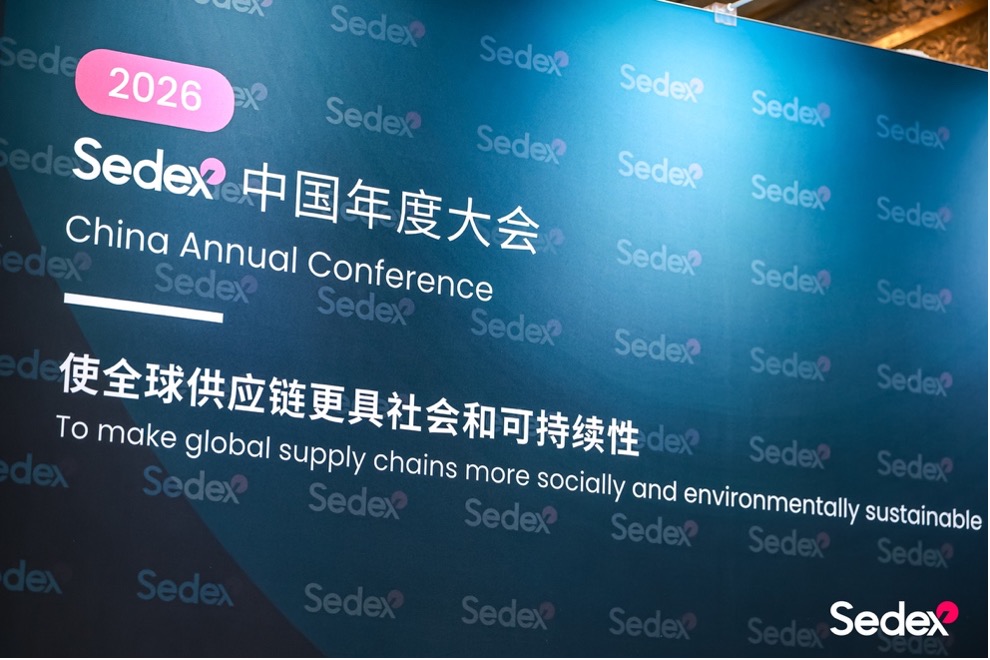
JINGDONG Industrials was the only industrial supply chain technology and service company to receive the Technical Innovation Award this year during Sedex China Annual Conference. Sedex is one of the world’s leading platforms for responsible and sustainable supply chains, used by businesses globally to assess, manage and improve environmental, social and ethical performance across their value chains.
From Supply-Demand Matching to Carbon Management: AI Tackles Real Supply Chain Challenges
Industrial supply chains often face a common set of challenges: mismatches between supply and demand that create resource waste, fragmented ESG data that is difficult to manage, and compliance risks that can be hard to identify early.
JINGDONG Industrials addresses these challenges by combining its Taipu digital-physically integrated industrial supply chain solution with JoyIndustrial, its proprietary industrial supply chain large language model. Built on data covering more than 97.7 million industrial product SKUs and experience across over 40 industrial sectors, JoyIndustrial uses a multi-agent architecture to support intelligent decision-making across industrial supply chain scenarios.
Together, these capabilities support three key areas: intelligent supply-demand matching, end-to-end carbon management, and AI-enabled compliance and risk management. The approach is designed to embed ESG into day-to-day supply chain operations, rather than treating sustainability as a standalone reporting exercise.
1,780 Tonnes of Carbon Reduction: Turning Technology into Measurable Impact
The impact is already measurable. Through smarter supply-demand matching and logistics optimisation, JINGDONG Industrials helps customers reduce unnecessary transportation and resource waste.
The company has also partnered with suppliers to scale the use of PCR (post-consumer recycled) packaging through its technology solutions. From May to December 2025, these initiatives contributed to an estimated 1,780 tonnes of carbon reduction, with the underlying technologies now adopted across more than 3,000 enterprise customers.
On compliance, its AI-powered risk management engine covers 100% of identified risk scenarios and achieves a reported 96% risk-interception rate, helping customers detect supplier compliance risks earlier and strengthen quality management across the supply chain.
“The recognition from Sedex reinforces our conviction that digitalisation and sustainability must advance in tandem across the industrial supply chain,” said a spokesperson for JINGDONG Industrials. “Our focus is on turning data and AI into practical tools that help businesses improve efficiency, manage risk, and make more informed sustainability decisions.”
Building a More Responsible Industrial Supply Chain Ecosystem
As of the first half of 2026, JINGDONG Industrials served approximately 13,000 key enterprise customers, including 60% of China’s Fortune 500 companies and more than 40% of the Global Fortune 500 companies operating in China.
Its responsible sourcing practices also extend upstream. The company has established lifecycle compliance management covering approximately 230,000 suppliers, with all onboarded suppliers required to sign anti-commercial-bribery agreements. JINGDONG Industrials has also obtained international certifications, including ISO 45001, ISO 27001, and ISO 27701.
These capabilities are becoming increasingly relevant as industrial companies navigate ever more complex sourcing, sustainability, and compliance requirements. JINGDONG Industrials is expanding its international presence across Europe, Southeast Asia, the Middle East, and Latin America, extending its digital procurement and supply chain capabilities to more global customers and partners.
The company continues to work with upstream manufacturers on product carbon-footprint management, giving customers more quantifiable data to support lower-carbon procurement decisions. By embedding sustainability into everyday sourcing and supply chain operations, JINGDONG Industrials aims to make responsible procurement more practical and scalable across the industrial ecosystem.
About JINGDONG Industrials
JINGDONG Industrials (HKEX: 7618) is a leading industrial supply chain technology and service provider under JD.com, dedicated to transforming how enterprises procure and manage industrial products.
Leveraging JD.com’s supply chain, logistics, and digital capabilities, JINGDONG Industrials provides digital procurement and supply chain solutions across a broad range of industrial products, including MRO (maintenance, repair, and operations), industrial materials, tools, and equipment. Its customers span industries including manufacturing, energy, and construction.
JINGDONG Industrials is also expanding its international operations across Europe, Southeast Asia, the Middle East, and Latin America, working with customers and partners to build more efficient, resilient, and responsible industrial supply chains.
(vivian.yang@jd.com)
Jul 2, 2026|
JINGDONG Industrials’ JoyIndustrial LLM Featured in World Economic Forum Human-Led AI White Paper at Summer Davos 2026
- JINGDONG Industrials’ supply chain innovation has been highlighted in the World Economic Forum’s new AI white paper at Summer Davos 2026.
- The company’s AI-powered data platform, IndLens, uses 27 autonomous agents to compress data processing times from months to hours, boosting efficiency tenfold.
- By automating tedious and repetitive data tasks, JINGDONG Industrials’ technology frees workers to focus on innovation, driving growth for corporate clients and partners.
The World Economic Forum has highlighted JINGDONG Industrials, a leading industrial supply chain technology and service provider under JD.com, for its ability to harness the power of AI in its newly released white paper, “Asia’s Human-led AI Opportunity: A Framework for Transformation.” Published ahead of the Annual Meeting of the New Champions, also known as Summer Davos, the report examines how the company leverages AI to establish unified industry standards and a shared digital ecosystem, unlocking a leap in supply chain productivity while elevating the role of human capital from routine labor to high-value innovation.
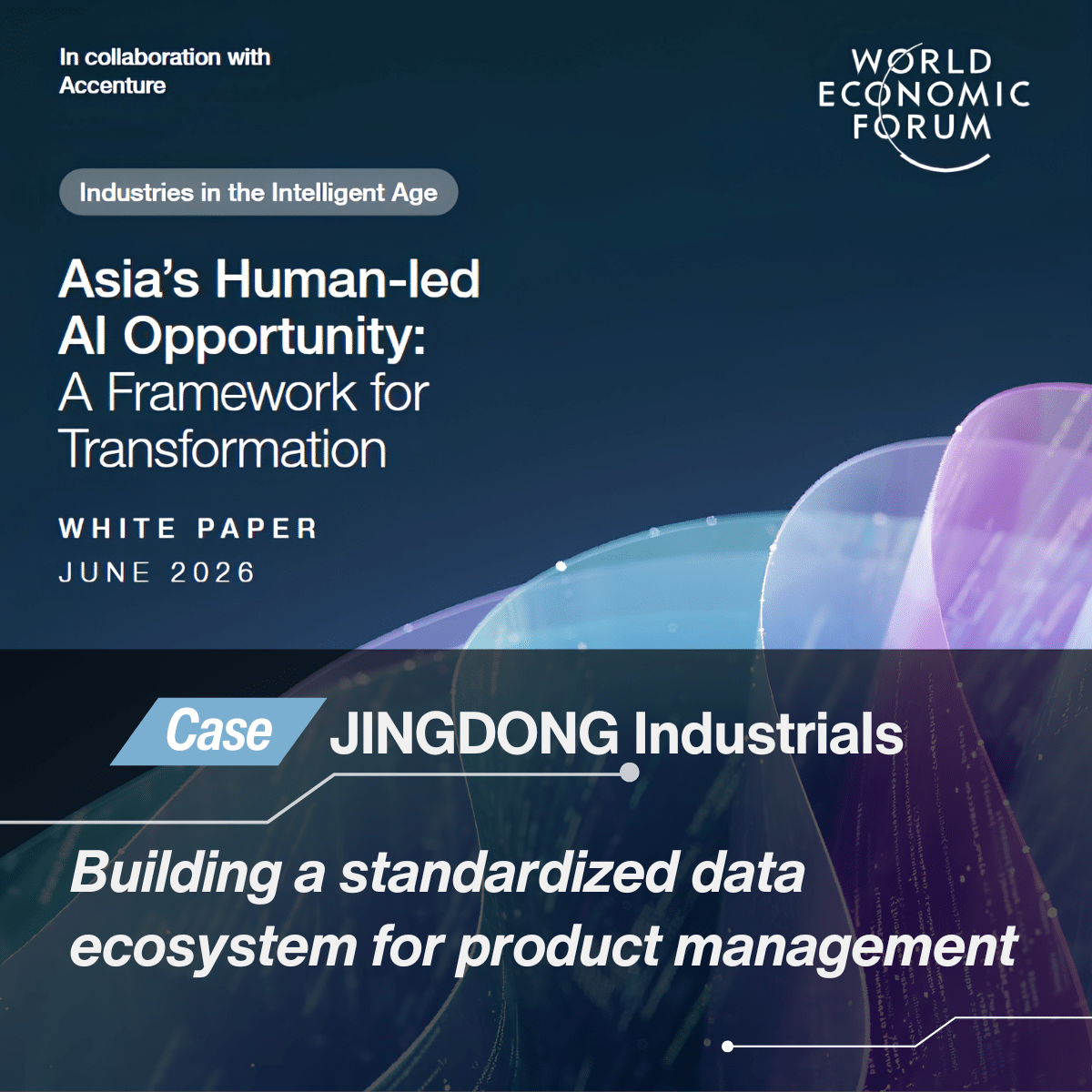
This recognition comes amid growing discussions across the globe about scaling AI to fuel real economic change. The white paper identifies a major bottleneck in the current technology landscape, noting that while 77% of organisations across Asia have adopted advanced AI, fewer than a third have managed to extract sustained, systemic value. The report argues that the primary challenge is no longer technological capability, but rather a lack of shared infrastructure and end-to-end process integration across value chains.
The solution developed by JINGDONG Industrials directly solves one of the most persistent inefficiencies in the industrial sector, which is highly fragmented product data. Historically, inconsistent technical specifications and naming conventions across different suppliers have driven up transaction costs and stalled procurement. To bridge this gap, the company leverages its proprietary JoyIndustrial LLM alongside the Mercator Standard Product Library. Together, they establish a unified digital parameter system and identical product algorithms, creating a standard data ecosystem that eliminates redundancy and ensures high-quality data integration.
At the operational core of this architecture is IndLens, a state-of-the-art product data governance platform powered by 27 autonomous AI agents. IndLens compresses data processing timelines from months to mere hours, delivering a tenfold increase in efficiency and an 80% reduction in manual labour costs. This shift effectively automates repetitive data management, allowing the industrial workforce to pivot away from manual input and focus on strategic, high-value innovation.
“Scaling AI is fundamentally a human systems challenge that requires treating workflow redesign as a primary agenda rather than a secondary effect,” said Maria Basso, Head AI Applications and Impact at the World Economic Forum. “As organizations scale AI,success will depend on shared data standards, interoperable platforms, and effective collaboration to bridge the gap between AI deployment and sustainable, ecosystem-wide value creation.”
This structural approach underpins an expanding commercial footprint. In the first quarter of 2026 alone, the company used nearly 40 specialised AI agents, supporting over 3,000 major corporate clients. Today, its JoyIndustrial LLM and digital supply chain solutions optimise procurement, demand forecasting, and automated ordering for an expansive roster of large-scale enterprises, including Fortune Global 500 companies.
To drive industry-wide modernisation, JINGDONG Industrials also launched the Baichuan Initiative. This collaborative programme invites upstream and downstream partners to co-develop an industrial ecosystem across data, models, and commercial applications. By sharing its digital infrastructure, the company enables partners, many of whom possess valuable specialist data but lack the resources to train standalone models, to unlock clear, measurable value.
Ultimately, this technological evolution is designed to elevate the role of the workforce within the industrial sector. By positioning AI as supportive infrastructure, the company aims to foster a collaborative environment in which technology manages complexity and humans drive creative breakthroughs.
“Our philosophy is simple: let AI handle the heavy lifting of industrial data management so that humans can be redeployed toward strategic growth and business breakthroughs,” said a spokesperson for JINGDONG Industrials. “Through the continuous evolution of our JoyIndustrial LLM and initiatives like Baichuan, we are committed to sharing a standardised digital framework with our global partners to build a more streamlined, resilient, and human-centric industrial ecosystem.”
(vivian.yang@jd.com)
 Trust and Reliability Put JD.com at No. 2 in Inside Retail’s Asia Brand Conviction Index