Dec 14, 2020|
Nearly 20,000 Orders Made by DCEP in First 24 Hours on JD
by Ling Cao
During Suzhou’s Double 12(December 12) Shopping Festival, JD’s online platform received nearly 20,000 orders by DCEP (Digital Currency Electronic Payment) in the first 24 hours starting from 8pm on December 11. Among them the largest online payment was over RMB 10,000 yuan.
According to JD Digits’ data, the first online order by DCEP was made by post-1990s customer Mr. Wu, who bought a foot-soaking basin and made payment successfully in just 2 seconds, in which the payment process was only made in 0.5 seconds. Younger generations dominated the consumption by DCEP. JD data showed that 41.7% were born post-1980s, and 37.4% were born post-1990s. Over half of the customers placed orders within one hour after the festival kicked off.
Suzhou is the first city to test online consumption scenarios by DCEP, with JDD providing support in technology and services, helping connect financial institutions with online and offline purchasing applications.
As Fei Peng, head of the DCEP program at JDD said during the shopping festival kickoff event, “JD has over 441 million annual active users, and nationwide logistics services, as well as omnichannel operations, and these advantages will help promote the building of the DCEP ecosystem.”
Sep 9, 2026|
From AI Models to the Physical World: Highlights from JDDiscovery 2026
AI is often discussed through models, benchmarks and digital productivity. At JDDiscovery 2026 in Beijing, JD.com focused on what AI can accomplish in the physical world from warehouses and delivery routes to retail, healthcare, smart homes, industrial supply chains and beyond.
Under the theme “JoyAI: Leaping into the Physical World,” JD.com outlined its goal to build the “World’s Largest Operational Platform for the Physical World”. As Cao Peng, Chairman of JD.com’s Technology Committee and President of JD Cloud, noted, JD.com’s AI was not born only in research papers. It has been refined “order by order” across production lines, warehouses, delivery stations and the full supply chain process.
Here are three highlights from JDDiscovery 2026 that show how JD.com is putting AI to work.
World Models Move AI Closer to the Physical World
An optimal route for hundreds of millions of parcels, calculated in seconds. A mechanical component designed through a simple conversation and turned into a 3D-printed prototype. A medical imaging agent that can proactively examine a scan. These examples show what becomes possible when AI moves beyond the screen and into real-world operations.
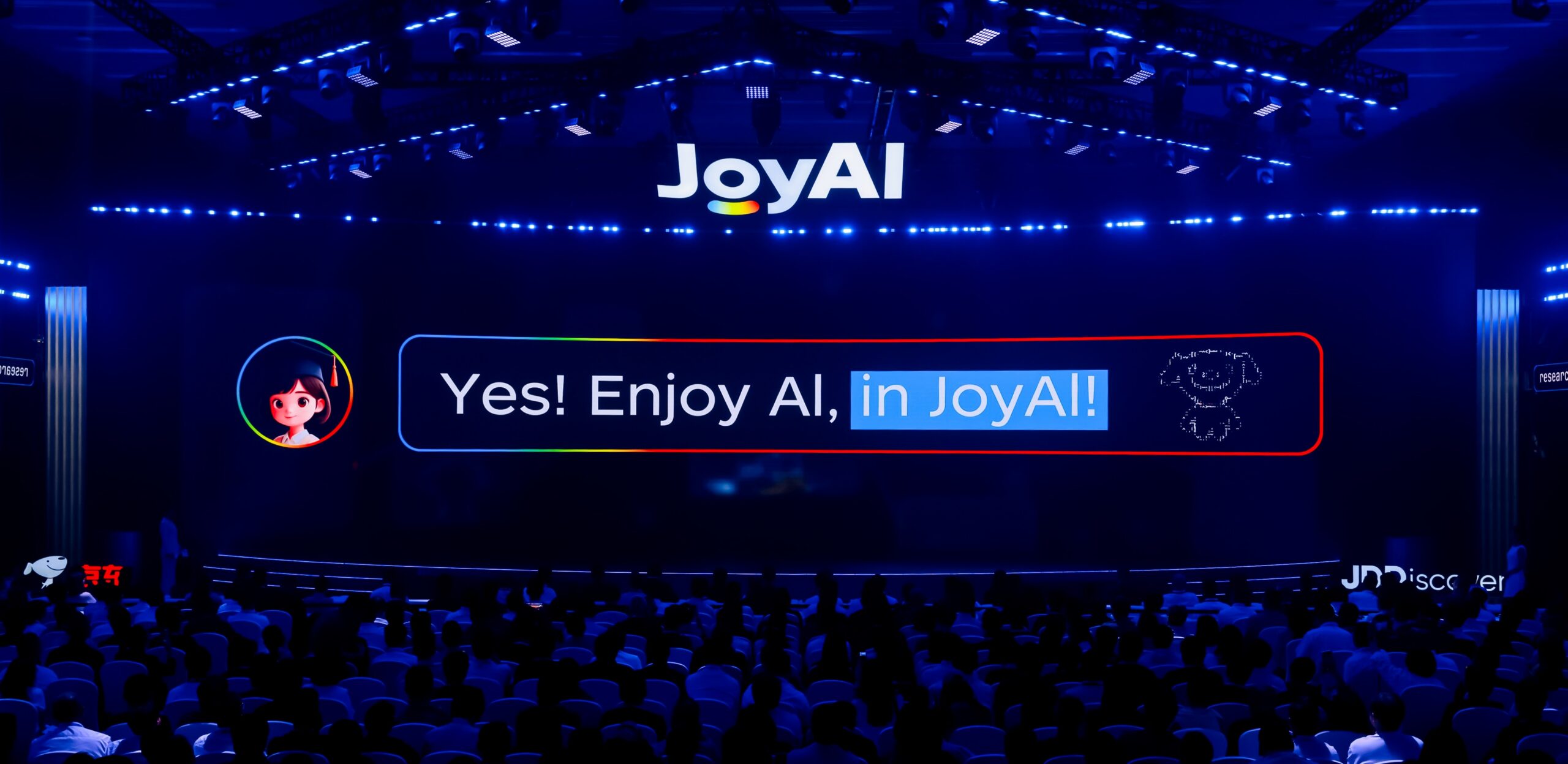
Behind them is JD.com’s JoyAI foundation model portfolio, which spans speech, image, video, real-time interaction, world models and embodied AI.
At JDDiscovery, the company added its new world model, JoyAI-Echo WM, an interactive audiovisual model that combines native audio-video generation with user control. It takes AI-generated content beyond something users simply watch, transforming it into virtual environments they can enter, interact with and explore.
JD.com also showcased industry-specific models and AI agent applications. JINGDONG Logistics’ Meta Brain 3.0 coordinates decision-making across warehousing, transport and delivery, reducing the time needed to calculate optimal routes for hundreds of millions of parcels from minutes to seconds.
JoyIndustrial 2.0, meanwhile, allows engineers to describe a mechanical design in everyday language and turn it into a physical prototype through 3D printing. In healthcare, JoyAI-Med 3.0 brings medical imaging, research, clinical documentation and multidisciplinary consultation into a unified model that is already being used across JINGDONG Health services.
AI Moves into Everyday Life: Shopping, Health and the Home
Of course, AI is not limited to robots on warehouse floors. It can also help someone choose a washing machine, collect a blood pressure reading with healthcare services, or allow devices across the home to respond more intelligently.
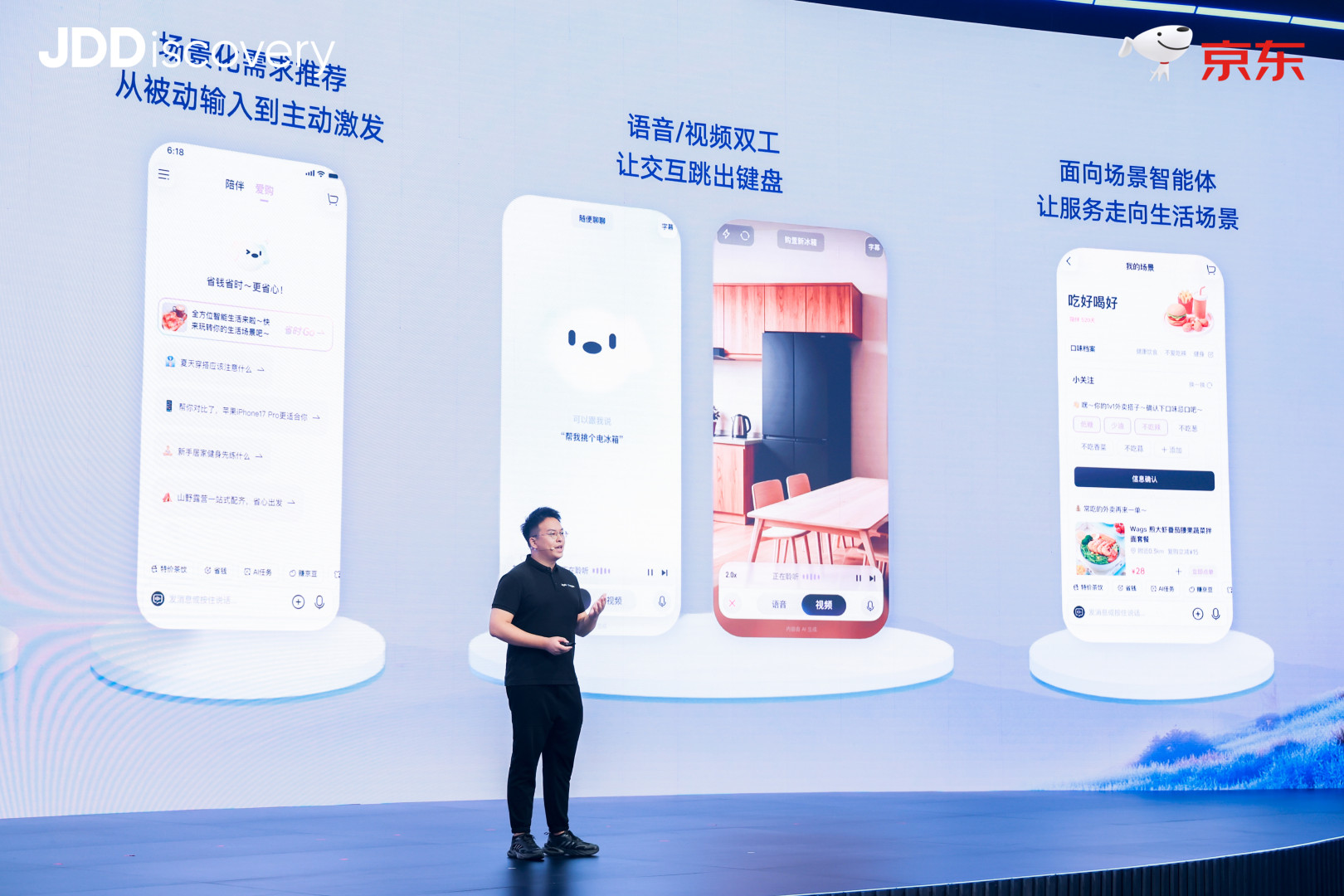
With the release of JD.com app ver.16.0 on 9 September, users can now access “Dongdong”, JD.com’s AI shopping assistant, throughout the shopping journey.
Instead of simply returning search results, Dongdong is designed to understand what customers are trying to accomplish. It can break down broad or unclear requests and match them with relevant products and services across JD.com’s ecosystem.
Users can also interact with Dongdong through voice and video. Someone looking for furniture or an appliance, for example, can show the assistant their available space, interior style or a problem they want to solve. Dongdong can then use that visual context to provide more relevant and practical suggestions.
In healthcare, JINGDONG Health introduced its first end-to-end specialist AI agent, designed to reproduce the diagnostic logic and clinical expertise of leading doctors. JINGDONG Health is also linking AI with devices and services.
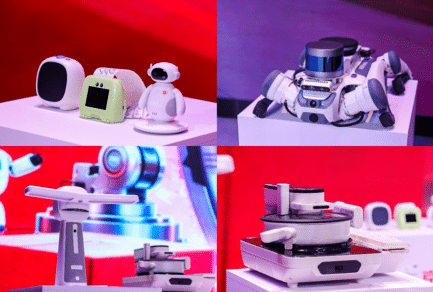
In the home, JoyInside gives connected devices an “AI brain”, helping them move from responding individually to providing more proactive, whole-home services. The technology has already been adopted through partnerships with more than 200 brands across appliances, home products, toys and robotics.
From Prototype to Scale: Building the Infrastructure for Robotics
Building a robot is difficult. Turning it into a product that can be manufactured, deployed and maintained at scale is harder. JD.com’s new Physical AI Acceleration Plan is designed to address that challenge across the full robotics lifecycle.
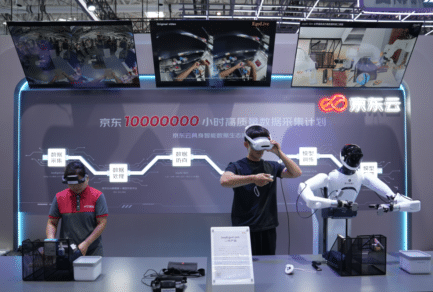
The plan begins with one of the industry’s biggest constraints: training data. JD Cloud aims to build the world’s largest embodied AI data collection centre, gathering more than 10 million hours of video from real-world human activities over the next two years.
JINGDONG Property plans to establish more than 80 RoboBase robotics industry hubs across China over the next five years, creating the world’s largest network of robotics industry bases. The hubs will integrate product demonstration and delivery, R&D, pilot assembly, data collection, manufacturing, maintenance and product iteration.
JINGDONG Industrials has launched an alliance connecting robot manufacturers with component suppliers, supporting its goal to become the world’s largest supplier of robotics components.
JINGDONG Retail plans to commit RMB 10 billion in resources by 2028. It aims to become the world’s largest robotics retail channel by helping 100 robotics brands each achieve RMB 1 billion in independent sales and reaching 10 million users.
Logistics already provides a significant proving ground. JINGDONG Logistics aims to build the world’s largest-scale application of embodied robots and advance autonomous operations across the entire logistics process.
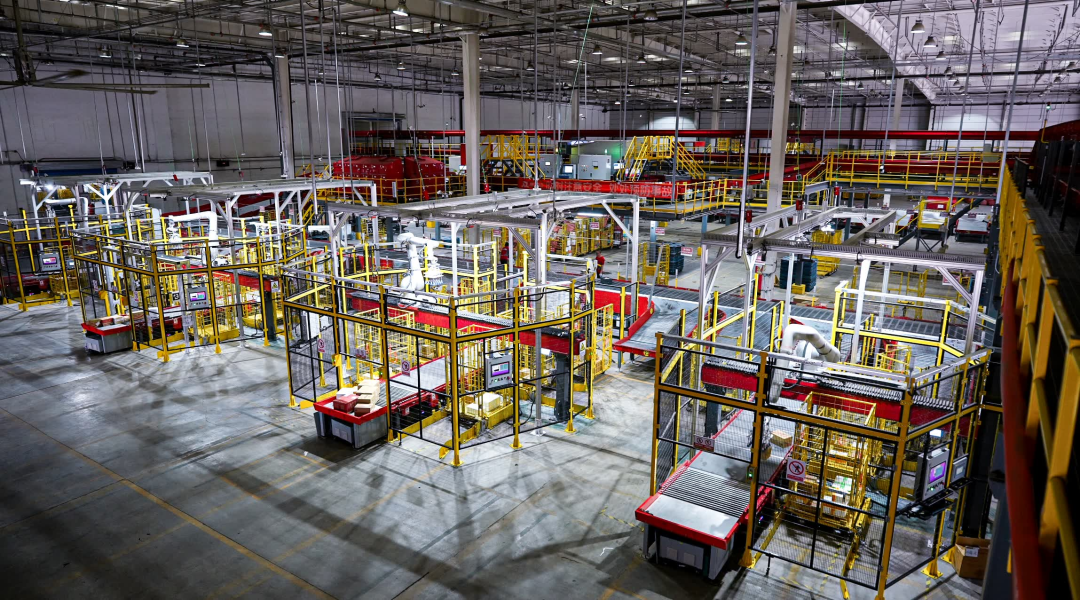
The increasing use of robotics will also require support after deployment. JINGDONG Logistics currently operates eight repair centres in China and plans to extend its robotics after-sales capabilities and support the creation of more than 100,000 jobs for robotics service engineers, over the next five years.
Sep 3, 2026|
When AI Adapts to People: JD.com’s JoyInside Brings AI Home
JoyInside, JD.com’s AI solution for smart devices, has been named on Fortune China’s Best Designs 2026, recognising its approach to bringing AI into everyday products and creating more intuitive, responsive experiences in the home.
The annual list, released on September 3, recognises designs that address real human needs, solve complex problems, and demonstrate both commercial potential and broader social value. This year, Fortune China highlighted the growing convergence of AI and the physical world as a notable shift shaping product design.
For JoyInside, the idea is straightforward: technology should adapt to people, rather than asking people to adapt to technology.
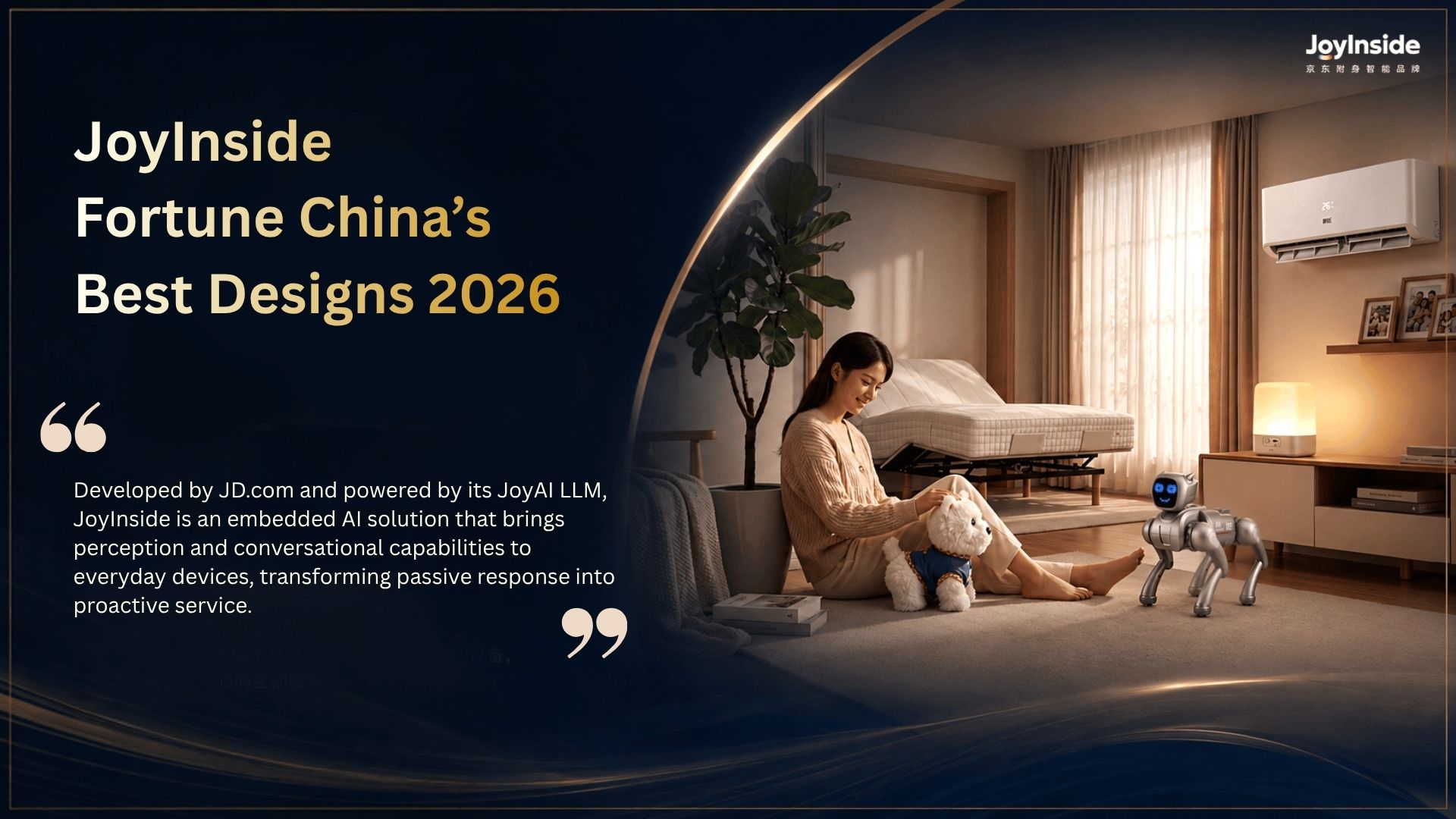
Traditional smart-home experiences often depend on users giving precise commands to individual devices. JoyInside is designed to make these interactions more natural. Through everyday conversation and contextual understanding, connected devices can better interpret what users need and coordinate their responses across different home scenarios.
JD.com demonstrated this concept through its AI Home at the 2026 World Artificial Intelligence Conference (WAIC) in Shanghai. Across a full home setting spanning the living room, kitchen, study and bedroom, visitors could experience how AI connects with physical products. A smart mattress, for example, can adjust based on the user’s physical state, while a connected beverage machine can interpret a casual comment such as “I’m a little thirsty” and respond accordingly.
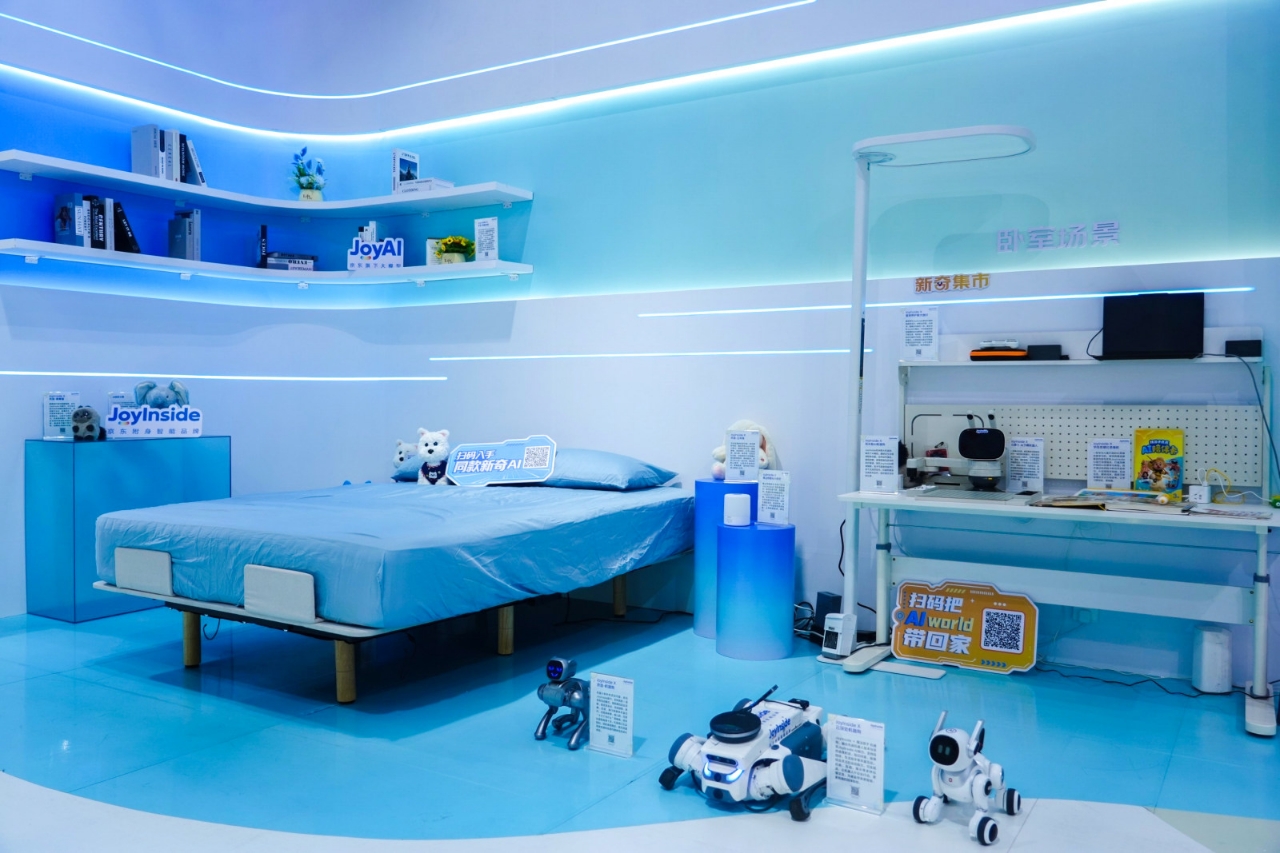
The technology is already moving beyond demonstration environments. JoyInside has established technology partnerships with nearly 200 leading brands across smart homes, kitchen appliances, healthcare devices, intelligent toys, and other categories. During JD.com’s 618 Grand Promotion this year, nearly 100 AI-enabled home products powered by JoyInside were introduced to customers.
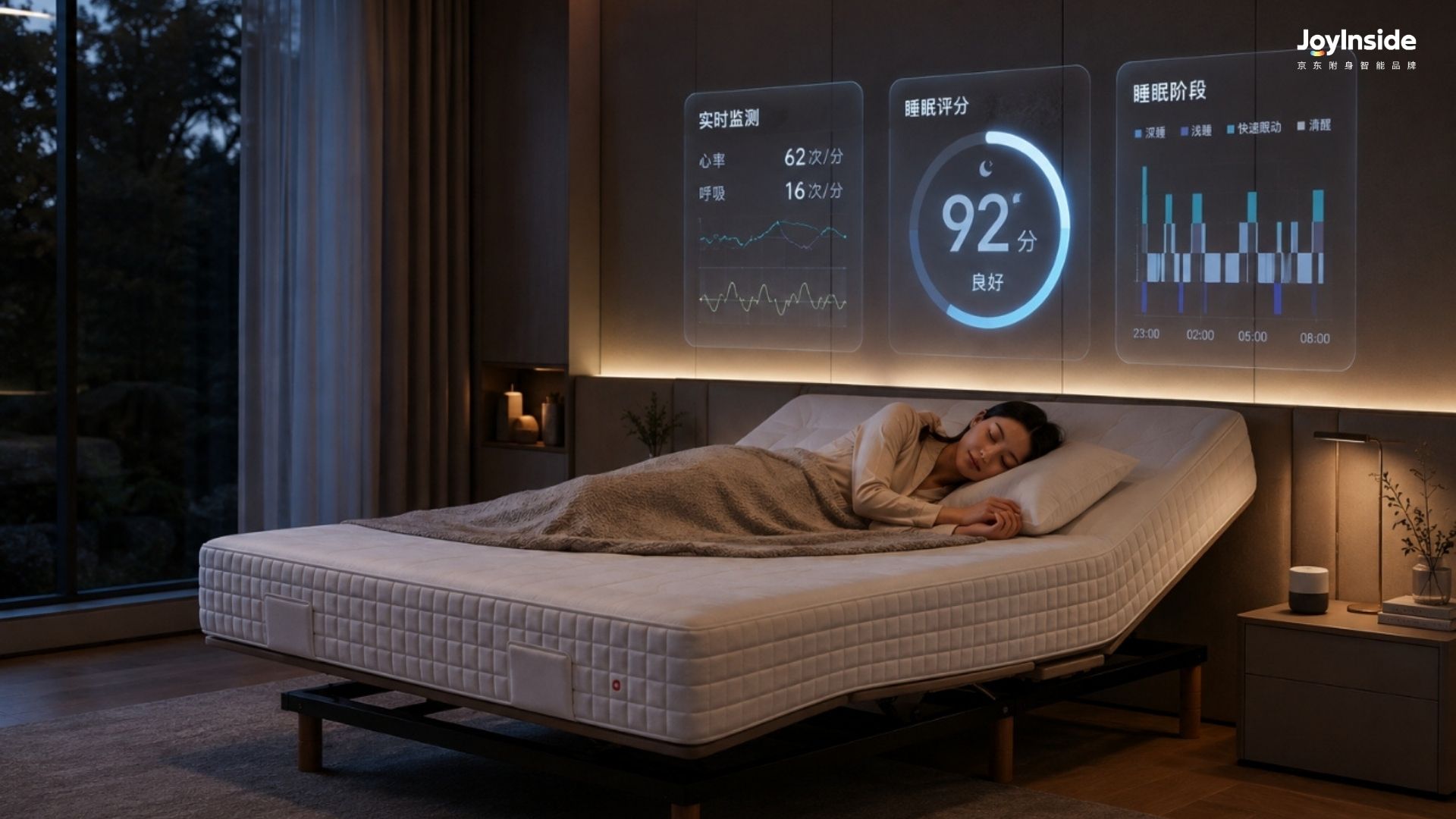
These collaborations show how JoyInside can be applied to different everyday needs. A J.Zao smart mattress combines sleep monitoring with personalised insights, while an AI-enabled wheelchair connected with the JINGDONG Health (also known as JD Health) ecosystem supports features such as real-time location, electronic safety zones and one-touch assistance, helping families stay connected with elderly members.
For brands, JoyInside also provides a way to integrate AI capabilities into existing products without having to build every layer of the technology independently. By working across brands and product categories, JD.com is building an open AI Home ecosystem where appliances and devices can become more responsive to individual needs and work more naturally together.
This reflects a broader direction in JD.com’s approach to AI: the value of a model is ultimately measured by what it can do in real workflows and everyday life, not simply by its size or technical specifications.
JD.com is exploring this intersection between AI and the physical world across a range of real-world environments. In the home, JoyInside brings AI into appliances, health devices and toys. In logistics, JINGDONG Logistics (also known as JD Logistics) is applying embodied AI to tasks such as handling and moving goods in warehouse operations.
These applications draw on JD.com’s more than two decades of experience in retail, supply chains, logistics and services, where AI can be tested against real operational needs and continuously improved through practical use.
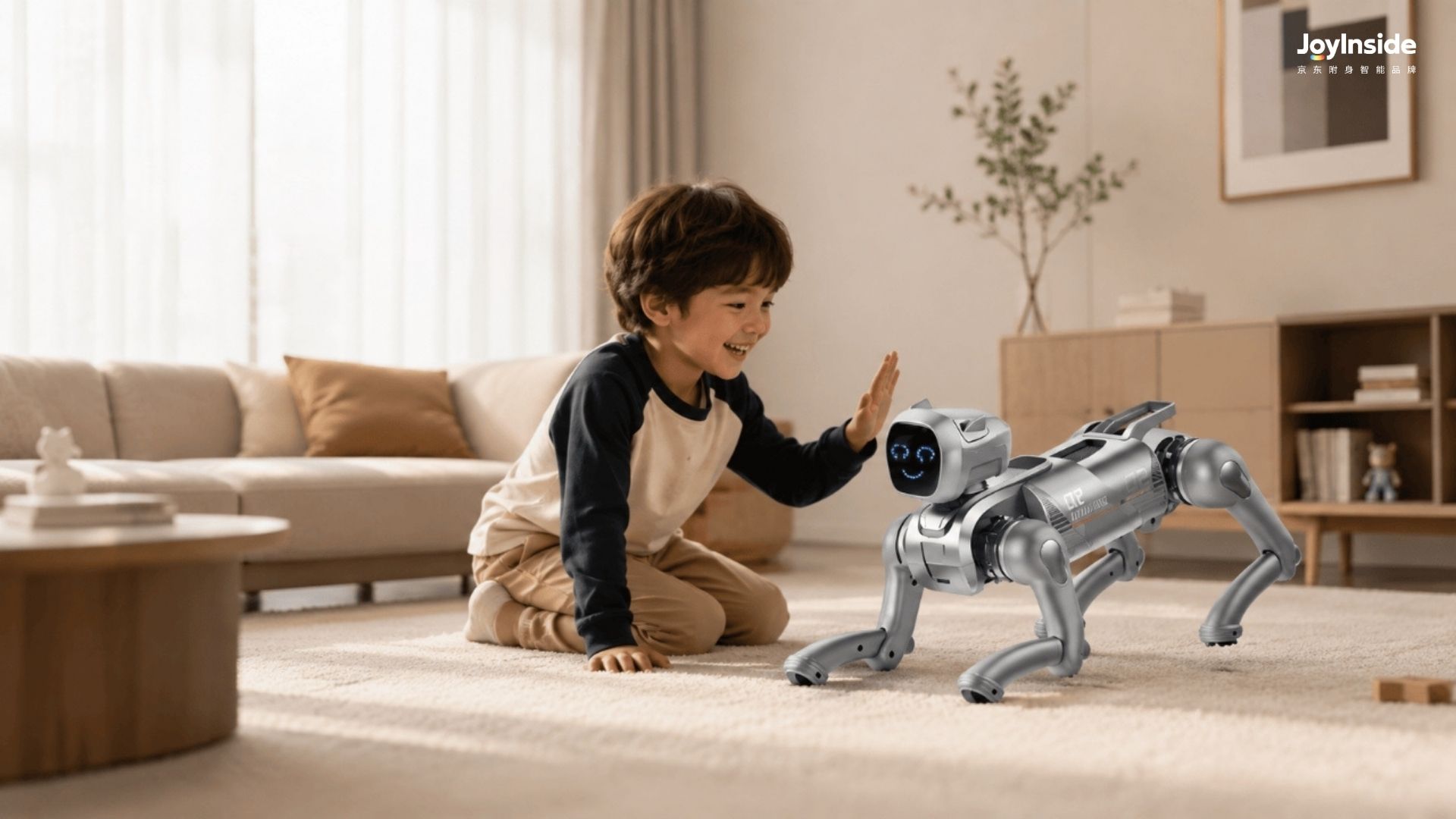
For JoyInside, the Fortune China recognition reflects a simple design philosophy: start with a real human need, then determine how AI can make the experience better. As more brands connect products to the ecosystem, JD.com aims to make AI less about what happens behind a screen and more about useful, intuitive experiences people can see and feel in everyday life.
(vivian.yang@jd.com)
 JD Central Celebrates Successful 12.12 Campaign in Bangkok