Dec 16, 2022|
JD Pet Health Claps with US Brand Zesty Paws to Explore China’s Pet Market
by Vivian Yang
JD Pet Health, the pet care business under JD.com, and Zesty Paws, a US leading multi-condition pet supplement brand under H&H Group, have reached a ground-breaking cooperation agreement on cross-border sales in China.
The cooperation marks the top-rated US pet supplement brand entering Chinese market, with JD Pet Health being its first Chinese retail partner.
“We will continue to explore cooperation in the aspects of marketing, pet health education and more,” said Wenbo Tong, general manager of JD Pet Health. “The cooperation will be conducive to providing more science-based and targeted pet care products and services for pets and pet parents in China.”
Lately rebranded in November, JD Pet Health consolidated health products and medical services for pets as two core businesses to form a closed-loop, all-in-one pet care solution with both online and offline resources for Chinese users.
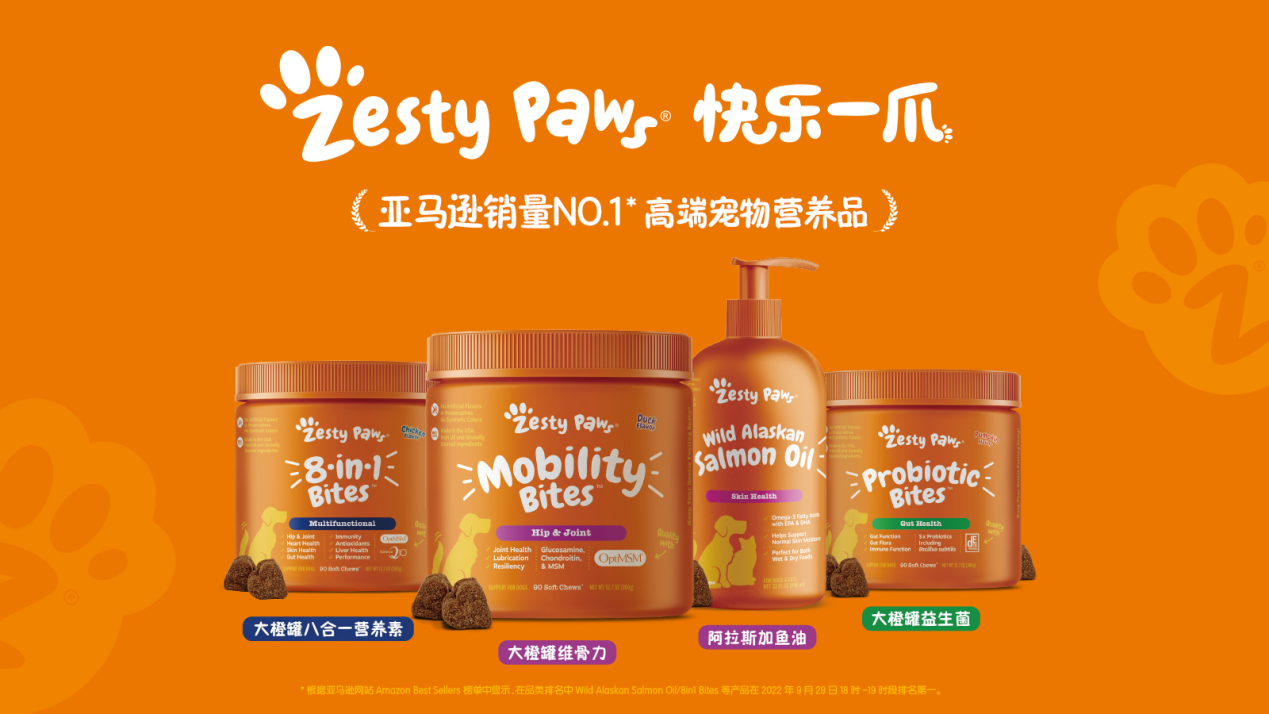
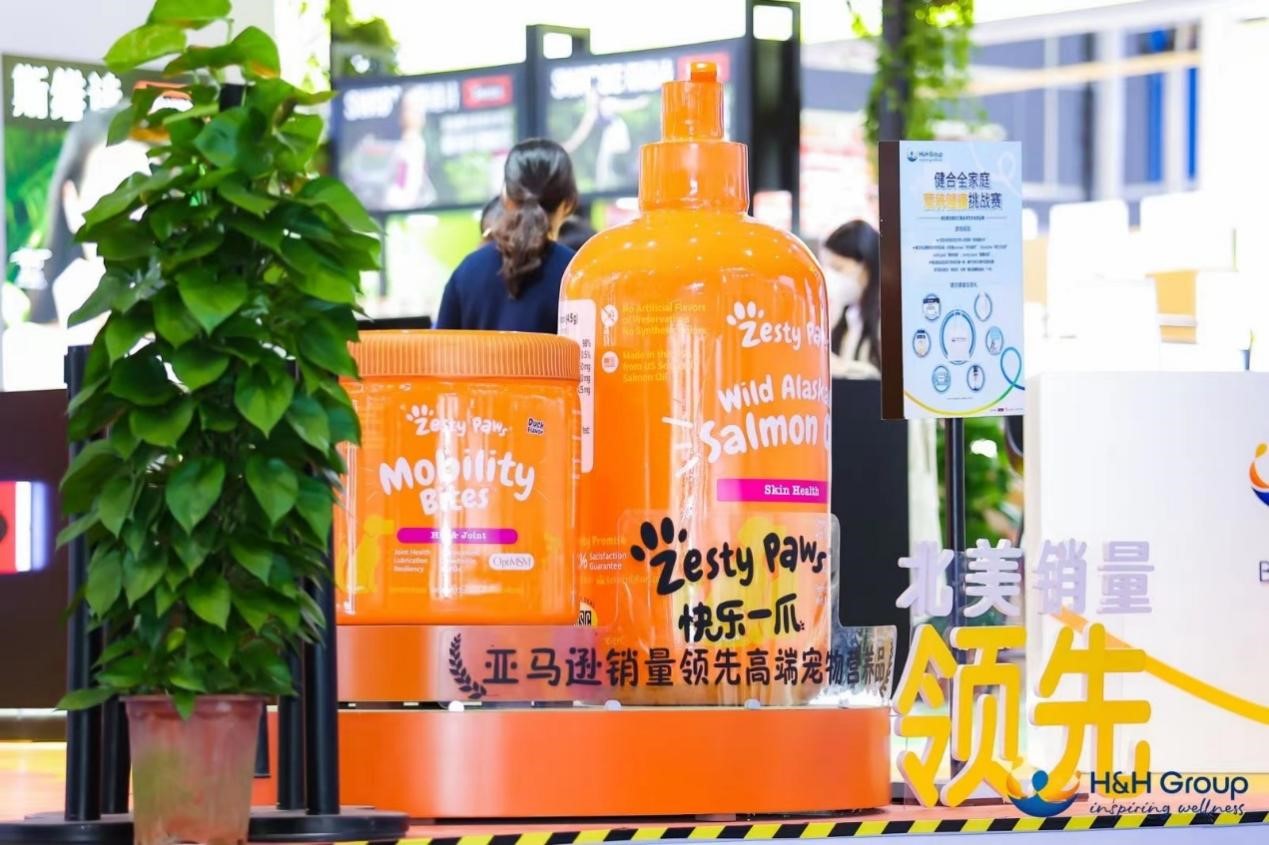
Founded in 2015, Zesty Paws offers a prime line of high-quality supplements for cats and dogs, represented by its bright-orange-bottle-packed star products, such as the Mobility Bites soft chews for dogs, Calming Bites for cats and more. It is currently the #1 best-selling multi-condition pet supplement brand online in the US, with successes in e-commerce channels like Amazon.com and Chewy.com.
This November, Zesty Paws made its debut in China during the fifth China International Import Expo that was held November 5 to 10 in Shanghai.
Data from the 2021 White Paper on China’s Pet Industry showed that China’s urban pet (dogs and cats) population has exceeded 112 million, boosting the consumption market scale to RMB 249 billion yuan by 2021, up 20.6 percent from 2020. With more Gen-Z consumers becoming pet parents, the growing market is eager for greater inspirations and innovations to make sure China’s fur-babies are healthy and happy.
(vivian.yang@jd.com)
Sep 8, 2026|
Beyond the Chatbot: How JD Health Is Bringing AI Into Doctors’ Everyday Work
A doctor reviewing a complex case may need to search through medical literature, check the latest clinical guidelines, assess drug interactions, interpret test results and bring together years of patient information, often under significant time pressure.
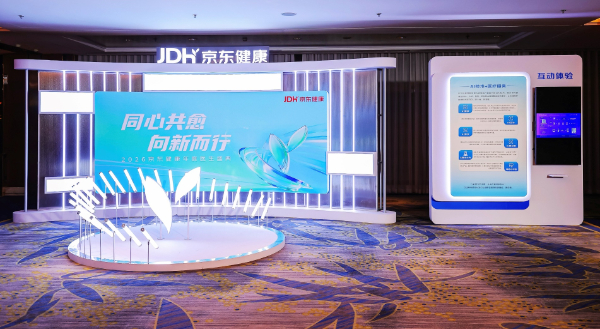
This is where Zhiyi (知医) comes in. Developed by JINGDONG Health (also known as JD Health), Zhiyi is an evidence-based AI assistant built specifically for healthcare professionals. Its Chinese name fittingly brings together the ideas of “professional knowledge” (知) and “doctor” (医).
Launched in January 2026, Zhiyi brings AI into the everyday workflow of doctors in China, supporting clinical decision-making, medical research, patient management and other professional tasks. It has integrated more than 50 million medical papers, clinical guidelines and authoritative journal resources, together with information from more than 160,000 pharmaceutical product instructions. The platform has already served over one million doctors and supported more than 20 million clinical decision-making interactions.
From Finding Information to Understanding the Evidence
Searching for medical information is one thing. Turning it into useful evidence for a particular patient or clinical situation is much harder.
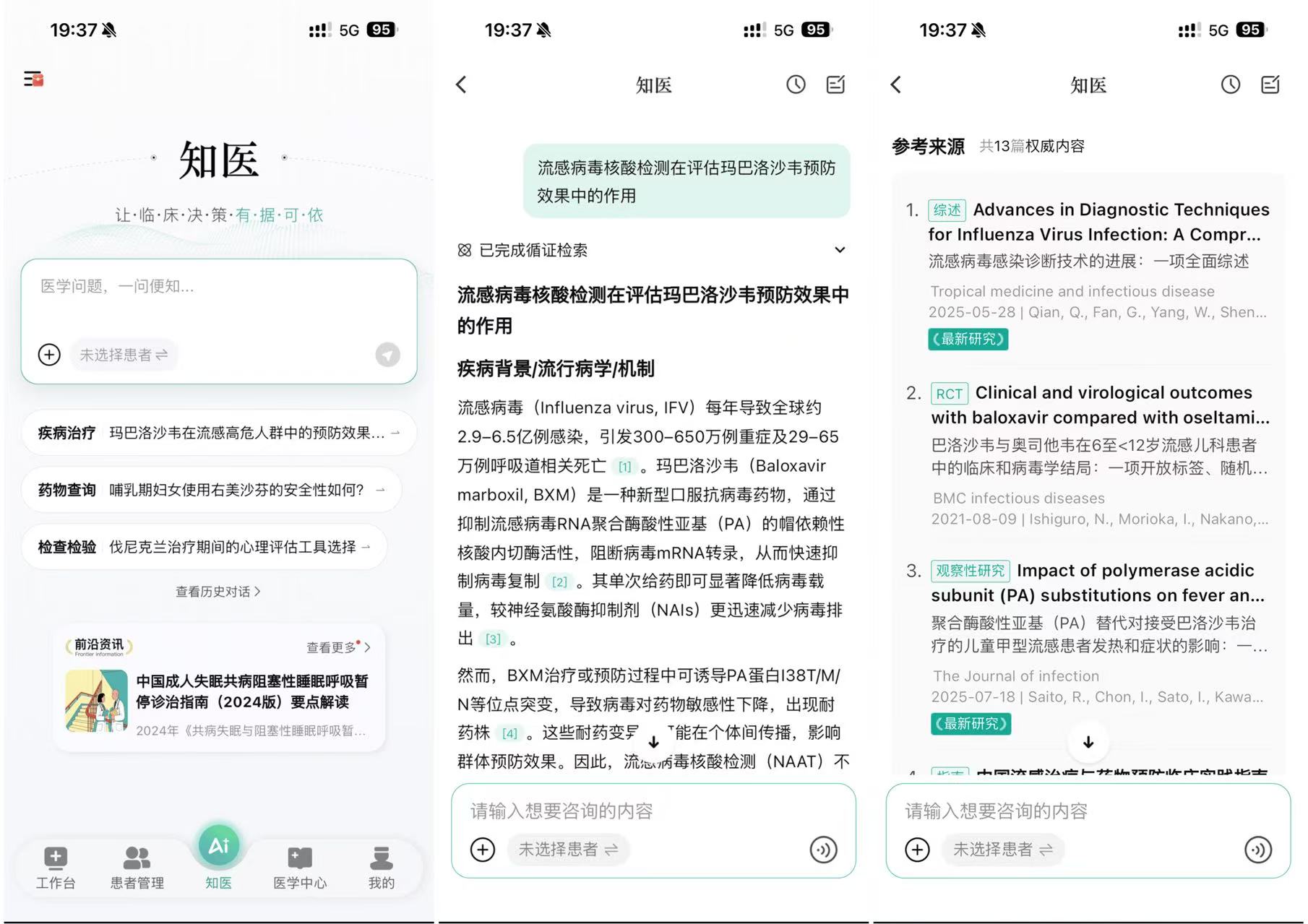
Zhiyi is designed to help doctors move beyond simple search. Its Deep Thinking mode can break down complex questions, assess different levels of evidence and provide structured references for doctors to consider, including in cases involving multiple conditions or medications.
A good example is oncology. Zhiyi has integrated the China Anti-Cancer Association (CACA) Guidelines for Holistic Integrative Management of Cancer, which cover 29 cancer types and 72 diagnostic and treatment technologies. By making this body of specialist knowledge searchable and actionable through AI, Zhiyi can help doctors access relevant evidence when they need it, rather than requiring them to navigate lengthy reference materials separately.
Zhiyi also offers more than 200 medical calculators, covering areas such as disease assessment, risk stratification, medication dosage and cardiovascular risk, with AI providing evidence-based interpretation of the results. Its research assistant extends these capabilities into academic work, supporting literature reviews, patient education materials and presentations.
The aim is simple: reduce the time doctors spend navigating information so they can focus more of their expertise on understanding the patient and making clinical decisions.
Making AI Fit the Way Doctors Actually Work
Clinical information rarely arrives as a perfectly structured prompt.
It may be a laboratory report, prescription, medical image, PDF document or information collected across previous consultations. Zhiyi’s multimodal capabilities allow doctors to upload and analyze different types of clinical materials, reducing the need for manual entry and page-by-page review.
More importantly, Zhiyi is designed to show doctors where its conclusions come from. Its dynamic evidence-location capability can identify the original text supporting a clinical point, allowing doctors to trace AI-generated information back to the underlying evidence.
That distinction matters in healthcare. A useful medical AI assistant should not simply produce an answer; it should help a professional understand the evidence behind it.
When “Sounds Right” Isn’t Good Enough
Generative AI can produce convincing answers. In medicine, however, convincing is very different from reliable.
JD Health has therefore built dedicated evaluation systems around Zhiyi. Its MedScope framework evaluates AI outputs across evidence quality, content accuracy, appropriate expression and practical usefulness, supported by evaluation sets spanning 46 major clinical specialties.
A separate MedSafety framework evaluates 26 categories of high-risk medical scenarios, including medication contraindications and complication warnings. High-risk outputs that cross defined safety boundaries do not pass the evaluation.
This reflects an important principle behind JD Health’s approach: AI is there to support medical professionals, not to replace their experience, judgment or responsibility.
One AI Foundation, Different Healthcare Supports
Zhiyi is part of a broader AI healthcare architecture JD Health has been developing.
Underneath it is Jingyi Qianxun (京医千询), JD Health’s proprietary medical large language model. Rather than positioning the model itself as the final product, JD Health is applying its capabilities to specific healthcare workflows, including evidence retrieval, clinical support, patient follow-up and medical research. Zhiyi is one example of how that underlying AI capability is translated into a practical professional tool.
On the patient-facing side, Dawei (大为), JD Health’s AI doctor, applies AI to another part of the healthcare journey. JD Health has also launched more than 1,500 AI agents based on specialist doctors, alongside solutions developed for hospitals and specific disease areas.
Together, they illustrate a broader strategy: rather than building one AI assistant for every healthcare problem, JD Health is developing specialized AI tools around the needs of different users and healthcare scenarios.

Taking Medical AI Beyond Major Hospitals
Perhaps one of the most meaningful tests of medical AI is whether it can make high-quality tools more widely accessible.
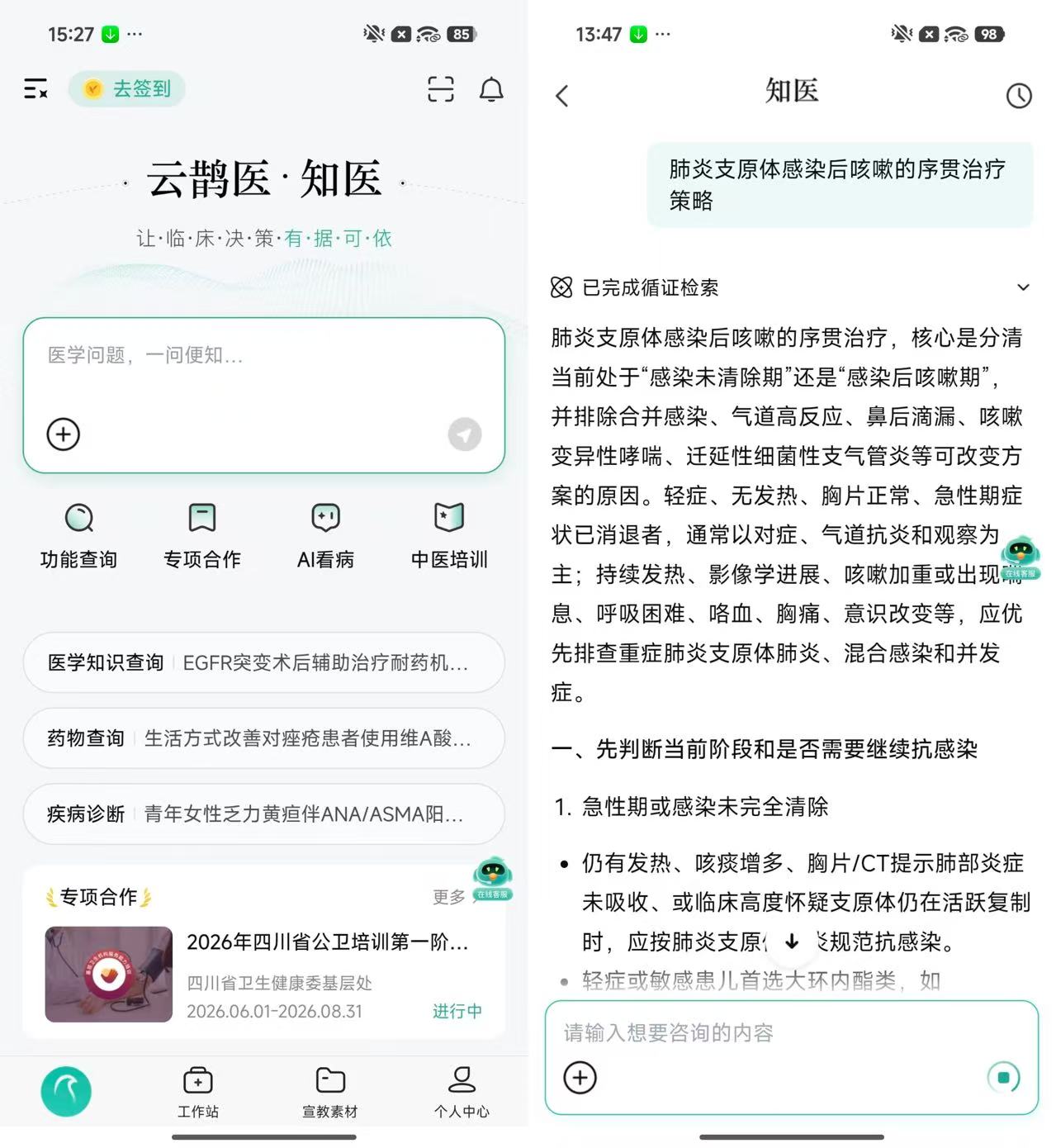
In August, JD Health formed a strategic partnership with PICA Health (Yunqueyi), one of China’s largest digital platforms serving primary-care doctors. Zhiyi has been integrated into the PICA Health app, making its upgraded capabilities, including Deep Thinking, medical calculators and research assistance, available free of charge to the platform’s registered primary-care doctors serving. PICA Health connects around three million registered primary-care doctors serving China’s grassroots.
The significance is not simply putting AI into more hands. A doctor working in a smaller community can use the same AI tool to access medical literature, clinical guidelines and evidence-based decision support that would otherwise be more difficult or time-consuming to obtain.
And this is where JD Health brings another capability into the picture: supply chain infrastructure.
JD Health’s pharmaceutical supply chain reaches more than one million villages in China, while same- or next-day delivery coverage has reached 87.1% across county-level areas covered by its network.
This creates an interesting connection between medical intelligence and healthcare access: AI can help doctors find and interpret the right evidence, while supply chain capabilities can help turn a clinical decision into access to the medicines and healthcare products patients need.
Building AI Around Healthcare, Not Healthcare Around AI
There is no shortage of discussion about how powerful the next generation of medical AI models will become. JD Health’s experience with Zhiyi suggests that model capability is only part of the equation.
Healthcare AI also needs trusted medical evidence, safety mechanisms, integration into real clinical workflows and a way to reach the doctors and patients who can benefit from it.
That is why Zhiyi is particularly illustrative of JD Health’s broader approach. The technology begins with a medical large language model, but extends into authoritative resources such as the CACA Guidelines, professional tools for doctors, partnerships such as PICA Health, patient-facing services such as Dawei, and JD Health’s wider healthcare and supply chain infrastructure.
Doctors’ experience, judgment and responsibility remain at the center. The role of AI is to help those capabilities go further by making trusted knowledge easier to reach, complex information easier to navigate and everyday clinical work more efficient.
The more meaningful question for healthcare may therefore be not whether AI can become a doctor, but how AI can help every doctor do more for every patient.
(vivian.yang@jd.com)
Aug 26, 2026|
JD.com Shares Growth Playbook for UK Brands in China at CBBC 2026 UK-China Brand Excellence Summit
On August 20, JD.com joined the 2026 UK-China Brand Excellence Summit, hosted by the China-Britain Business Council (CBBC) in Shanghai, to share practical insights on how UK brands can enter China, understand local consumers, and build sustainable growth.
The summit brought together more than 150 industry experts from over 20 brands to explore China’s evolving consumer market, growth opportunities for UK brands and the international expansion of Chinese companies.
Speaking on the panel “The Creation of an E-commerce Phenomenon vs. a Slow-Burn Offline Presence: How to Build an Omnichannel Strategy,” Marcia Mao, General Manager of Business Development at JINGDONG Cross-Border, the cross-border import e-commerce platform under JD.com, outlined a four-stage pathway JD.com has observed among international brands entering China: cross-border market testing, consumer engagement through localised content, brand building and omnichannel growth.

For emerging and mid-sized UK brands in particular, Mao highlighted cross-border e-commerce as an asset-light way to test the market. Brands can start with lower upfront investment and lighter inventory, use real consumer feedback to identify their target audiences and potential hero products, and then scale behind what works.
“China is a huge market, but that doesn’t mean every customer is your customer. Start light, find the right customer base, learn from real customer feedback, and then invest behind what works,” said Mao.
Today, JINGDONG Cross-Border offers products from more than 20,000 international brands across over 100 countries and regions. Its “10 Billion GigaGrowth Plan”, launched in 2025, aims to introduce 1,000 new international brands to China over three years, supported by JD.com’s capabilities across global sourcing, supply chain and logistics solutions, localised marketing, consumer insights and more.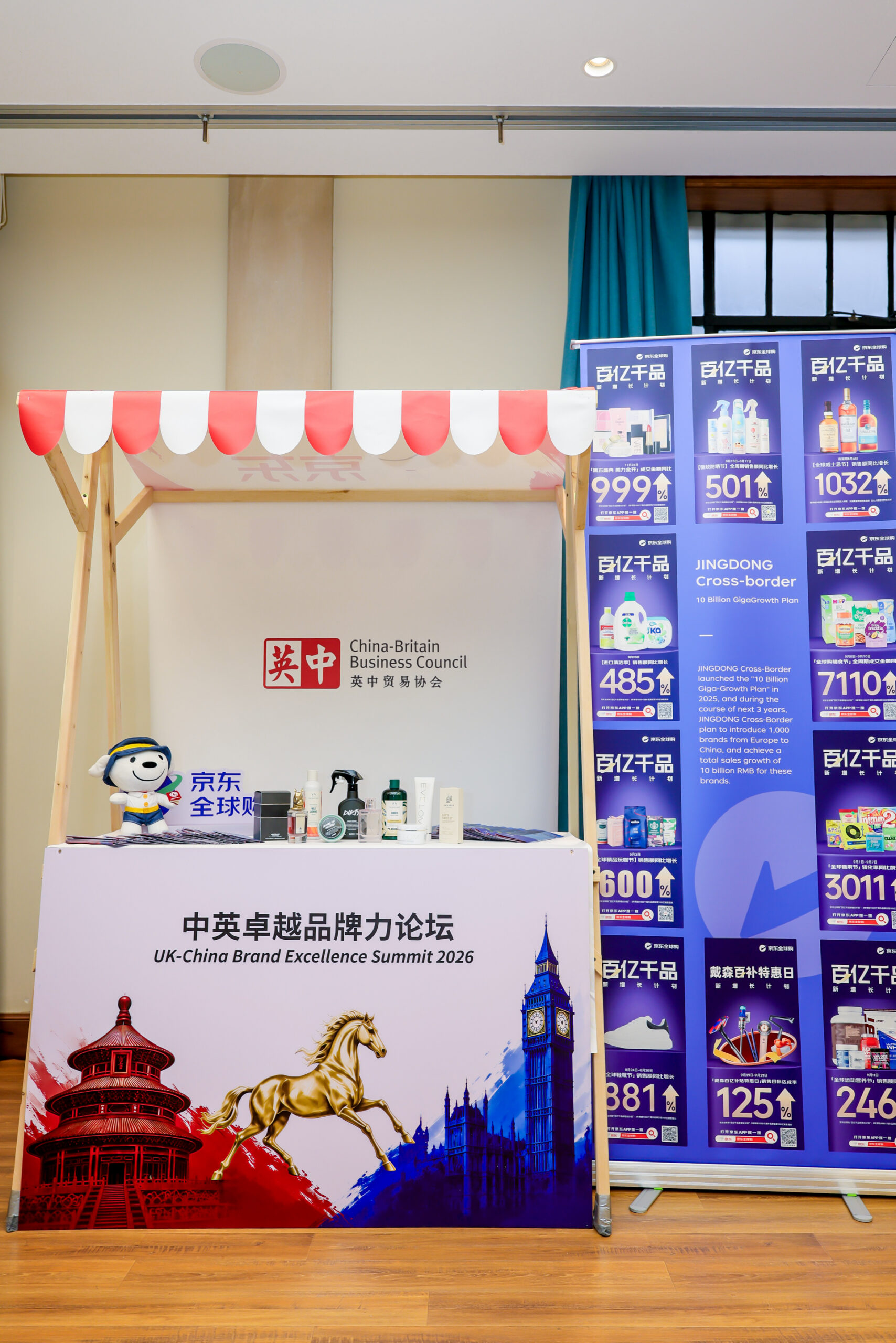
As brands move beyond initial market testing, Mao noted that the focus increasingly shifts from simply selling products to building consumer recognition through storytelling and more local engagement. JD.com works with international brands on localised content, livestreaming and origin visits to bring their heritage, craftsmanship and brand stories closer to Chinese consumers.
Omnichannel engagement is another important part of this journey. Experience-led categories such as fragrances, wines and food can benefit from physical trial and discovery, while higher-consideration purchases such as jewelry, watches and furniture often require greater trust and hands-on experience. Toys, IP products and other impulse-driven categories can similarly benefit from offline discovery followed by convenient online purchasing.
By the end of Q2 2026, 30 JD MALLs were operating across China, providing physical spaces for consumers to discover and experience products. Combined with JD.com’s e-commerce, consumer insights and fulfillment capabilities, these touchpoints can help brands turn offline engagement into digital relationships, identify “seed” consumers and reach relevant audiences more effectively online.

JD MALL in Shanghai’s Qibao commercial district, opened in June 2026.
JD.com’s participation builds on its growing collaboration with CBBC. In January 2026, the two organizations signed a long-term strategic partnership to support more UK brands entering the Chinese market, connecting British businesses with JD.com’s more than 700 million customers and its broader retail and supply chain ecosystem.
The summit brought together a broad UK-China business community, including Dettol, Little Moons, Diageo, Ahmad Tea, MINISO and Florasis. The event was opened by Tom Simpson, Managing Director & Chief Representative, China at CBBC; Sohail Shaikh, Deputy HM Trade Commissioner for China, and representatives from Shanghai’s Xuhui District.
Building on its partnership with CBBC, JD.com will continue working with the UK business community to help more brands understand Chinese consumers, navigate the market and scale sustainably. This includes its participation in the UK-to-China Trade Booster, alongside CBBC, HSBC UK and ICBC London, providing UK businesses with practical market-readiness, route-to-market, and commercial support while fostering greater two-way business exchange between China and the UK.
(vivian.yang@jd.com)
 Ochama Delivers Selected Frozen Foods to Customers in France