Topic

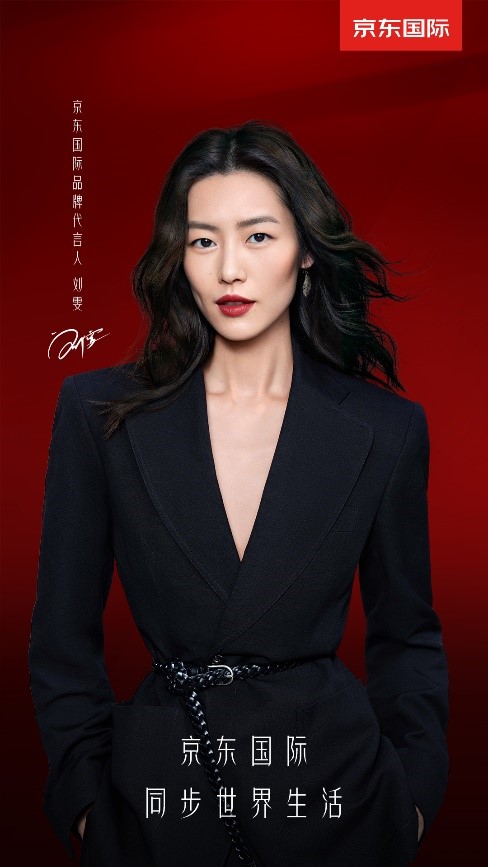
Supermodel Liu Wen is JD Worldwide’s New Brand Ambassador

by Rachel Liu

JD Worldwide announced today that international supermodel Liu Wen will be its new brand ambassador, before the sixth anniversary of JD Worldwide on Apr. 15.

“We are very glad to invite Liu Wen as our new brand ambassador. As a world-renowned supermodel, she has charmed Chinese audiences,” said Frank Yu, general manager of marketing and operations of JD Worldwide. “Her spirit and attitude of exploring new things and always challenging herself also matches with the brand attitude of JD Worldwide. We believe that our cooperation will help introduce more high-quality products from all over the world to Chinese customers.”

JD Worldwide announced today that international supermodel Liu Wen will be its new brand ambassador, before the sixth anniversary of JD Worldwide on Apr. 15.

To celebrate its sixth anniversary, JD Worldwide launched an online promotion from Apr. 8 to 15, providing customers with benefits including 50% discount, free delivery, etc.

JD Worldwide will also source products directly from international malls and online ecommerce platforms to provide customers with high-quality products at competitive prices. The duty-free store and cross border experience store that JD Worldwide launched in Sanya, Hainan province will provide rich variety of duty-free products to offline customers.

More celebrities will join JD Worldwide for its anniversary celebration through livestream or offline live shows. JD Worldwide will sign a partnership with Taihe Music Group to bring its musicians to join activities on the platform, in order to introduce their favorite imported products to fans and customers.


(liuchang61@jd.com)

JD Joins Beijing’s V Partner Plan of High-level Self-driving Pilot Zone

by Yuchuan Wang

JD Logistics has joined Beijing’s V Partner Plan of the city’s high-level self-driving pilot zone. The announcement was made on Apr. 13 at an event which also announced the establishment of a policy-priority test site in Beijing for autonomous driving vehicles. It is the city’s most recent push to build China’s first high-level self-driving pilot zone. Other V Partners include Baidu, Didi Chuxing, BAIC, Daimler, Audi and more.

The policy-priority test site will formulate product standards and regulations for unmanned delivery vehicles covering researching traffic rules and management models and entitling right of way.

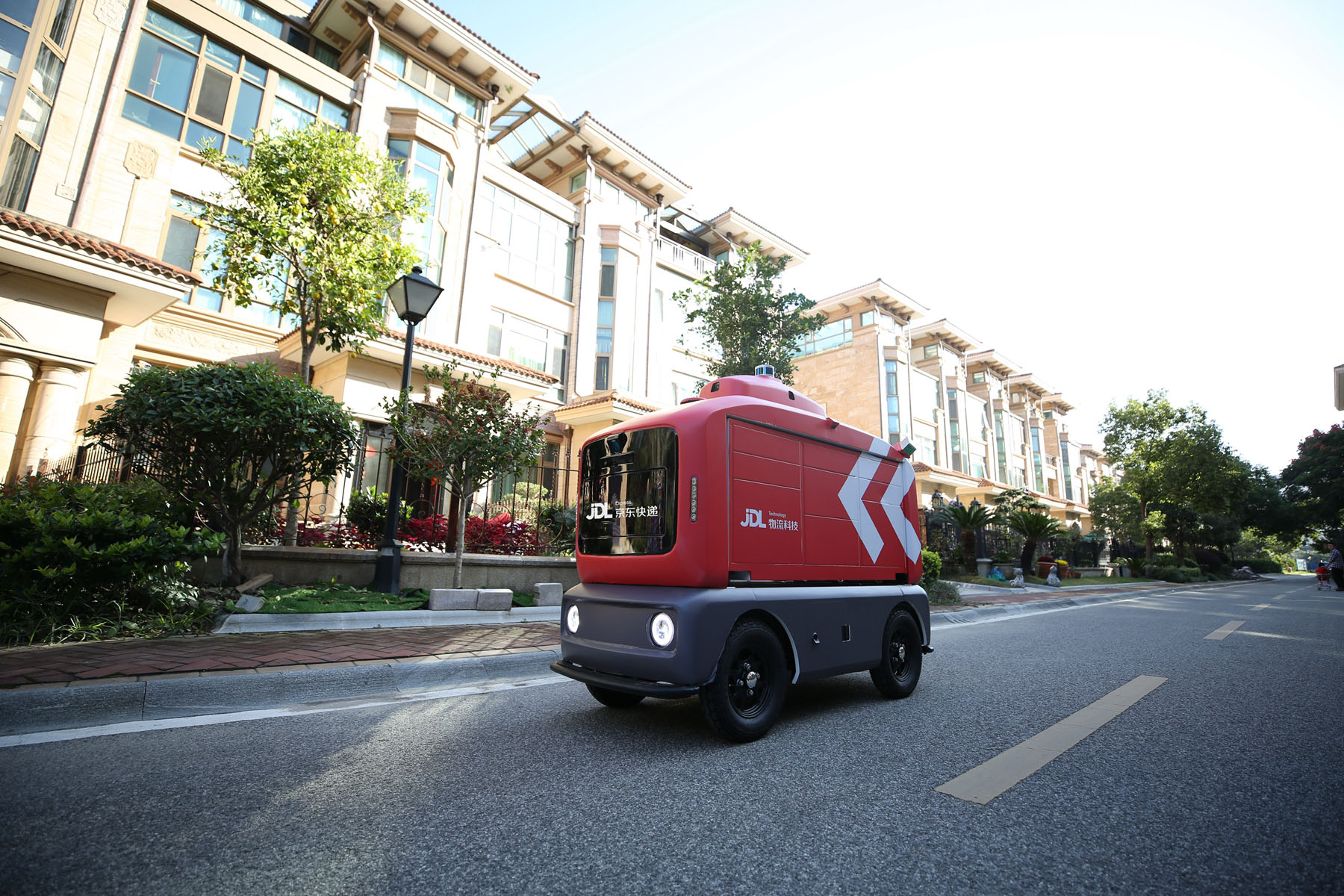
In late 2019, JD Logistics became the world’s first company to apply Level-4 autonomous driving technology on public roads without any human interaction and has since put it into large-scale daily operation. In October 2020, JD announced it would deploy 100 autonomous delivery vehicles in Changshu, Jiangsu province, to facilitate the building of a smart city.

JD Logistics became the world’s first company to apply Level-4 autonomous driving technology on public roads

“Autonomous delivery vehicles can be applied in last mile scenarios far beyond the logistics industry, such as food delivery,” said Qi Kong, chief scientist of autonomous driving at JD Logistics. This also matches the vision of Beijing that the city hopes last-mile delivery vehicles to expand use scenarios to include retail, security and other comprehensive commercial applications to drive the “unmanned economy”.

The policy-priority test site spans an area of 225 square kilometers in Yizhuang, the capital’s economic-technological development area and Daxing International Airport. In addition to urban roads, expressways and highways will be gradually opened for autonomous driving tests. The test site will also encourage enterprises to trial entirely driverless models.


(yuchuan.wang@jd.com)

In-depth Report: Dr. Tao Mei: Deep Look at the Industry Through Computer Vision

by Yuchuan Wang

It is currently the harvest season for Dr. Tao Mei, the head of computer vision research and development at JD Technology (JDT) and the director of JD’s computer vision and multimedia lab. The annual computer vision event CVPR (IEEE International Conference on Computer Vision and Pattern Recognition) to be held in June will include 11 papers from JDT, among which six are submitted by Dr. Mei’s team, which has over 50 members, is the champion at JDT in academic competitions.

Tao Mei Ph.D., IEEE/IAPR Fellow  Vice President of JD.com Deputy Managing Director of JD AI Research

Tao Mei

Ph.D., IEEE/IAPR Fellow 

Vice President of JD.com

Deputy Managing Director of JD AI Research

As an IEEE Fellow, Dr. Mei has distinctly different expectations for engineers and scientists on his team. “Although mingling engineers and scientists might maximize the working efficiency, I would doubt it’s beneficial for deep research and innovation,” said Dr. Mei. In his opinion, engineers should pursue creating standardized products and services to meet the requirements of diversified clients and business scenarios, while scientists should be guaranteed with enough freedom for doing research. “We have a relatively exclusive computer vision lab function in our team, and I hope all the scientists there to do one of two things: be the best, or be the first.”

Dr. Mei joined JD.com in 2018 to lead the research, innovation and application of computer vision technologies. He is a pioneer of large-scale multimedia analysis and applications, having authored or co-authored over 200 publications with 12 best paper awards granted by industry leading institutions including IEEE and ACM (Association for Computing Machinery), and holds over 50 US and international patents.

Prior to JD, he spent twelve years working at Microsoft Research Asia in Beijing, where he contributed over 20 inventions and technologies to Microsoft’s products and services, including the renowned virtual companion chatbot Xiaoice.
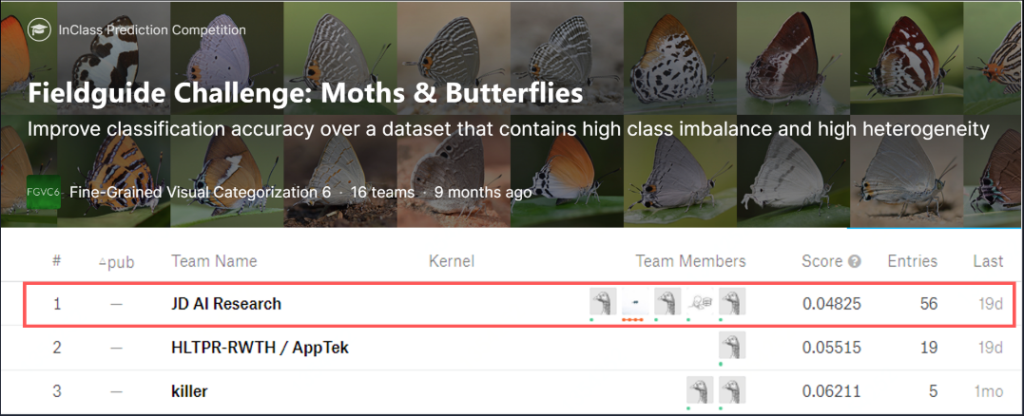
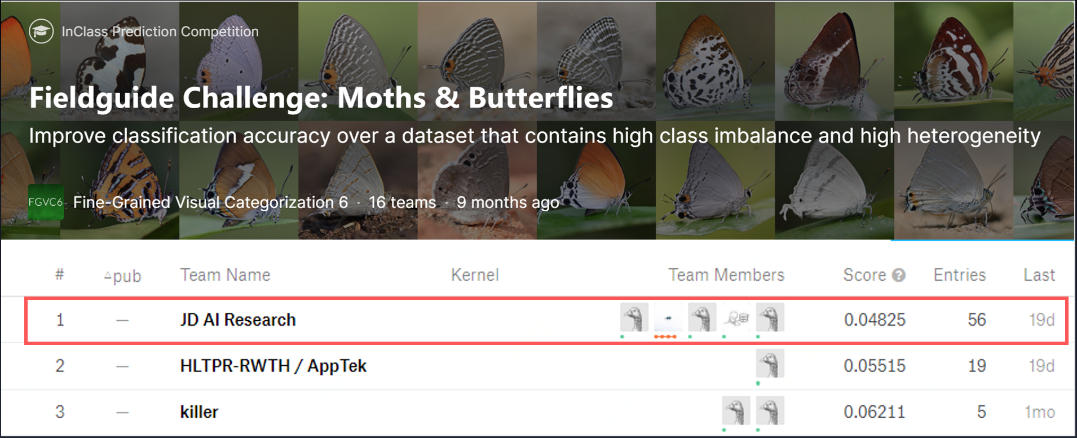
Dr. Mei’s team won first place in the Fieldguide Challenge for moths and butterflies recognition during CVPR 2019

Dr. Mei’s team won first place in the Fieldguide Challenge for moths and butterflies recognition during CVPR 2019

As a field of artificial intelligence (AI) that trains computers to interpret and understand the visual world, computer vision is like “connecting the computer with a camera so it can describe what the camera sees,” said Dr. Mei. For example, there are numerous photos and videos being uploaded by merchants or customers on e-commerce platforms every day. To determine whether this kind of multimedia content is compliant, a lot of auditing work is required, such as whether it contains pornographic or violent information, or whether a product picture meets the design requirements of the platform. Thanks to computer vision, the work can be done automatically by AI. At JD.com, AI processes billions of pictures and videos every day.

“To unleash the power of AI, we need to provide rich application scenarios and training data. JD has the most extensive and diversified retail scenarios, which in turn naturally connects research with the industry. The company’s commitment to long-term technology investment makes me believe AI can create greater influence than ever in the industry.”


Making retail smarter

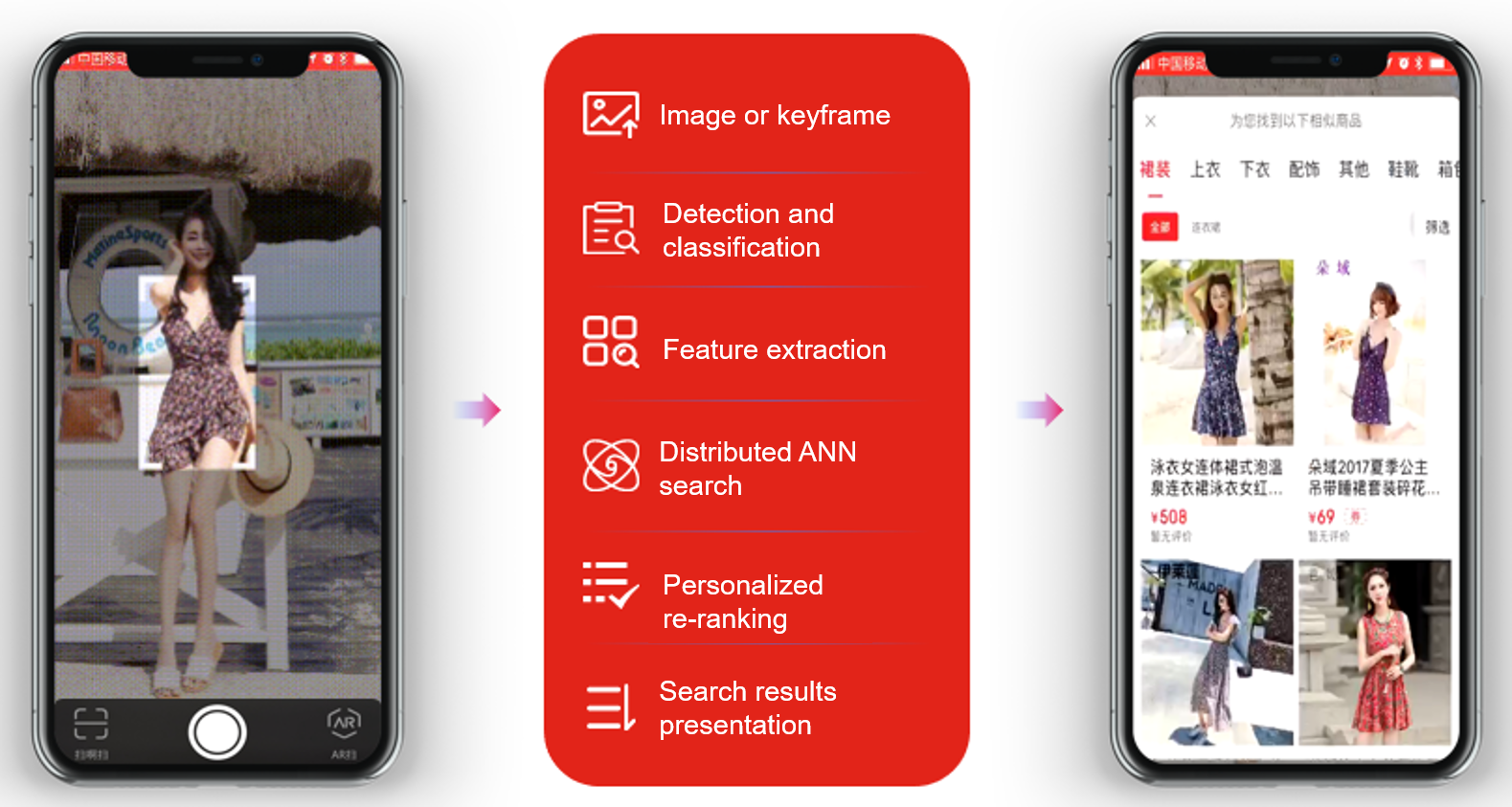
JD’s SnapShop is a ground-breaking application of computer vision in online retail. Previously, when a customer wanted to place an order online, he or she needed to input the exact name or description of the product. That made online shopping challenging for nonstandard product searches, such as for apparel, shoes, and imported products with foreign language descriptions. SnapShop aims to alleviate customers’ effort of searching the exact products they want via AI technologies.

With the adoption of SnapShop, the e-commerce platform can analyze a given photo uploaded by a customer and provide identical or similar product recommendations on the fly. From detecting a bottle of wine on the dinner table, to the distinct elements of a certain clothing outfit and more, SnapShop makes shopping much more convenient.
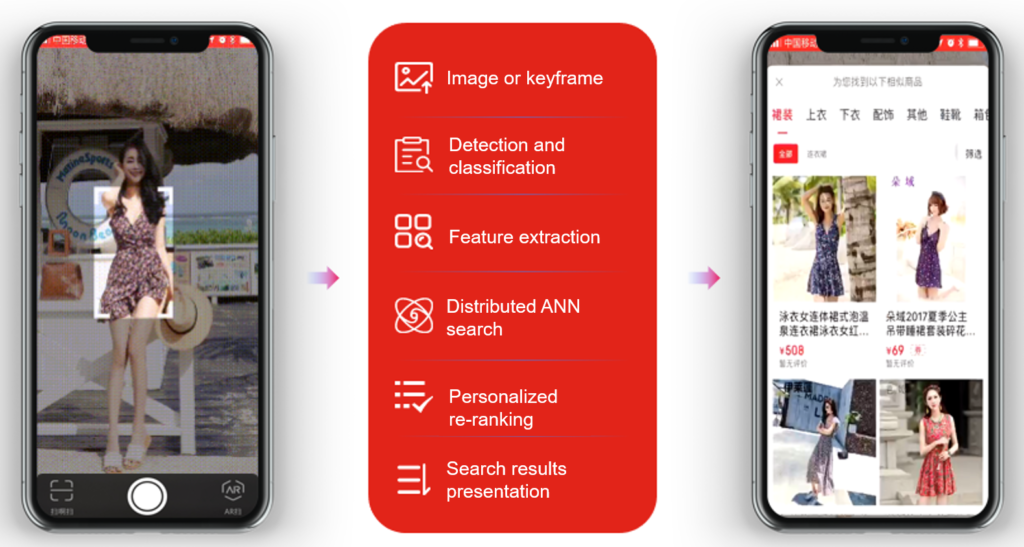
SnapShop at JD.com

SnapShop at JD.com

“As of now, the daily sales generated from SnapShop are tens of million RMB, making a great contribution to the e-commerce business, and also significantly enriching customers’ online shopping experiences via multimodal interactions,” said Dr. Mei. “Cell phone manufacturers including Huawei, Vivo, Xiaomi and Samsung have integrated our SnapShop API in their smart phones. For example, you can turn on Vivo’s built-in camera to search products directly on JD.com.” According to Mei, the daily external usage of SnapShop API through JD’s NeuHub Open AI Platform have reached tens of million times.

This technology has also inspired Mei’s team to research the waste sorting function that helps users classify different types of discarded items and how to dispose of them properly since China began requiring trash sorting in communities.

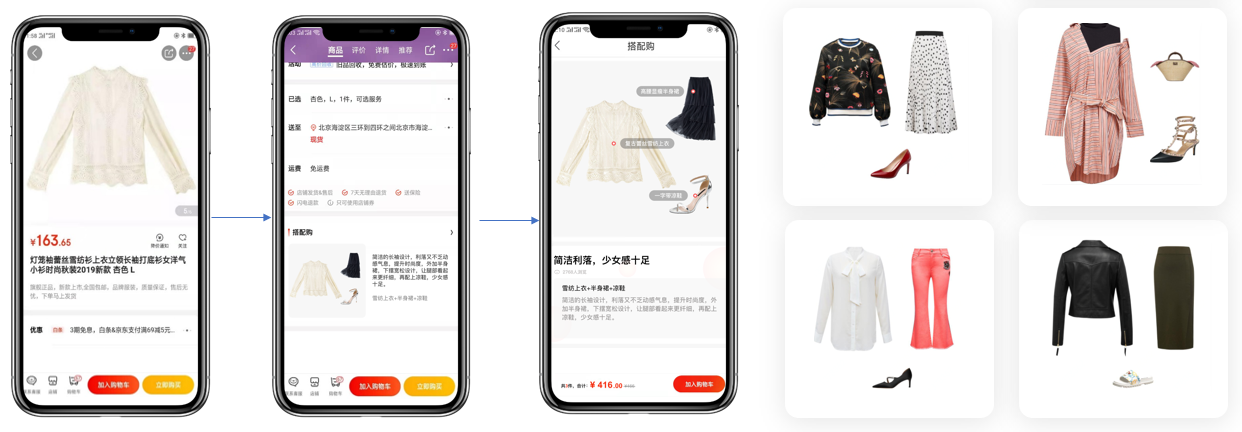
Dr. Mei and his team also integrate AI with aesthetics to enable automated fashion collection recommendations. For instance, when a consumer orders a T-shirt on JD, the app will automatically recommend which bag, shoes, or necklace might be well matched and fashionable to pair with the T-shirt. The analysis is based on the calculation of a large number of fashion pictures.

“We’ve seen that most occasions, the sales conversion rate of a machine-recommended collection is higher than the manually recommended ones,” said Dr. Mei. “This is incredible. We suspect this is probably because a machine does not have a bias in recommending products, but a salesman might have.”
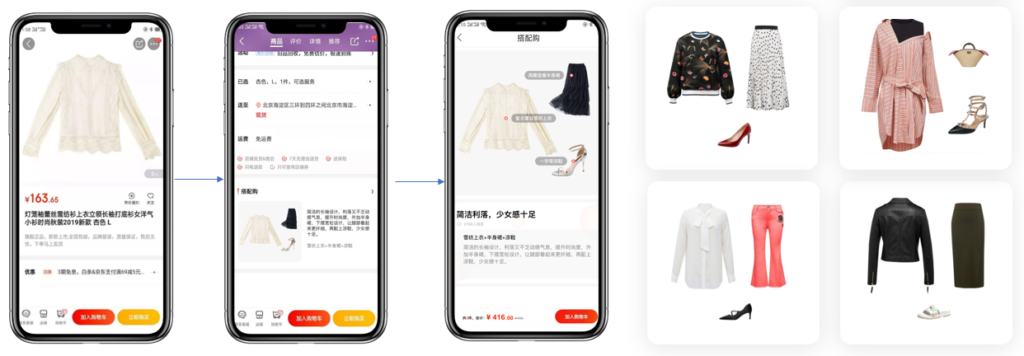
Fashion collection recommendation via AI

Fashion collection recommendation via AI


Making manufacturing more efficient

“AI is still new to the manufacturing industry, as it is composed of different scenarios with different know-how and requires customized solutions,” said Dr. Mei. The “Industrial Brain” project is to promote the transformation of traditional manufacturing, enhancing the production efficiency while lowering the operation costs.

Although the production processes in many plants have been advanced by automation, the quality assurance (QA) procedure is still labor-intensive. For example: During the QA process of smart phones, a complete examination of the appearance takes at least 20 seconds. Employees inspect the phones closely with magnifying glasses to check if there are any tiny scratches or spots on the surface.

“Many manufacturers tell us that it is becoming even harder to recruit QA staff. Young people, especially Gen Z, are unwilling to take such positions because they are often boring, tiring and seem to lead nowhere.”

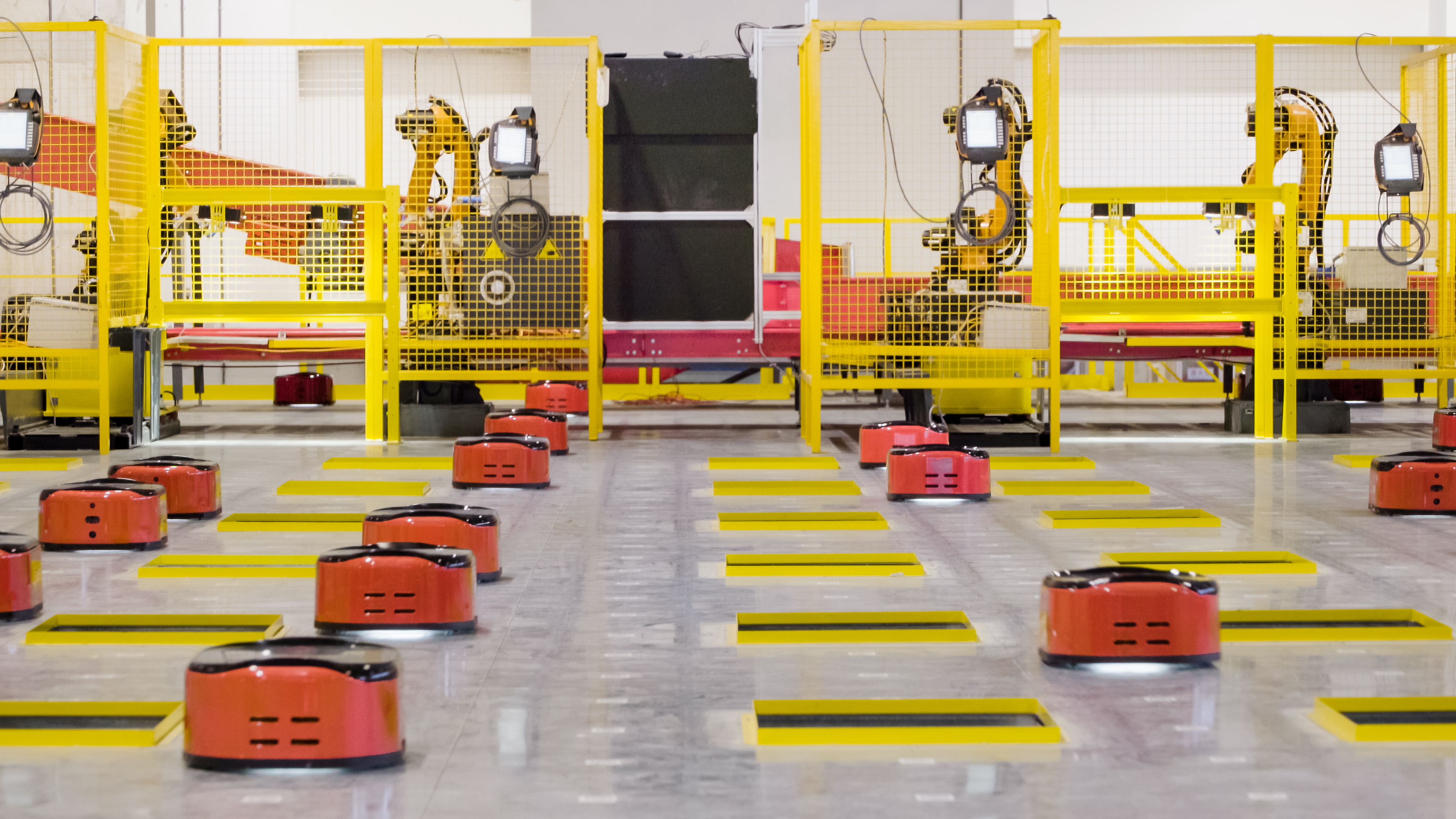
The “Industrial Brain” has managed to change the situation. Sensors including cameras simulate the functions of human’s hands, eyes and ears, and AI algorithms simulate the cognitive and execution abilities.
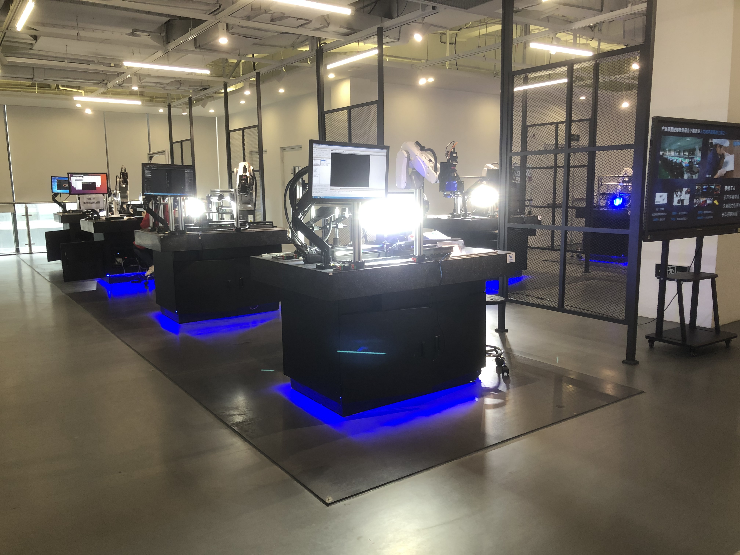
JD’s “industrial brain” working stations for smart phone QAJD’s “industrial brain” working stations for smart phone QA

Incorporating a robotic arm, optical cameras, and computer vision algorithms, the examination procedure of a cell phone has been reduced to three to four seconds. The robotic arm will first grab the product and take a picture of it. AI will then verify if it is normal or defective. This method can also be used to inspect product packages, such as proofreading the design, font size, etc.

“Workers are no longer inspecting the products directly; they have been transformed and upgraded to being the supervisor and operator of the machines.”

“Further to this scenario, once we’ve identified the common problems with the products, this information can be used to optimize the manufacturing procedure,” said Dr. Mei. “It means that through analysis, we will know if we need to adjust the raw materials or change the production temperature, thus lowering the defect rate.”


Making plants safer

Since 2019, the computer vision algorithms researched by Dr. Mei’s team have been opened up to Chiwan Port through NeuHub, to inspect the operation of the port including vehicles, equipment and personnel to avoid production accidents.

Located in Shenzhen in the Guangdong-Hong Kong-Macao Greater Bay Area, Chiwan Port is one of the world’s fastest-growing container ports, with an annual throughput of more than 8 million tons. On average, there are 3,750 vehicles every day in the port to load, unload and transport goods such as cereals and steel. The frequent interaction among vehicles, equipment and staff workers in the port also poses highly likely hidden dangers during the operation, especially in the processes of transportation, loading and unloading, and warehousing.

Based on the intelligent edge computing powered terminals deployed in the port to collect real-time data, AI will automatically label and identify the image data collected, enabling the combination of monitoring and prediction at the same time. For example, AI can identify various types of vehicles, pedestrians, lanes, guardrails, traffic lights, traffic signs and other targets in front of working vehicles and trigger the early warning of possible accidents such as too-close vehicle distance, forward collision, pedestrian collision, lane departure and other dangers. In addition, leveraging computer vision and millimeter wave radar technologies, the system can alert against the possible “invasion” of people or vehicles in the operation area, so as to avoid collisions in the process of handling large containers, which might result in injuries to personnel and loss of goods.

Since the introduction of the system in November 2019, the accident rate of the vehicles in Chiwan Port has decreased to the zero, an amazing outcome. At the same time, the working efficiency of the port management has been improved by 40%.


Be wild

Although Dr. Mei’s work has become busier and busier, life still provides him with an inexhaustible source of innovation.

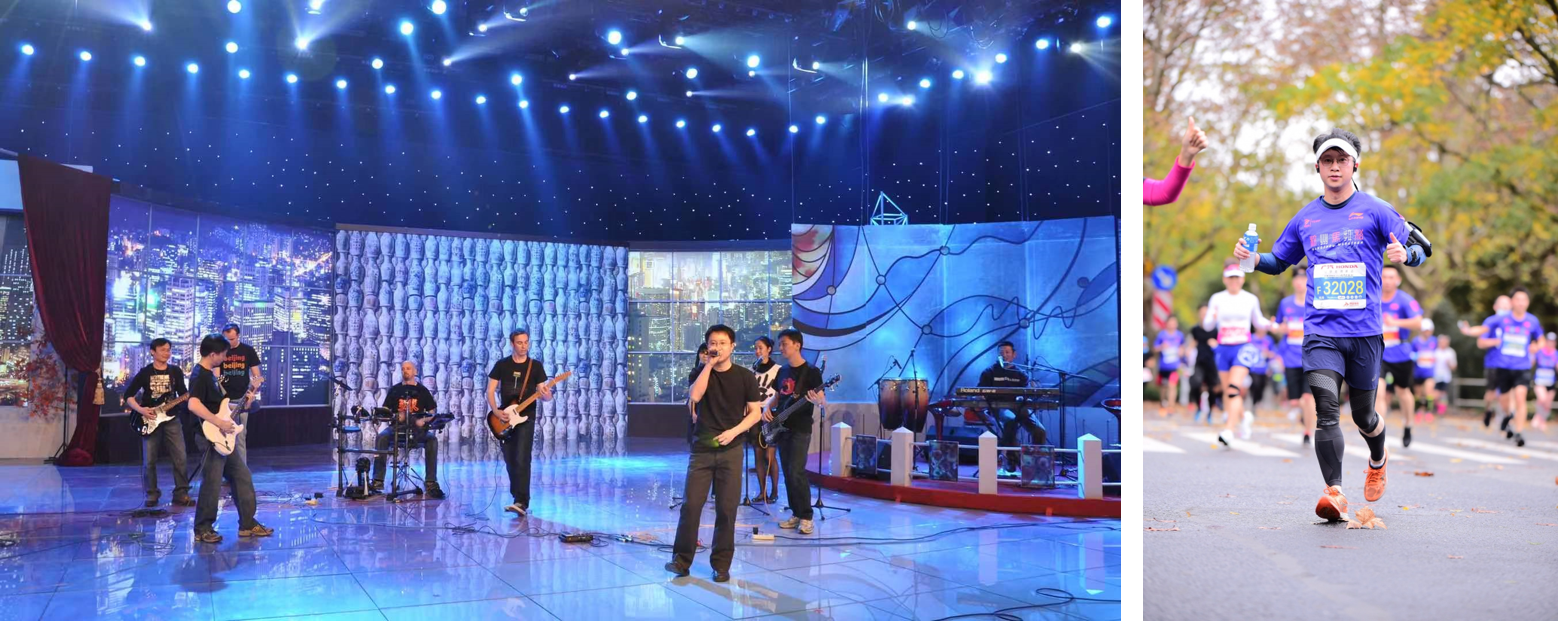
Ten years ago, he joined a band as the main vocal. Ten years later, he runs marathon races every year, and goes running every week.
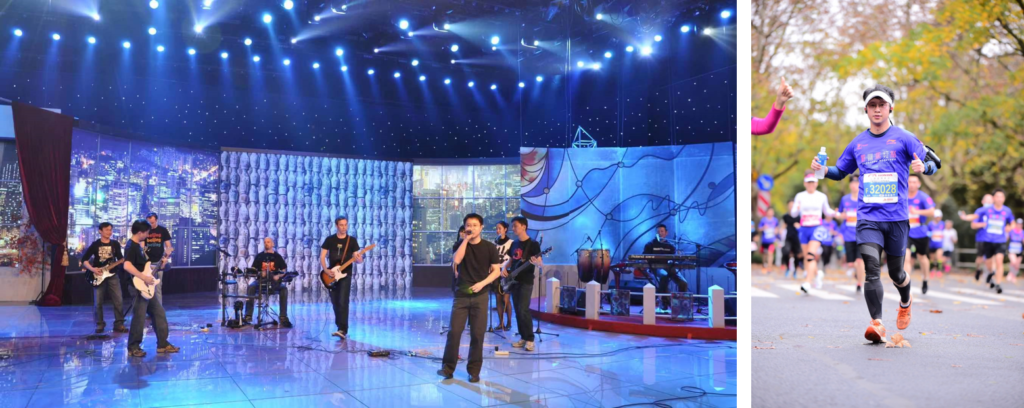
Dr. Mei and his band (left), and Dr. Mei participates Hangzhou Marathon in 2020 (right)Dr. Mei and his band (left), and Dr. Mei participates Hangzhou Marathon in 2020 (right)

“We need to refresh ourselves and be wild. Life and nature give me more inspiration and lead me to be more creative in my job,” said Dr. Mei, “Life always begins at the end of your comfort zone.”


(yuchuan.wang@jd.com)

JD’s View: Integrated Supply Chain Solutions Will Accelerate Logistics Digital Transformation

by Yuchuan Wang

JD Logistics anticipates that technology-driven integrated supply chain solutions will accelerate the digital transformation of the logistics industry. During the 2021 China Retail Supply Chain Annual Conference held on Mar. 31 and Apr. 1 in Shenzhen, JD Logistics invited experts from the logistics industry and representatives from retail enterprises to discuss digitalization trends and practices that have helped enterprises lower costs and increase efficiency.

Lei Zhou, director of strategy and innovation at JD Logistics, shared that retail brands, channels and supply chain had experienced great changes over the past year. Consumers are increasingly pursuing diversified services and products to serve individual needs. Innovative channels are popping up, which make omni-channel marketing and fulfillment challenging—but digitalization and intelligentization are the best response to the changing commercial environment, Zhou said.

Xuebin Sun, director of smart supply chain solutions at JD Logistics, said that the retail industry had faced pain points in managing inventory and distributing online and offline, in addition to the increased costs for last-mile delivery brought by the emergence of community group buying. JD Logistics is able to provide a one-stop supply chain management solution to waive these concerns.

Xiande Zhao, Professor of operations and supply chain management at China Europe International Business School(CEIBS), proposed the concept of “PDA” supply chain, namely, “Pull”, “Digital” and “Agile” supply chain. Digitalization plays the core role in the innovation of supply chain and business models. It enables the collection of data from different nodes and channels on the supply chain through digital tools, and integrates resources to lead data-driven decision making.

As China’s leading supply chain and logistics services provider, JD Logistics has served over 190,000 business clients in 2020, covering the industries of FMCG, apparel, home appliance, home furnishing, 3C and fresh produce. Among them, Rainbow is a chain shopping mall in China. Since 2019, JD Logistics has been helping Rainbow upgrade its warehouse management system and build automated warehouses. Weiping Peng, general manager of Rainbow’s logistics center, said during the event that the two parties would further collaborate in agile supply chain to drive a positive shopping experience and satisfy customers’ individual demands.

The integrated supply chain solution powered by JD’s logistics technology will continue accelerating the whole industry to undergo digital transformation.


(yuchuan.wang@jd.com)
JD Logistics Supports Beijing 2022 Winter Olympics Test Run

by Ella Kidron

The organizers of the 2022 Beijing Winter Olympics finished 10 days of test events on Apr. 10. The test provides an opportunity to fine-tune operations and services ahead of the official event next year, and covers everything from competition, venues, epidemic prevention, and medical treatment to logistics. JD has been entrusted to provide logistics for the event and its employee Song Xuewen is at the heart of the action.

JD’s Song Xuewen during his time as a courier

JD’s Song Xuewen during his time as a courier

Song is part of the team managing JD Logistics’ support of the Winter Olympics. In advance of the 10-day test competition, the team has undergone meticulous preparation, facilitating the transportation of over 4,000 items of furniture as well as emergency goods. “There are tons of rooms that all need to be outfitted with furniture such as desks and chairs. We need to deliver and install the furniture according to the floor plan for each room,” Song said. “Through the tests, we figure out how to optimize our systems to be even more efficient and precise,” he added.

Song is excited to have the opportunity to experience and support the Olympics test run. He said: “Ordinarily, we’re focused on completing our own tasks and delivering to individual customers. In a sense, supporting this highly professional project is also society’s acknowledgement of what we do every day. It’s great to have the opportunity to participate in and witness the successful completion of the test events.”

The JD Logistics team supporting the Beijing Olympics test run

The JD Logistics team supporting the Beijing Olympics test run

Song, who hails from Chifeng, Inner Mongolia, and joined JD in 2011, is no stranger to being entrusted with important responsibilities. In his 10 years with the company, he has been promoted from courier to delivery station head, and is now helping to manage the Beijing Olympics test run project.

As a courier, Song covered 320,000 kilometers and delivered 300,000 packages in the span of 10 years —with zero errors, zero complaints, and zero safety incidents. He was among a group of model workers awarded across China by the Chinese government in its National Model Workers and Advanced Workers awards announced on Nov. 24th last year. In addition to being a model worker in the eyes of the Chinese government, he also embodies JD’s noble principle of doing the right thing. Song has gained a reputation of trust and reliability among his customers by never refusing a request as long as it is doable. “Even when I’m on holiday, customers will always ask for me.”


(ella@jd.com)

JD Auctions Sold Two Over-100-Million-Yuan Buildings within Four Days

by Vivian Yang

JD Auction sold two house properties in Beijing worth over RMB 100 million yuan each within four days, as the e-commerce platform revealed on Apr. 9.

“JD Auction has been an effective channel to support public court auctions with a high transaction rate and premium rate,” said Chengxin Han, general manager of JD Auction. “It has also become a go-to place for many people to find good bargains for high-value properties in Beijing.”

On Mar. 27, JD Auction closed the deal for the building of a former chain hotel on Beiyuan road in Chaoyang district in Beijing at RMB 276 million yuan. A 12-storey building totaling 9,550.73 square meters, the building is located in a mature commercial area. Its popularity drove 83 rounds of bidding before the price finalized.

The second deal which was made on Mar. 31 was a high-end residential building also located in southern Chaoyang district. The building is part of a well-known real estate program in the capital city which is famous for cultural gardens in its landscape design. The item has been a hit on JD’s platform. Starting at RMB 3,500 yuan, the building’s auction price was capped at RMB 100 million yuan after 319 offers, making it the highest transaction price the real estate program ever achieved on online judicial auction platforms.

Online public auction is the only legitimate way for courts to handle seized real estate in China. Since its establishment in 2016, JD Auction has been providing strong support for Chinese courts at all levels in this area. JD’s trust-based brand identity and technology-driven services such as VR panorama house viewing, big-data-driven price evaluation and financing assistance, have enabled an increasing number of users to acquire real estate on its platform. It is estimated that in 2020 alone, more than 15,000 JD customers bought houses or apartments on JD Auction.


(vivian.yang@jd.com)

JD Joins Hands with Maternal and Baby Brands to Serve New Generation of Parents

by Rachel Liu

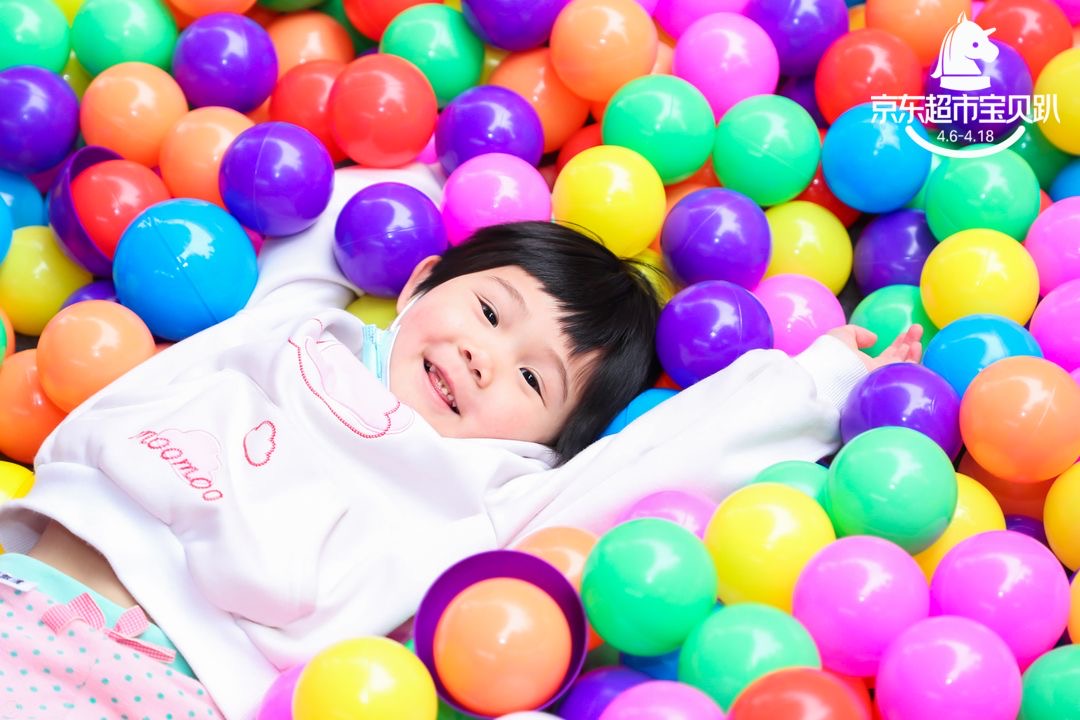
JD Super, JD’s online supermarket, held the annual JD Super Baby Festival of JD’s maternal and baby products today at JD’s Beijing headquarters. On the ceremony, JD shared its goal to build deeper cooperation with global maternal and baby brands on supply chain, products and sales channels to jointly achieve better growth on the platform.

According to the 2021 Chinese Maternal and Baby Market Consumption Trends report released by leading Chinese consulting firm iResearch on the event, over 60% of parents in China are of the post-90s and post-95s generations, and 66% of parents have bachelor’s degrees. These well-educated parents prefer “scientific parenting,” and are willing to spend more money on better products for their children.

“The new consumption trends mean that customers are looking for more high-end products, as in products that are better looking and more unique with detailed functions,” said Jingwen Ruan, partner of iResearch, during the ceremony. “For example, we found that the demands for goat milk, organic milk powder and diapers made of new technologies and materials are rising.”

The report also shows that 88% of customers prefer to buy baby-use products through online channels, and 73% of customers already see online channels as the first choice to buy these products.

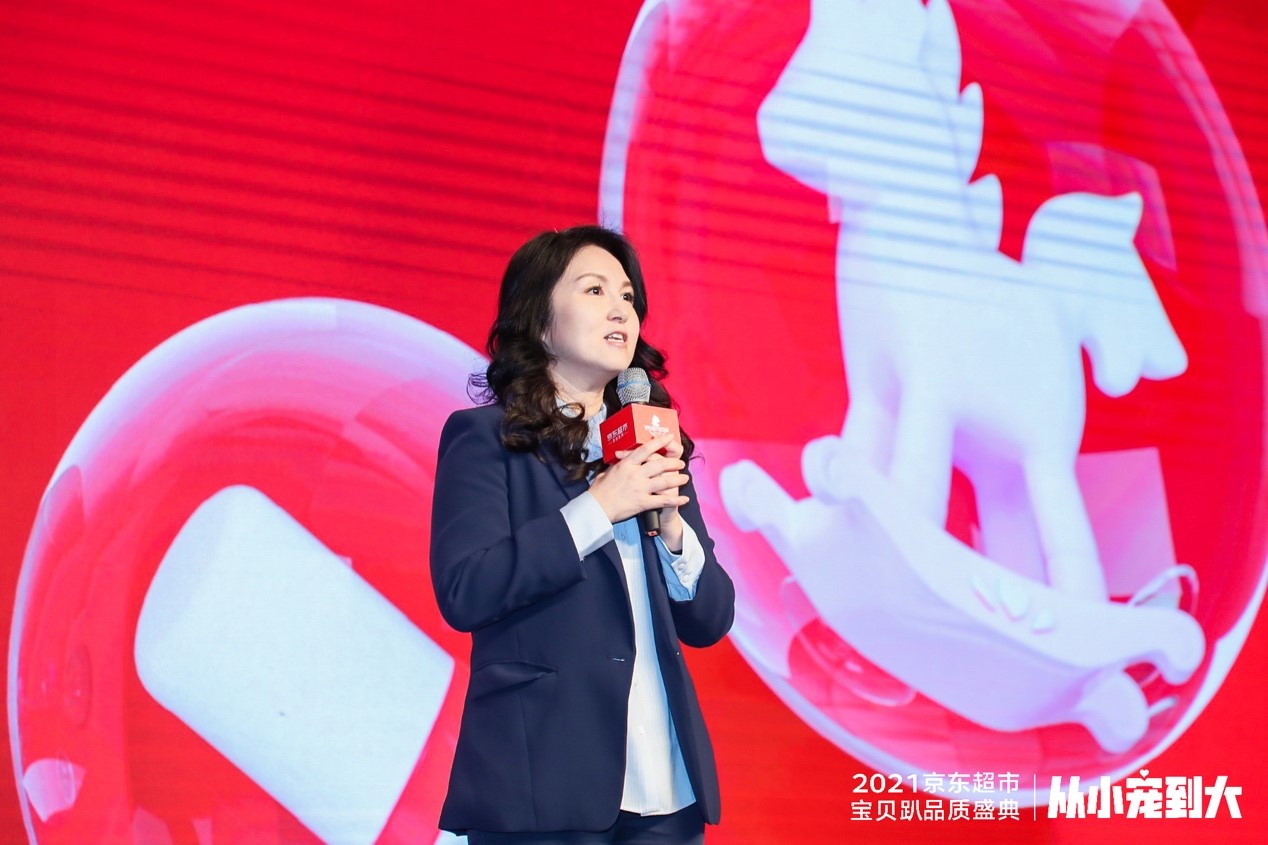
“We will work with brands on new product cultivation, customer lifecycle management, sales channels and data cooperation and supply chain management to better meet customers’ demands. Omni-channel and digitalization are unstoppable trends of the industry, and JD will open up our capabilities and achieve win-win cooperation with brands,” said Carol Fung, president of JD FMCG Omni-channel. “Together with our brand partners, we hope to make our customers’ parenting easier, providing more trustworthy service and promoting the growth of the whole industry.”

Carol Fung, president of JD FMCG Omni-channel.

For new products and brand cultivation, JD will explore the new consumption trends and develop customized products with brands. For example, when JD observed that online searches for millet and pumpkin had increased rapidly among parents, the company quickly developed C2M millet and pumpkin flavored rice powder with American brand Gerber. In the first three months of launching, the product became one of the best-selling products and accounted for over 10% of sales of the brand on JD. The company also jointly developed an avocado baby skincare cream with Chinese brand Baby Elephant.

Additionally, JD will identify customers from more channels such as vertical media for parenting, offline stores, short video and livestreaming platforms to better analyze customers’ preferences to achieve targeted marketing and user lifecycle management.

To provide faster delivery service for customers, JD will use its Omni-channel Fulfillment project to integrate online orders with offline stores and supermarkets. In 2021, JD also aims to open 1,000 offline maternal and baby stores, and work with Better Life and Huaguan (华冠) supermarkets to build front warehouses. Omni-channel marketing is another way to help brands accumulate more users. Biostime just launched a new milk powder exclusively on JD, and JD plans to integrate online and offline marketing channels to cover over 10,000 offline stores, hoping to help the brand reach as many customers as possible.

“The consumption trends for maternal and baby products are changing quickly, and parents have more detailed and personalized demands,” said Longwu Jiang, general manager of JD Maternal and Baby Products. “The new generation of parents know exactly what kinds of products they need at different stages. Besides products, they also want more information and guidance on scientific parenting. I hope all brands can join JD to provide an easier, more considerate and trustworthy shopping experience for customers.”


(liuchang61@jd.com)

JD Hosts Experience Booth at Wuxi Marathon

by Ella Kidron

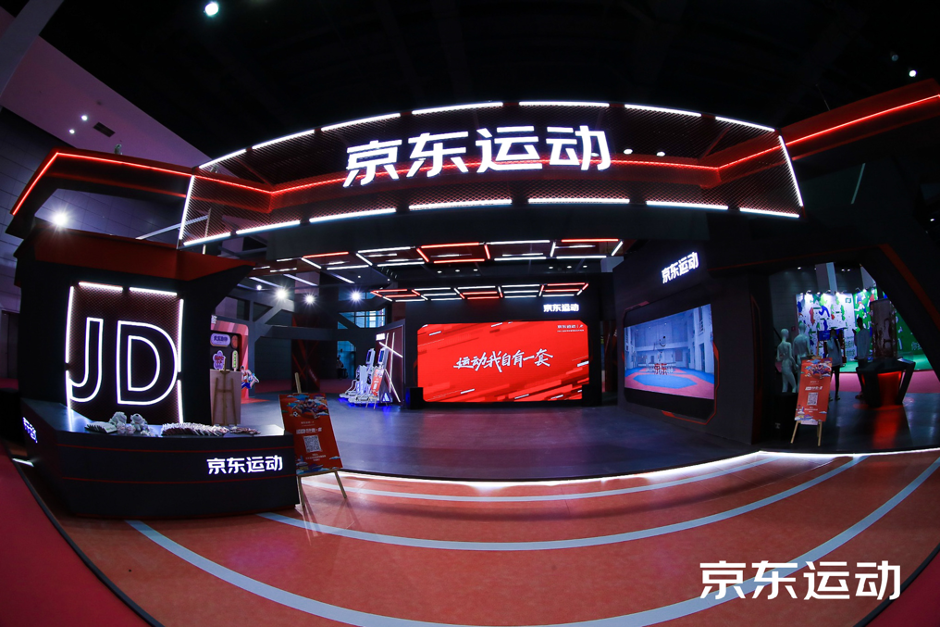
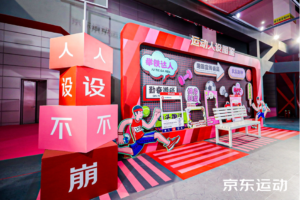
The 8th annual Wuxi Marathon was held in Wuxi, Jiangsu province on Apr. 11. To mark the event, the sports division of JD.com hosted an exhibition space from Apr. 8-11, giving runners and spectators a place to play games, try out products and make purchases through a pop-up store, and even get running tips. Consumers can test products on display and then buy them online to be delivered home, creating an omni-channel experience and raising awareness of JD’s sports category.

The high-tech space featured a virtual skiing game, an electronic hoops shooting game and more, and attracted people of all ages to learn more about JD while being entertained.

JD booth at the Wuxi Marathon

JD booth at the Wuxi Marathon

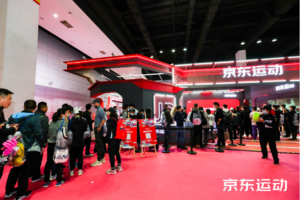
At least 10,000 people visited the booth each day. Viewers were encouraged to take photos and share them on their social network platforms, raising the overall influence of the event and profile of the JD brand among sports enthusiasts.

Visitors to JD booth at Wuxi Marathon

Visitors to JD booth at Wuxi Marathon

This is the 7th year that JD has partnered with the Wuxi Marathon. In addition to providing an onsite experience, JD also supported the event through its event signups platform as well as deals on hotels and high quality running gear through its e-commerce platform. The company has also partnered with top sports gear brands at past events.

In addition to the Wuxi Marathon, JD has had a presence at several marathons across China, including the Shanghai Marathon, the Suqian Marathon, the Chengdu Marathon and several others.

The person responsible for JD’s partnerships with sporting competitions explained that such events provide an excellent bridge between customers and sporting goods and apparel brands as well as JD.


(ella@jd.com)