Topic

“Your World Shines”: JD Worldwide and ELLE Encourage Women to Find Their Shining Moments

by Rachel Liu

JD Worldwide and international lifestyle magazine ELLE jointly launched the “Your World Shines” photography exhibition on Mar. 8, International Women’s Day, to encourage women to stay true to their dreams and find their own way to shine.

The photography exhibition shows the profile photos of 38 women who are successful in their own areas, and encourages women to explore themselves and shine in their own way. The women who joined the exhibition include female KOLs in different areas, such as traveling, exercising, food, fashion and more. Actress Yitong Li, who initiated the exhibition, said: “I believe when women choose to do what they are passionate about, their world will shine.” The exhibition is part of JD Worldwide’s “Shining Season” campaign, from Mar. 8 to Mar. 15.

The exhibition is part of JD Worldwide’s “Shining Season” campaign, from Mar. 8 to Mar. 15.

“Our idea behind this exhibition is that we think when women have their own passion, they will shine from the inside out and bring that energy to people around them,” said Frank Yu, general manager of JD Worldwide. “We want to take this opportunity to show our appreciation to these powerful women who have found their passion, and encourage more women to follow.”

The campaign successfully gained resonance among female audiences. “Everyone has their shining spots. Find your shining spot and grow it. It is never too late.” said one comment on a social media platform.


(liuchang61@jd.com)

Rise of Chinese Women as Economic Force 

by Kelly Dawson

On the occasion of International Women’s Day, JD’s Big Data Research Institute has released a consumption report on Chinese female consumers, revealing trends and changes that also reflect the evolution of women’s status in China. Among JD’s findings are that the growth of female shoppers on the platform is quickly outpacing that of their male counterparts, spending not only on “family consumption,” an area where they remain a dominant force, but also on themselves, increasingly focusing on their own needs and tastes.

“In addition to their vast contributions to the workplace, family and society, women are also the powerhouse of Chinese consumer spending,” said Meha Verghese, growth and innovation lead for MediaCom, a leading media agency in China with a focus on consumer insights. “Seventy-five percent of all purchase decisions in China are made by women, and the ‘she-conomy’ (她经济) is driving the growth of diverse categories from cosmetics, baby products and luxury goods to alcohol, cars and mobile gaming.”

Chinese women are currently responsible for ¾ of household purchasing decisions, but the proportion between how much women spend on household and family consumption vs. spending on their own interests is declining year by year, with the two pulling level at 50% and an expectation that personal spending will continue to grow, according to JD’s report.

“The modern Chinese woman is an economic powerhouse with more financial and social independence, social stability and higher disposable income, meaning women now spend more on themselves,” said a recent report from market analysis agency Alarice. Among the world’s self-made female billionaires, Chinese women account for 57% of the total. In fact, even everyday Chinese women have amassed increasingly formidable economic power, as more and more women achieve financial independence and demonstrate unprecedented spending savvy.

As women’s status changes, so do their needs, said Verghese. “Chinese women’s values, their ambitions and passions, and their consumption habits are changing and diversifying,” Verghese said.

Chinese women with higher education and greater participation in the workforce are naturally more likely to experience financial autonomy. Today in China, 56% of the female population enrolls in tertiary education, while only 46% of men do. If this trend continues, female spenders will grow to represent an even greater power in the Chinese market.

Reflecting this dedication to learning is a higher rate of book purchases among female shoppers on JD as compared to male shoppers, with women buying 8.1 books a year on average. Popular book topics include self-improvement and finance management, with a focus on the pursuit of financial independence.

Women are also increasingly health-conscious, a trend that has accelerated during the pandemic as many have prioritized self-care. While traditionally female-centric categories like makeup have grown, so have the categories of sports and fitness—particularly in lower-tier cities, according to JD’s data.

Women in lower-tier Chinese cities are indeed gaining share in the market, with female shoppers in these cities becoming the single largest source of increase in Internet retail, according to JD’s report.  While female shoppers tend to spend the most in Tier 1 Chinese cities, the report found that the lower the tier of the city, the higher the rate of growth among female shoppers as compared to male shoppers.

Female shoppers in these lower-tier cities were most likely to list “zero-tolerance for quality issues” as a determining factor in how they shop online. Considering that customers in lower-tier cities have been slower to adapt to ecommerce due to lingering skepticism, JD’s commitment to 100% authenticity has been particularly attractive for female consumers with increasing health-consciousness and a desire to make savvy purchases.

Additionally, female shoppers are becoming a driving force in the growth of the pet economy. They are increasingly likely to purchase smart pet products including automatic water dispensing machines and self-cleaning litter boxes, with sales growing by 6 times YOY.

Distribution of female shoppers across age groups is becoming more balanced, with more teens and elderly women shopping online. Additionally, Chinese women are resourceful shoppers, according to the Alarice report. They use extensive channels to research and more deeply understand merchandise before spending, and are quick to explore shopping innovations including group buying, livestreaming and more.

“Powerful women are pursuing our best selves,” said Jacqueline Chan, Alarice projector director, of what’s driving the rise of the Chinese female consumer. “We insist on self-improvement, from our appearance and fitness to upgrading our professional skills and cultivating our talents, to make the best of ourselves inside and out. We’re willing to pay to enhance our quality of life.”


(kellydawson@jd.com)

NPC Delegate Highlights Digital Governance System Supported by JD on CCTV

by Ling Cao

As China’s National People’s Congress currently convenes for the annual session in Beijing, an NPC delegate spoke to national TV network CCTV on Mar. 7 about the country’s first governance command center created in his city of Nantong in cooperation with JD.com.

“It is like the city’s brain that manages the entire city, using only one network to help with governance, and one app to manage services,” said Yi Ling, who is also executive vice chief of the Organization Department of Nantong Municipal Committee of Jiangsu province. “This has made the whole social governance system intelligent, and has helped to connect information across different departments. Right now, the center can smoothly manage an average of 10,000 queries from local residents.”

Since Mar. 5, NPC delegates have focused on topics regarding people’s livelihood, including digital cities, food safety and more.

Yi Ling

The center is based on JD Technology’s intelligent city operating system, which can realize digital city management, enabling precise transportation forecasting, intelligent monitoring for hazardous chemicals, environmental conditions monitoring and more, in addition to providing visual reports to manage the city.

For example, the center can achieve an intelligent supervision system for hazardous chemicals. There are over 2,000 enterprises in Nantong related to hazardous chemicals. Challenges such as asymmetric information, unintegrated systems and imperfect mechanisms make comprehensive monitoring difficult. The command center integrates the relevant information from local departments and chemical manufacturers to provide optimal monitoring abilities.

Dr. Yu Zheng, vice president of JD Technology said, “Based on our city operating system, we hope Nantong will accelerate the upgrade of its intelligence, industrial digitization and provision of convenient life services. And by integrating all the applications into the system, it will enable a virtuous circle among government-level management, industrial development and improvement of livelihoods.”


(ling.cao@jd.com)

Periods Shouldn’t be a Financial Burden. Here’s How One Retailer is Helping

by Ella Kidron

The average woman spends seven years of her life on her period. As women are hitting puberty earlier and earlier, due to an increase in obesity, chemical exposure and other factors, this number is only rising.

This also means that the economic burden associated with periods are impacting women at a younger age, increasing the total cost over their lifetime and compounding the growing global issue of “period poverty”— a term that broadly refers to a lack of access to sanitary products, menstrual hygiene education, toilets, handwashing and/or waste management.

The World Bank estimates that 500 million women and girls globally lack access to adequate facilities for menstrual hygiene management. Research from Plan International UK reveals that three in 10 girls and women aged 14-21 have had issues either affording or accessing feminine hygiene products during the COVID-19 lockdown, and that over 54% of them have resorted to toilet paper as an alternative. Cultural stigmas around periods also exacerbates these trends.

Recent moves to address period poverty around the world are encouraging, such as New Zealand Prime Minister Jacinda Ardern’s pledge to provide menstrual products to students in the country for the next three years; Scotland’s announcement last November that it would make period products available for all who need them; and Britain’s promise to repeal the “tampon tax”, which classifies sanitary products as non-essential, luxury items.

In the US, the documentary Period. End of Sentence., which was the result of California high-school students who came together to address period poverty in rural India, won an Academy Award for a short documentary in 2019. In China, grassroots campaign Stand by Her is aiming to increase access and reduce stigma surrounding menstruation while increasing education for students.

Even for women who do not experience period poverty, high-quality feminine hygiene products often also come with a high sticker price. The gross margin on feminine hygiene products can be as high as 70%, while the tissue industry, which has a similar supply chain, has an average gross margin of around 30%.

Seemingly every year, undoubtedly the result of significant R&D by top brands, new campaigns and new concepts surrounding feminine hygiene products emerge – pads with luxurious super-absorbent foam, pearl-like plastic tampon applicators, and more – giving women more options and flexibility around their periods. Environmentally friendly options are also mushrooming in the market – period underwear (US $23) and reusable cotton pads (US $30). All of this is well and good, but women also need more no-frills, affordable options that they can trust. This is where retailers can play an important role.

Feminine hygiene products come with a high sticker price. Image: Rewire News
Feminine hygiene products come with a high sticker price.
Image: Rewire News

Take China as an example. Low-cost feminine hygiene products available in the Chinese market vary widely in quality. This poses a threat to consumers, especially those in lower-tier markets (defined as tier 3-6 cities). It is not uncommon to find copycat versions of name brands proliferating on poorly managed online marketplaces, or unbranded packages of pads sold in bulk with little transparency as to where they came from. And customers are not shy about questioning the quality of these products in their reviews.

As for the branded products – many are more expensive than necessary. Research from Zhongtai Securities finds that as the price is increased layer by layer, the final price of sanitary napkins can as much as triple. Cost reduction doesn’t have to be at the price of high quality.

JD.com hopes to use its supply-chain strength to help with this effort with a social e-commerce platform, Jingxi, that will work with the industrial belt of Quanzhou, a prefecture-level port city in southern Fujian province, to bring an affordable, high-quality sanitary pad option to the market.

The move also serves to support the Quanzhou industrial belt’s more traditional players to get acquainted with e-commerce, providing them additional growth channels. This is particularly helpful as many enterprises have turned towards the domestic market under COVID-19 export pressures.

On 8 March, this International Women’s Day, JD will also launch a long-term programme to donate sanitary napkins to girls in remote areas, beginning with working with Chinese Social Welfare Foundation’s Aixiaoya Fund (中国社会福利基金会爱小丫基金) to donate sanitary napkins to girls at Gansu Mountain Middle School.

The bottom line is that feminine hygiene products should not break the bank, and responsible supply-chain actors need to facilitate the availability of high-quality, affordable products. Period.

This article first appeared on the World Economic Forum’s Agenda blog, here: https://www.weforum.org/agenda/2021/03/international-womens-day-periods-financial-burden-how-retailers-can-help


(ella@jd.com)

Posted in ESG

In-depth Report: JD’s Female Pioneers Are Reshaping the World

by Yuchuan Wang & Hui Zhang

International Women’s Day, which is celebrated on March 8th, is a focal point in the women’s rights movement for the pursuit of gender equality. It is also a  day celebrating the social, economic, cultural, and political achievements of women.

At JD.com, there are many women who have not only achieved success in their careers, but also achieved great satisfaction in their lives. These women work hard, and are confident and diligent. They make unremitting efforts to change the industry in their own field and even the world. Here are the stories of four of JD’s female employees.


Xiaoxia Zhang: Connecting rural areas with the world

When Xiaoxia Zhang looks back on the earlier parts of her life, she describes her younger self in humble terms: “I couldn’t have been more ordinary.” Back then, she was a full-time housewife living in Linze, Gansu province.

Linze is 40 kilometers away from Zhangye, a city that attracts tens of millions of travelers to the beautiful scenery of its Danxia geomorphology. Local residents, particularly in Linze, were almost cut off from the rapidly developing Chinese e-commerce industry, with parcels taking about a week to arrive, when some larger cities were already enjoying same-day delivery.

That all changed when Zhang decided to say farewell the housewife life, establishing the first JD delivery station in Linze.

Xiaoxia Zhang in front of her station

Xiaoxia Zhang in front of her station

In 2016, Zhang noticed a JD Logistics courier recruiting poster in her WeChat social media feed. “I was quite nervous to apply for the position,” Zhang said. “At that point I had never had a job, not to mention I’m also a bit introverted and a courier may need to have good communication skills.”

Zhang decided to call the number on the poster anyway, and soon learned about JD’s program to build “pioneer stations” in rural areas all over China to connect rural people with global offerings through its logistics and e-commerce platform.

Being a “pioneer” meant the newcomers would need to create a JD outpost from scratch- and alone, due to the small volume of orders at the beginning. As the job requires some physical labor, the conventional thinking held that men might have an advantage in the position.

But Zhang didn’t give up, and her determination touched JD’s recruiter. In her first few months on the job, the company assigned a mentor courier to teach Zhang how to use systems, communicate with customers and drive a delivery vehicle.

“I remember that on the first day I joined JD, on Mar. 11 in 2016, there were only eight parcels for delivery,” said Zhang. “I was too shy to talk to customers, but there was a young teacher in a local middle school who knew I was JD’s first courier in Linze, so he gave me a five-star score on JD’s app. That was the first time I felt how fulfilling this job could be.”

I was JD’s first courier in Linze, so he gave me a five-star score on JD’s app.

Now, with Zhang’s dedication in the past five years, shopping online with fast delivery is no longer a rare thing for people living in Linze. Placing an order in the evening and receiving it the next morning is the new normal. “Now I have two more colleagues at the station, and we deliver over 200 parcels daily on average, and during peak sales seasons, the amount will go up to over 800.”

“My life dream was to buy an apartment here in Lingze, and now I’ve achieved that dream through my own efforts at JD, something that I couldn’t imagine before.”

“Now I think I have also fulfilled another dream, to connect the world by my hands with everyone in Linze.”


Ying Zhao: Shaping the future of the modern city

Ying Zhao is shaping the future of people’s lives, as a scientist in charge of R&D of JD iCity, a project led by Dr. Yu Zheng, an outstanding AI scientist at JD Technology.

Cities worldwide are faced with ongoing problems in traffic congestion, medical care, and urban management, among many others. JD iCity is dedicated to using technology to address these issues. “I hope my research can be put into real application, serving every resident by turning technology into real products,” said Zhao.

When Zhao was studying for her doctorate degree at Tsinghua University, she participated in a program to use video analysis technology to recognize and quickly respond to emergencies happening to women. “We always read news about women being hurt in underground garages, or getting robbed at night,” Zhao said. “Now, through our technology we can use video analysis to recognize and sound the alarm in these situations to protect women.”

Ying Zhao: Shaping the future of the modern city

Ying Zhao

Last September, JD and Nanton, a city in Jiangsu province, announced the two parties have built China’s first modern governance command center. To fulfill this project, Zhao and her team stayed in Nanton for several months. The project is ambitious and wide-ranging, with an impact that will be sensed by every resident, she said.

One application of the project is the intelligent supervision system for hazardous chemicals. For example, by monitoring the transportation routes of trucks carrying hazardous chemicals, the system can closely monitor abnormal behavior like sudden prolonged stops or detours; and by analyzing the surrounding environment, it can determine the root cause, such as irregular transportation or illegal production.

After the launch of the Nantong project, Zhao feels more connected to the city itself when she walks its streets, she said.

“As a result of our work I saw the environment around the campus get more quiet, and the city administrative hall became more efficient with fewer queues,” Zhao said. “With one click in the command center, we can know the dynamic number of tourists in Langshan (a local tourist site), and in the future we will see the environment get greener. I feel like Nantong has become my second hometown, as I have measured it with data and my own footsteps.”


Dongyuan Wang: Redefining the healthy industry

“What can really reshape the health industry must be a compassionate heart, eyes full of awe and desire to change the industry step by step”—This is the philosophy driving Dongyuan Wang, the general manager of JD Health’s Intelligent Medical Services Department, as she explores the burgeoning field of digital health.

Prior to JD Health, Wang worked with IBM and Microsoft, where she was responsible for sales of big data’s analytical products. She has nearly 15 years of working experiences related to technology and big data, and has rich experience in accelerating industrial development through scientific and technological innovation. Her previous work empowered her to get access to different industries, and of these areas she believes that the potential of the health industry is the most impressive, after having witnessed how technology has helped thousands of patients.

She recalled a fond memory of cooperation with Ruijin Hospital, a renowned general hospital in Shanghai, on the precision of medication for children with leukemia. Arsenic trioxide is helpful in controlling certain types of leukemia and can effectively control the progression of the disease. It is widely used in clinical applications, but arsenic trioxide is highly toxic and potentially life-threatening if it is taken in the wrong dosage. Through in-depth research with professional doctors and technicians, she found that technology could provide doctors with guiding doses of medication, improving the safety of medication, and saving sick children from the improper medication.

“Patients want to spend less to get more healthcare, and that can only be changed through technology,” said Wang.

In 2016, Wang started her own business, but this experience also made her realize that it was hard to realize her dream without strong technical and platform capabilities. In 2018 she decided to join JD. Now JD Health is listed in Hong Kong to benefit more people through a way of combining both internet and healthcare. She has also led her team to create a PharmCOO (“Pharma chief operating officer”), an AI-based prescription review and analysis system, that optimizes the clinical prescription process and improves patient safety.

Dongyuan Wang (right) and Lijun Xin, CEO of JD Health, on the listing ceremony of JD Health

Dongyuan Wang (right) and Lijun Xin, CEO of JD Health, on the listing ceremony of JD Health

Wang is also mom to a 10-year-old girl. Whenever she is tired, her daughter always gives her a hug and says something sweet, Wang recalls with a smile. Her husband also supports her unconditionally. Because of the support from her family, she has more time to study digital health. She likes to find answers by reading, and always reads each book at least twice, drawing the key points of the reading with a mind map.

“I may be a little clumsy sometimes, but I am diligent and I know when to seize the opportunity when it comes, Wang said. “I hope I can have more in-depth understanding of health industry and reshape the industry in a digital way.”

Dongyuan Wang and her daught

Dongyuan Wang and her daught


Kunjiara: Making society a better place

Kunjira Pavasant, the head of the branding marketing team of JD CENTRAL, JD’s joint venture in Thailand, is a skilled marketer with over 15 years of experience and always has a passion for making a difference in the world. Over the past decade, she has participated in a few volunteer works for good causes.

Before joining JD, Pavasant worked as a CSR specialist for TMB Foundation focusing on building sustainable development of youth and community. Half of her job with the foundation involved inspiring and empowering youth, especially those who are underprivileged, to become “change makers”. The foundation runs 4 youth centers offering a free 3-year-program of art and life-skill classes to underprivileged kids in the nearby communities.

In return, each kid would only need to give their commitment to help make their own community better using the skills and knowledge they have learned in the form of “community improvement projects”. So far, 4 out of the many community projects from kids have grown and evolved to be a social enterprise that will improve health and wellness of the community in a sustainable manner.

Kunjira Pavasant, the head of the branding marketing team of JD CENTRAL

Kunjira Pavasant

“The volunteer and CSR experiences really have inspired me to pursue a career that allows me to create a meaningful impact to the people and society,” said Pavasant.

“I believe working at JD CENTRAL would give me such an opportunity with the company’s commitment to promoting access to quality products and trustworthy services among Thai consumers anytime anywhere.”

JD is dedicated to promoting gender equality in the workforce, and toward this end has made efforts to help working mothers better balance their work and life in the workplace by continuously improving preferential policies for women. At present, JD provides on-site childcare to alleviate pressure on female employees who have children, and more.


(yuchuan.wang@jd.com; zhanghui36@jd.com)

APEDE MOD Launches Flagship Store on JD

by Hui Zhang

New York fashion brand APEDE MOD announced the launch of a flagship store on JD.com on March 8th to present its latest series of bags to Chinese consumers. To mark the store’s opening, APEDE MOD brings its classic Froggy bag, Le Book, and Deco Line, as well as its new series of gradient color bags.

new series of gradient color bags

Since its trial operation on Feb. 1, the brand’s weekly sales on JD have grown steadily at a steady rate of 200%. Consumers with strong consumption power are one of the most important factors attracting APEDE MOD to partner with JD. As an increasing number of fashion brands have been working with JD due to the pandemic impact, the company has become a favorite for many international fashion brands to partner with so as to assist them in exploring Chinese market.

“JD has been acting as a trustworthy ecommerce platform for our brand to be featured in China market. Through our partnership, APEDE MOD helps to enrich JD’s international profile,” said Vic Li, senior e-commerce manager of APEDE MOD.

Each bag is designed with inspiration from nature, vintage pieces, architecture and modern culture.

Founded in 2016 in New York, APEDE MOD was created by two women, Jaquelyn Wang and Claudia Lin, in their search for the perfect go-to bag. Each bag is designed with inspiration from nature, vintage pieces, architecture and modern culture.


(zhanghui36@jd.com)

JD Super in Spotlight for Supporting Chinese Brands Going Overseas

by Hui Zhang

As the EU-China bilateral agreement of protecting geographical indications (GIs) in China and Europe entered into force on Mar. 1, JD.com, among other retail platforms, came under the spotlight for its efforts in helping Chinese products go global.

The agreement protects around 500 iconic European and Chinese agri-food names against imitation and usurpation, and many Chinese products, such as Anji white tea and Shanxi mature vinegar are on the list. The two products have witnessed increasing sales on JD.com thanks to support from the platform.

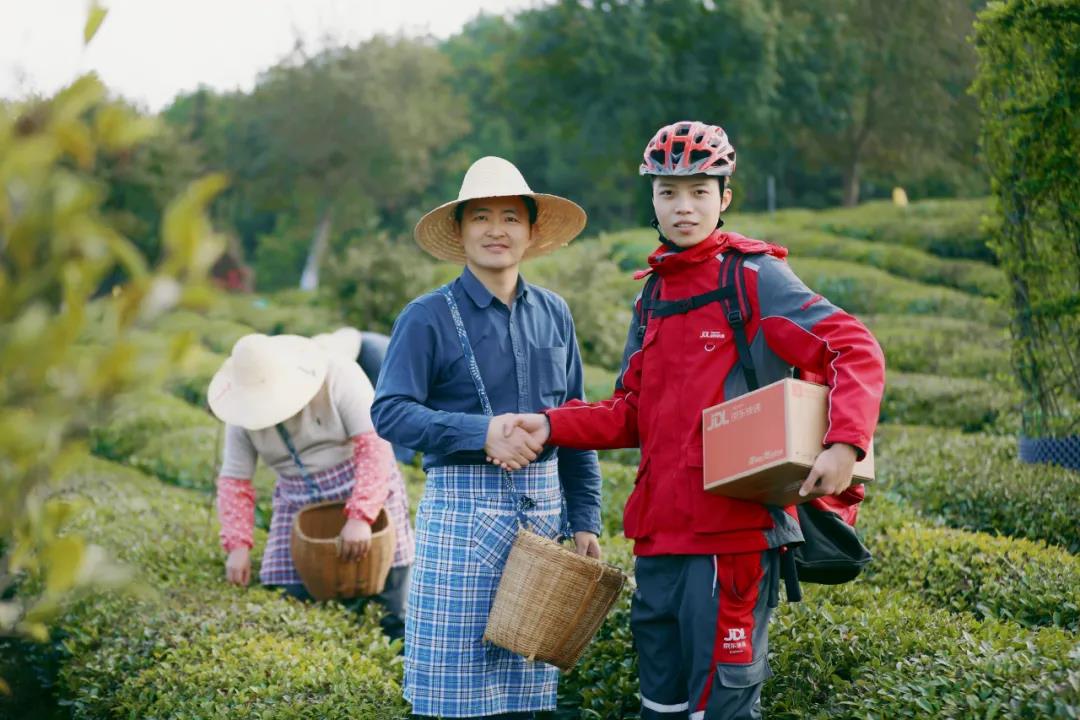
Take tea as an example. Official data shows that China’s ready-made tea beverage market size will reach RMB 478.9 billion yuan in 2021, however it is difficult for tea brands to go abroad due to the slow industrialization and branding processes. JD Super together with tea alliances and local government leverages its strength to provide preferential policies to help tea growers quickly win market share.

Since joining JD in 2017, Anji white tea has achieved a compound growth of 270% in 2020, up 270% YoY, reaching 8.7 times the industry average growth rate.

“The diversification of consumption scenarios has played an important role in the development of tea industry, and JD will take advantage of its platform to enable China’s high-end tea to reach the rest of the world,” said Lizhen Liu, general manager of JD’s FMCG business unit.

Shanxi mature vinegar has also benefited from e-commerce platforms such as JD. According to JD Super’s data, the compound annual growth rate of Shanxi mature vinegar exceeded 50% YoY in 2020 on JD. Meanwhile, this vinegar not only sells well in northern China, but has also become the first choice of condiment for consumers in many southern cities including Chengdu, Dongguan, and Hangzhou.


(zhanghui36@jd.com)

JD Worldwide Introduces New Marketing Strategies for 2021

by Rachel Liu

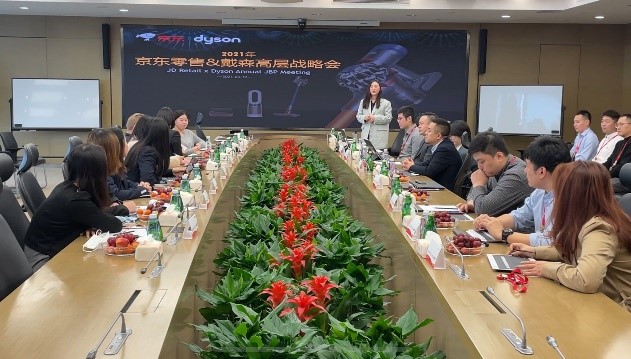
JD Worldwide, JD’s platform for imported products, aims to better leverage its marketing capabilities to help overseas brands grow in 2021 through new programs, as was shared with key partners at JD headquarters on Mar. 5.

“We hope that marketing will become a key driving force for the growth of JD Worldwide and our partners,” said Frank Yu, general manager of marketing and operations at JD Worldwide during the session. “We will focus on four key aspects: Increase the brand recognition of JD Worldwide and it’s Imported Products Day promotion on the 15th of each month, improve the efficiency of using marketing resources, and innovate in the areas of content marketing. Our goal is to achieve success together with partners.”

Among the core marketing projects is the celebrity stores project, in which JD Worldwide works with leading entertainment companies to invite celebrities and KOLs to open stores on JD to bring more traffic to the platform and improve the diversity of JD Worldwide’s customer base. JD Worldwide has worked with companies including Wanda Cinemas and Taihe Music Group to open celebrity stores, and aims to work with 160 celebrities and well-known IPs to open stores in 2021.

JD Worldwide has worked with companies including Wanda Cinemas and Taihe Music Group to open celebrity stores, and aims to work with 160 celebrities and well-known IPs to open stores in 2021.

JD Worldwide will also continue to recruit customers who are passionate about recommending products to become its influencers and join livestreams and offline activities. As of Nov. 30, 2020, the project has generated over RMB 10 million yuan of sales. JD Worldwide will also go to universities to select over 1,000 Key Opinion Consumers, especially those who have strong knowledge in vertical categories, in order to increase its appeal among young customers.

In addition, the JD Imported Supermarket, which was launched last November, will continue to be an important sales channel for overseas brands. The JD Imported Supermarket gathers high-quality consumer goods from all over the world, aiming to be a “go-to” place for customers.

Since launching in 2015, JD Worldwide has attracted over 20,000 brands and over 10 million SKUs from over 100 countries including the U.S., Canada, South Korea, Japan, Australia, New Zealand, France, Germany, etc. Any brands interested in building their business with JD in China can apply via https://www.jd.hk/cooperation_en, by emailing worldwide_BD@jd.com or by adding the “JDworldwideBD” account via WeChat.


(liuchang61@jd.com)