JD.com joined P&G China, the leading consumer goods company, and officially launched the “P&G CARE+ Accessible Shopping Assistant” on March 10, providing an array of solutions to the problems often faced by visually impaired consumers before, during, and after the online shopping process. The services aim to optimize the online shopping experiences through barrier-free consultation, home delivery, door-to-door pickup logistics services, etc.
P&G China staff testing the “P&G CARE+ Accessible Shopping Assistant”
Before sales:
JD.com will join P&G China and launch outbound voice calling services for businesses. After the visually impaired consumers turn on the screen reader, they can experience the barrier-free escort service by entering the key phrase “speed forward” in the customer service chat window of P&G China’s official flagship store on JD.com.
During sales:
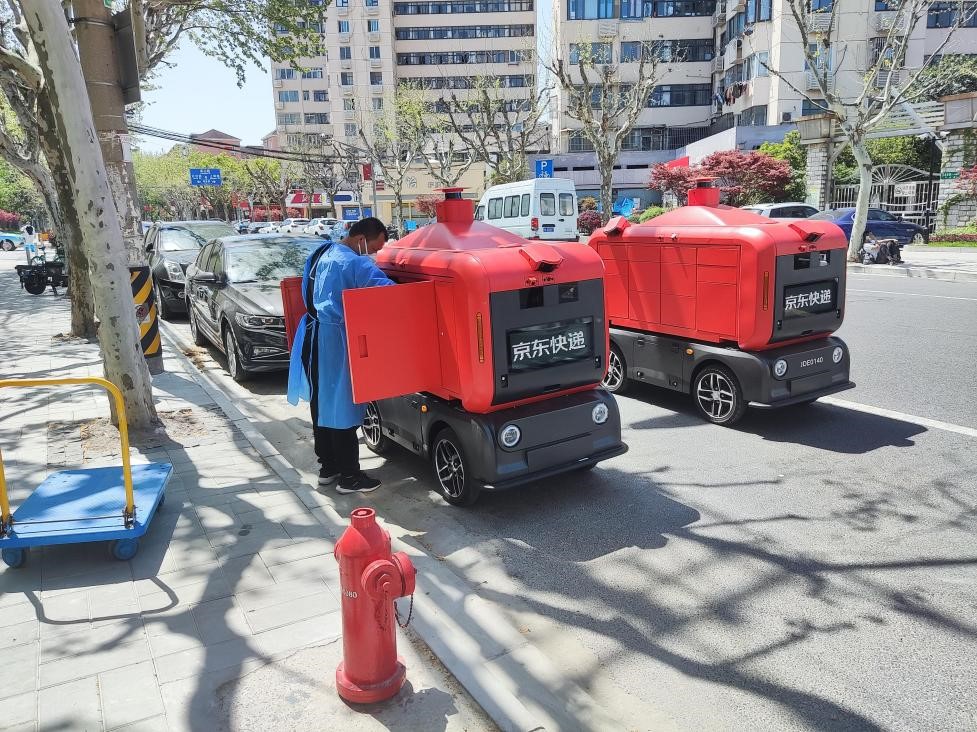
JD.com will give full play to its advantages in logistics, and work with P&G China to track barrier-free parcels. With the services of JD Logistics, the parcels will be door-to-door delivered to ensure the implementation of barrier-free services.
After sales:
JD.com will work with P&G China in solving the after-sale service needs for visually impaired consumers, and support P&G China to initiate return visits.
According to China Disabled Persons’ Federation, there are over 17 million visually impaired people in China. Due to the challenge, visually impaired consumers often encounter difficulties in grasping product information, picking up deliveries and returning products. “In the future, we will continue to work with JD.com to continuously optimize technical support and provide special services visually impaired consumers,” noted Ella Lu, General Manager of Consumer Relations Communications at P&G Greater China.
JD.com reported its fourth quarter and full year 2021 results on March 10, recording full year net revenues of RMB 951.6 billion yuan (US$149.3 billion), with an increase of 27.6 percent YOY. Notably, JD.com saw a YOY growth of nearly 80 percent in its omni-channel transaction volume in 2021, further reiterating its commitment to on-demand retail through the omni-channel approach.
With consumers’ increasing need for on-demand consumption of different product categories, a variety of merchants have joined the initiative to deliver products within an hour, further expanding the on-demand retail business.
China Resources Vanguard (CR Vanguard), one of China’s largest retail chains, serves as an example of JD’s omni-channel capabilities. Last July, more than 1,800 supermarket stores of CR Vanguard settled on JD Daojia (JDDJ), covering all types of business models of CR Vanguard, all of which are accessible through Shop Now, which is a new business dedicated for JD’s on-demand consumer retail section jointly launched by JD.com and Dada Group in 2021. Last September, CR Vanguard recorded a fourfold increase of transaction volume realized through Shop Now services compared to six months ago in March.
A Dada rider standing in front of a CR Vanguard store
Zhijiang Xu, CMO of China Resources Vanguard, said “The cooperation between China Resources Vanguard and JD Daojia (JDDJ) in omni-channel fulfillment, products, users, marketing, and other aspects has laid a solid foundation for Shop Now. Deep collaboration and co-creation will enable both parties to better seize the opportunities of on-demand retail and have a win-win future.”
During the fourth quarter of 2021, JD.com reinforced its omni-channel innovation project through its collaboration with over 600 stores of CR Vanguard. JD.com leveraged the on-demand delivery and retail platform of Dada Group, which was recently consolidated by JD.com, to help CR Vanguard achieve a growth of over 400 percent YOY in transaction volume during 2021’s Singles Day Grand Promotion.
“On-demand retail is an important part of JD’s omni-channel strategy, which helps us expand our touchpoint with our customers and provides diversified shopping scenarios,” noted Lei Xu, President of JD.com.
JD.com has successfully built collaborations with more than 370 supermarkets including Walmart and Yonghui, covering over 34,000 stores with over three million SKUs, providing consumers with on-demand shopping options through JD.com’s app, including the recently launched in-app tab “Nearby”, which gives customers access to JD.com’s one-hour delivery service in nearly 400 cities in China.
As JD.com continues to expand its omni-channel layout, brands, merchants and brick-and-mortar stores in various fields are leveraging JD.com’s omni-channel capabilities to accelerate digital transformation and high-quality development. JD.com has opened over 10,000 physical stores, such as JD Mall, JD Electronics Experience Store, JD Home Appliance Store, JD Computer Digital Store, JD Home, JD Pharmacy, SEVEN FRESH Supermarket, JD Convenience Store, JD Automobile Club, etc. In addition, JD.com is also providing services in product selection, operation, supply chain, logistics, and finance to 3.67 million pharmacies, specialty stores, supermarkets, convenience stores, automobile repair shops, and flower shops across China.
JD automobile repair shop
“JD.com’s open ecosystem and supply chain capabilities have improved operational efficiency and sustained high-quality growth to partners. JD.com’s long-term business strategy and investment outlook will always focus on creating value for customers and partners,” added Lei Xu.
In the field of home appliances, for example, JD.com launched the first JD Mall in Xi’an last year, bringing an immersive shopping experience that integrates online and offline to consumers.
JD Mall in Xi’an
Additionally, as of March 2022, more than 4,000 physical maternal and baby stores have settled on JD Daojia (JDDJ) and Shop Now. In 2021, the transaction volume of maternal and baby products through JD Daojia (JDDJ) and Shop Now increased by over 200 percent YOY. The data shows that more physical stores represented by maternal and baby stores have achieved better and faster growth through JD.com and Dada’s digital capabilities and on-demand retail solutions.
After Dada Group was consolidated by JD.com, the parties will deepen omni-channel cooperation, in which Dada will further undertake JD.com’s on-demand retail delivery business. The two parties will jointly enhance the consumption experience with continuous innovation, especially the convenient and efficient on-demand consumption experience.
“JD.com maintained a healthy growth momentum and continued to outperform the industry, contributing to the high-quality expansion of China’s consumption in a dynamic external environment.” Lei Xu, president of JD.com, said during a call to discuss JD’s Q4 and full year 2021 earnings on March 10.
JD.com recorded 23 percent year-on-year net revenue growth in Q4 of 2021 on a high comp, reaching RMB275.9 billion yuan (US$ 43.3 billion). Net service revenues for Q4 were RMB41.2 billion yuan (US$6.5 billion), an increase of 28.3 percent YoY. Net revenues of 2021 were RMB951.6 billion yuan(US$149.3 billion), up 27.6 percent YoY; and net service revenues were RMB135.9 billion (US$21.3 billion) with a rise of 44.7 percent YoY.
Amid the evolving macro-economic and competitive challenges, JD achieved an increase in both user volume and quality (as measured by spending power). The company’s annual active users reached 569.7 million in 2021, up 20.7 percent, with meaningful improvements in shopping frequency, range of categories purchased as well as Average Revenue Per User (ARPU).
“As China’s internet industry develops into a more mature stage, the traffic-driven growth model relied on subsidies is being replaced by a user quality and operating efficiency-oriented model,” Lei Xu said during the earnings call, adding that JD will explore and satisfy more user needs with higher standards and goals in 2022.
With direct management of nearly 10 million SKUs, JD further shortened inventory turnover days from 33.3 days last year to 30.3 days, the lowest level in the industry.
Facing the booming and fierce competition brought by live streaming e-commerce, Lei Xu said JD was less affected by its emergence as more customers choose JD for planned consumption.
“JD has complete capabilities of supply chain infrastructure, fulfillment, customer service, platform governance and so on,” Lei Xu said. “Compared with other e-commerce platforms, we can effectively reduce the circulation costs of the supply chain and have a greater differentiation advantage.” Operating with an open-minded attitude, JD is willing to strengthen cooperation with content platforms, and support merchant partners to better operate on these platforms, Lei Xu added.
It’s notable that the growth of third-party merchants accelerated to the highest level on JD.com in the past three years. Meanwhile, the number of new merchants added in Q4 exceeded that of the previous three quarters combined.
JD expects that third-party merchant business will grow faster than self-operated business in 2022 as the company has been optimizing the third-party ecosystem and merchant tools, said Sandy Xu, CFO of JD.com.
“The overall consumption in Q1 or even the first half of the year 2022, will be relatively conservative,” said Sandy Xu during the call. However, she was confident in JD’s performance this year: “Overall, although the retail consumption is currently under pressure to a certain extent, we will deliver higher growth than the industry average.”
On March 10th, JD.com released its fourth quarter and full year 2021 earnings results. Below is an infographic with the key highlights. The full release can be found here.
JD Super, JD.com’s online supermarket business, released the “2022 On-Demand Consumption Trend Report” on March 5, revealing the latest trends of on-demand consumption based on Shop Now consumption data. The report shows that supermarket goods are the main category of on-demand consumption, and there are 9 consumption trends, including first-tier cities (Beijing, Shanghai, Guangzhou, Shenzhen) where the majority of Shop Now consumption takes place.
Shop Now, jointly launched by JD.com and Dada Group last October, is a new business dedicated for JD’s on-demand consumer retail section, and it will more easily connect JD’s more than 550 million customers with products offering delivery within one hour.
According to the report, the top 5 cities that use Shop Now services are Beijing, Shenzhen, Guangzhou, Chengdu, and Shanghai. Beer, snacks, paper towels, baby formula, and menstrual pads make the list for top 5 categories of on-demand consumption, ranging from partying, and emergency use.
Meanwhile, the consumption preferences in different cities vary from one another. The most purchased products by consumers in Beijing are condiments, such as sesame oil, and the most purchased products in Guangzhou are shampoo and other daily necessities. Additionally, the proportion of orders for snacks purchased in Beijing has reached 45 percent.
On demographics, consumers under the age of 35 account for 55 percent. Consumers over the age of 46 have gradually joined the Shop Now consumer group, taking up 24 percent and are keen to purchase daily necessities such as soybean oil through Shop Now services.
The growth rate of female consumers born after the year of 2000 has exceeded 6 times YOY. Many post-2000 females tend to purchase high-quality nutritional products such as premium milk through Shop Now. Another high-growth group are mothers born after 1995, which has increased sixfold YOY in 2021.
At present, JD Super with Shop Now services have covered more than 34,000 physical stores, providing immediate consumption services to consumers in nearly 400 cities across China. It has become an increasingly common choice for consumers to visit JD Super online from home, purchase daily necessities, and enjoy the one-hour delivery experience.
As Chinese women’s financial status continue to evolve, their consumption habits are also changing and diversifying. On International Women’s Day (March 8), JD’s Consumption and Industry Development Institute released a trends report featuring analysis on female consumption, which shows female shoppers continue to focus on their own needs and tastes, while Chinese women are spending more on themselves.
Compared to male buyers, Chinese female shoppers tend to spend more on household products for their family members. The number of female users on JD.com has continued to climb in recent years, and their purchasing power has reached a new high.
Below are some of the key takeaways from the report:
Women are increasingly spending on their own interests
Women outpace men in family consumption
Women upgrade skills both physically and mentally
Women are a driving force in purchasing technology products
Own interests
During the process of consumption, female consumers are constantly re-examining the meaning of shopping and thinking about the real value brought by consumption. What is noticeable is that more women put “buy for self” as a top focus. The data shows that in 2021, the proportion of women’s consumption to gratify themselves increased significantly to reach 54 percent, and the transaction value increased by nearly 30 percent year-on-year (YoY).
Specifically, the transaction volume of luxury items, education and training, local life/tourism, and health services increased dramatically. From March 4th to 7th, luxury brand turnover climbed by 167 percent YoY, luggage categories increased by four times YoY, shoes and boots increased by 105 percent YoY, and the apparel categories increased by 100 percent YoY. The data also revealed that women’s search styles for clothing are more specific and diverse, which to a certain extent shows that women are more aware of themselves and how to cater to their needs and preferences than ever before.
Family consumption
Despite the fact that women’s consumption of self-satisfaction is increasing, the share of family consumption is still substantially larger than men’s. According to the JD report, Chinese female shoppers are more likely to acquire high-tech household appliances for their families. They favor innovative technical household products and baby care items, for example. JD.com data show that female users’ purchases of household washing machines, floor/window cleaning robots, and dishwashers increased respectively by 440 percent, 104 percent, and 69 percent in 2021 YoY. Baby formula smart kettle, Smart Lamp, and baby nasal aspirator all had a 274 percent, 143 percent, and 63 percent growth in sales YoY respectively.
Upgrade skills
According to the JD’s report, women insist on self-improvement both through fitness and inner cultivation. Female consumers contributed 52 percent of book sales in 2021. For the past three years, females outnumbered men by 2.38 times in the number of new customers under the category of books.
Among the Top 10 categories of books most frequently purchased by female shoppers in 2021, military books, comic books, and magazines/periodicals saw the fastest YoY growth in the number of copies sold. Of particular note is the significant growth in females’ consumption of political and military books, which had an increase of 72 percent YoY in 2021 in terms of the number of copies sold.
Women are also looking for fitness products. JD’s sales in 2021 showed that the number of items purchased by women for sports services, swimming, ice and snow sports, and equestrian/folk sports increased significantly YoY, with the number of items purchased for sports services increased 8.4 times YoY.
JD’s data shows that in 2021, the number of pieces of strength training equipment sold among female customers increased by 65 percent YoY. The products with the fastest growth in female purchases were Flexi-Bars, hand grip strengtheners, resistance bands, single/parallel bar/pull-up bars, and shot puts. Flexi-Bar became an important option for women’s strength training, with a rise of 6.1 times in the number of items purchased YoY.
Technology products
JD’s data show that in the past year, the turnover of smart devices purchased by females has risen by 40 percent YoY. In particular, the turnover of smart devices purchased by women aged 46-55 surged by 122 percent YoY.
Data also show that in 2021, the consumption of sports trackers and smartwatches among women aged 46-55 went up dramatically, with a turnover increase of 2.7 times and 1.4 times YoY respectively, while the turnover for VR (virtual reality) glasses, drones, and smart robots also increased by 76 percent, 70 percent, and 40 percent YoY respectively.
JD Technology and Miracle Automation Engineering Co., Ltd (MAE) signed a cooperation framework agreement on March 8 to step up cooperation in the entire industry chain of lithium battery recycling with a new business model of “Internet + recycling”.
Signing ceremony between JD Technology and Miracle Automation Engineering Co., Ltd.
An ecosystem for lithium battery recycling will be jointly built based on MAE’s resources and experience in the lithium battery recycling industry and automobile-related fields, together with JD Technology’s management capabilities in warehousing and logistics, supply chain technology, cloud computing and big data. It also provides supply chain technology services for companies with financing needs in the industry, aiming to establish an industry benchmark and fully realize the unity of economic, environmental and social benefits.
Mr. Huang Bin, Chairman of MAE, said he was very optimistic about the cooperation with JD Technology. MAE has been focusing on the vision to be “dedicated to serving the whole life cycle of automobiles”, and has put much emphasis on the lithium battery recycling industry, Mr. Huang added that he believes the cooperation with JD Technology will help promote the long-term development of the industry.
According to China’s Ministry of Industry and Information Technology, 3.521 million new energy vehicles were sold across the country in 2021, up 1.6 times year on year, which made China the largest market of new energy vehicles in the world for seven consecutive years. Driven by the surge in production and sales, the demand of batteries installed in new-energy vehicles is high. Furthermore, the new energy vehicles sold in the previous period will be gradually scrapped, triggering a strong need for recycling of retired batteries.
Ahead of International Women’s Day, JD.com and China Women’s Development Foundation co-launched a charity activity in Daliangshan Yi autonomous prefecture, a mountainous area in China’s Sichuan province, to raise local women’s awareness on feminine hygiene protection.
The donations arrive at the village
The activity plans to promote healthcare knowledge and provide hygiene products such as HPV self-test kits, intimate wash and sanitary pads for 1,500 women in Zhaojue county of the region. The donations were handed to the recipients starting on March 4th.
A sanitary bag is given to each participated local woman
JD Health hosted livestream sessions under the theme to popularize the knowledge about cervical cancer and invited Dr. Lihui Wei, a renowned gynecologist for online medical consultation.
JD Health’s livestream with Dr. Wei on the screening and prevention of cervical cancer
According to Dr. Wei, based on a decade of research data, at-home HPV tests deliver almost 100% accuracy, and e-commerce provides a convenient way for everyone to acquire self-test products, instead of relying on limited hospital resources.
Additionally, JD users can join this activity through the “Orders Charity” program jointly hosted by JD Finance and JD Foundation, by which they can exchange their payment points for “charity energy” free of charge to lift the organizers’ donation amount and encourage greater public participation. They can also donate money directly to the campaign.
Poster of JD’s “Orders Charity” program
AllianzJD, the insurance branch of JD.com has provided RMB 1 million yuan medical insurance for Daliangshang women.
JD Foundation said that JD will continue to integrate various capabilities under JD.com, making full use of the company’s supply chain and logistics strength to work together with public welfare organizations to enhance women’s wellbeing, especially those in rural areas.