What Does the Middle Class Costumers Like to Buy on Yihaodian?

by Rachel Liu

Earlier this year JD upgraded the B2C e-commerce platform Yihaodian (No. 1 Store) to be the first online membership-only retail platform in China, providing a premium shopping experience for members, many of which are middle-class customers. Recently a report released by Yihaodian reveals the shopping preferences of these customers in six cities in China.

The report, based on the consumption data of Yihaodian, covers Beijing, Shanghai, Guangzhou, Shenzhen, Suzhou and Hangzhou, six cities where consumers have relatively higher purchasing power. It shows that in Beijing, customers like to buy baby diapers after midnight, and 70% of customers who make orders are male customers. Customers in Shanghai like to buy imported beer the most, while customers in Guangzhou prefer high-end health supplements, especially customers who are born after 1990.

The report also shows that in Shenzhen, 80% of male customers bought smart wearable products for their partners. Customers from Suzhou are passionate cat lovers – 15% of customers who buy cat food on Yihaodian are from Suzhou, and most of them are female. Female customers from Hangzhou are the ones who love to buy home furnishing products the most.

The upgraded Yihaodian membership program focuses on providing high-quality, selected products with competitive prices. Customers can also enjoy JD Logistics’ unparalleled same-or-next day delivery service. Other services that ensure a high-quality customer experience include “membership fee insurance,” which means if a customer place over 12 orders in one year and the money they saved (compared with JD prices) is lower than the money they paid for the membership fee, Yihaodian will provide a full refund of the membership fee; as well as 24/7 customer service, refunds of orders with broken packages, special discounts for new members and more, providing a better and more economical shopping choice for the growing population of middle-class customers in China.

 

(liuchang61@jd.com)

JD Digits and PKX to Take Smart Airports to the Next Level

By Ella Kidron

When Beijing’s Daxing International Airport (PKX) opened last year, many hailed it as the most innovative airport in the world. Now, an airport that is already fully-equipped with 5G, smart parking and more is about to get even smarter.

JD Digits and Daxing International Airport have reached an agreement to establish a joint intelligent airport innovation laboratory. The project, which was reported by China Civil Aviation News on Dec. 2nd, was announced via a ceremony at the fourth annual JD Discovery (JDD) tech conference held in Beijing last week.

The project will include a comprehensive innovation space integrating the presentation of construction achievements in intelligent airports, testing of new products and technology, and the pre-production testing of information systems. PKX features the world’s largest single-building airport terminal (700,000 m2) and sits on 47 km2 of land. The first phase of the project was designed with a target of 72 million passengers, 2 million tons of cargo and mail and 620,000 aircraft movements per year in the long term. All of this means that its operations are extremely complex.

Based on the airports real, multi-faceted scenarios, and relying on cutting edge technological capabilities in algorithms, big data technology and artificial intelligence accumulated by JD Intelligent City over the years, the two sides will help build an intelligent airport innovation system and achieve joint product innovation and incubation. The parties have already carried out research covering aspects high precision positioning, intelligent passenger service robots, data room management, and more.

JD began cooperating with Daxing Airport in 2019. JD Logistics provides integrated logistics services including storage, transportation and delivery in the airport, while JD Retail Experience shops offer passengers the convenience of on demand or on-the-go shopping. Additionally, JD Digits has implemented a smart parking system, which allows drivers to easily locate the most suitable parking space for their car and complete in-app payment.


(ella@jd.com)

JD’s Cold Chain National Network Empowers a Dairy Firm in Inner Mongolia

by Yuchuan Wang

Sales of Langege Dairy, an Inner Mongolia based dairy enterprise, increased 300% on a year-on-year basis during this year’s Singles Day Grand Promotion (Nov. 1-11). Through its deep collaboration with JD Cold Chain, this regional dairy company is expanding its footprint to the even larger national market.

Constituting approximately 12% of China’s total land area, Inner Mongolia has incubated well-known dairy brands in the country such as Yili and Mengniu. Established in 1988, Langege had focused on its regional business in Inner Mongolia. In 2015, it began to supply to supermarkets in Beijing. However, limited cold chain infrastructure made the company unable to sell to a larger national market.

“Cold chain is the lifeline of dairy enterprises, especially for those of us who specialize in chilled dairy products,” said Jianguo Ge, head of logistics at Langege. “A quality wide-coverage and efficient cold chain service provider is crucial for us to expand our business.” In June this year, Langege came to JD Cold Chain for help.

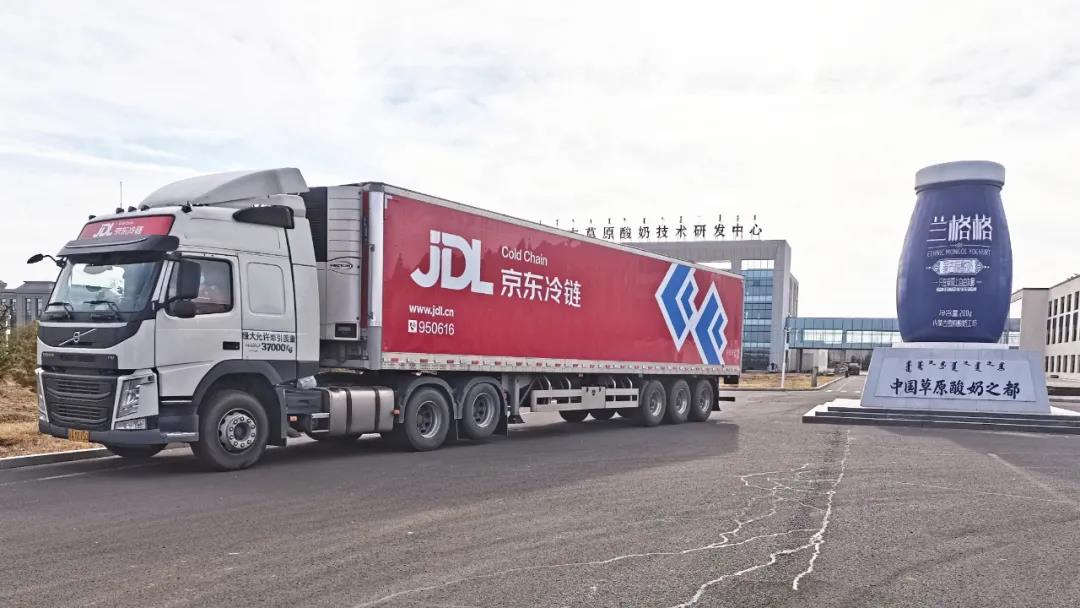
JD’s logistics cold-chain truck drives out of Langege’s enterprise park

JD’s logistics cold-chain truck drives out of Langege’s enterprise park

Operating China’s largest cold chain trucking service network, JD Cold Chain has over 34,000 truck routes in 31 provinces, municipalities and autonomous regions and is able to completely meet Langege’s transportation needs. “The collaboration with JD also helps optimize our logistics management,” said Ge. Previously, the company had to work with different service providers in each region, resulting in service quality and price disparities. Ge recalled a time that Langege hired a local logistics company to ship dairy products to Xi’an only to find that the products had been spoiled due to temperature wasn’t strictly controlled.

Langege‘s signature product is high quality yogurt with a shelf life of 21 days. With the help of JD, shipping time has been decreased to 1 to 2 days and JD enables a full visibility of temperature control during transportation process.

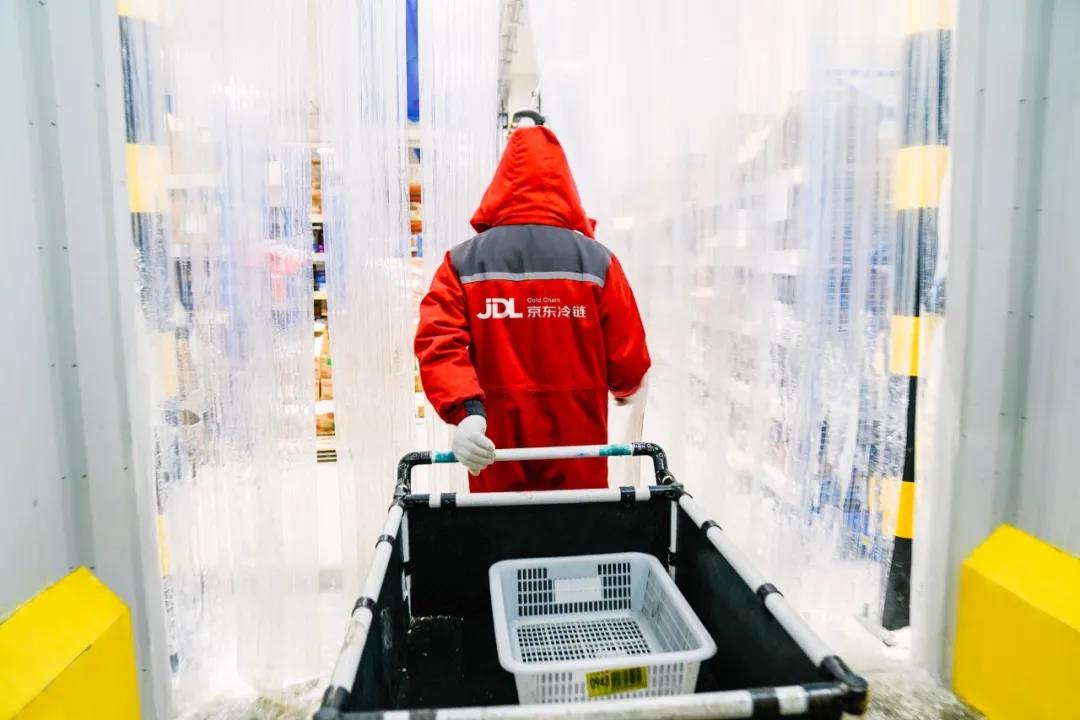
Inside one of JD’s cold chain warehouses

Inside one of JD’s cold chain warehouses

In addition, the warehousing and delivery network for fresh produce which covers 300 cities also supports Langege in its e-commerce sales. As the company gradually puts its products in JD’s cold chain warehouses, Ge has seen the improvement of cost and efficiency and customer satisfaction.

“Right now, consumers from five cities including Beijing, Shanghai, Guangzhou, Shenyang and Jinan can buy our products on JD. We hope that number can be 50 or even hundreds of cities in the future through the collaboration with JD Cold Chain,” said Ge


(yuchuan.wang@jd.com)

JD to Provide 15,000 Jobs for Class 2021

by Ella Kidron

JD will provide 15,000 jobs for the students graduating from college in 2021. This includes 10,000 jobs provided by JD Logistics as an effort to train management talent from the ground up.

According to data released by the Ministry of Education and the Ministry of Human Resources and Social Affairs, there are 9.09 million college graduates in the class of 2021. That is to say, roughly 17 of every 10,000  graduates in the class of 2021 will join JD.com.

In recent years, JD has created more than 2,000 types of jobs, appealing to graduates majoring in technology R&D, marketing, and more. As of September 30, 2020, the number of employees of listed and non-listed companies under JD’s umbrella exceeded 320,000 with a net increase of 60,000 since COVID-19 outbreak early this year, alone.

JD’s size and steady business growth have enabled the company to offer more employment opportunities even amid the pandemic. By August of this year, the company already had given job offers to nearly 1,000 students majoring in technology in the class of 2021 as part of its commitment to recruit R&D talent prior to graduation. JD provides extensive support to foster new talent, including freedom to innovate, personalized training mechanisms and promotion resources, and more.


(ella@jd.com)

Posted in ESG

JD Boosts the Smart Wearable Device Industry

by Ling Cao

Data from International Data Corporation (IDC), a leading consulting firm, showed that 4.5 million adults’ smart watches were sold in the third quarter of 2020, increasing by 76.8% YoY to set a record and making it the main sales category in China’s smart wearable device industry. The report was released on December 1st. Platforms like JD accelerated the growth rate in this area, and JD’s own data showed that smart watches dominated the popular products from JD’s electronics category.

Xuefei Pan, research manager from IDC said, “The adults’ smart watches can be connected with other devices, which improved its application, and helped other devices to recognize and analyze customer needs.”

JD has also worked with partners to launch C2M (Consumer-to-Manufacturer) smart watches. On Dec 2, JD and ZTE launched one that can connect with the newly launched C2M 5G cellphone tailored for elderly people.

Daniel Tan, president of JD Mobile Devices said during the press conference, “We hope to make people’s lives more convenient via technology innovation.”

Other popular smart watches on JD also include Honor’s GS Pro, vivo WATCH and more. In the latest Singles Day Grand Promotion, sales of smart watches on JD increased 115% YoY.


(ling.cao@jd.com)

Dr. Yu Zheng of JDT Selected as IEEE Fellow

by Kelly Dawson

Dr. Yu Zheng, Chief Data Scientist of JD Technology and president of JD’s Intelligent Cities Business, who pioneered the concept of urban computing, has been named fellow of Institute of Electrical and Electronics Engineers (IEEE) , an elite distinction awarded in recognition of a high level of achievement.

Dr. Yu Zheng, Chief Data Scientist of JD Technology and president of JD’s Intelligent Cities Business


Zheng’s IEEE Fellow distinction follows a long list of other awards, including the ACM SIGSPATIAL 10-Year Impact Award for his achievements in the field of spatio-temporal data. He was the first person to receive the award two years in a row, in 2019 and 2020.

Zheng was also named an Outstanding Young Innovator (TR35) by MIT Technology Review, as one of 35 top scientists under the age of 35 at the time. Past winners of the award have included Facebook founder Mark Zuckerberg; Yahoo founder Jerry Yang; and Larry Page, co-founder of Google.

More recently Zheng was named to the AI 2000 World’s Most Influential Scholars list, which is conferred in recognition of outstanding technical achievements with lasting contribution and impact.

For Zheng, technology has one purpose: to benefit society. As his achievements have grown, this philosophy has remained a constant through line. Again and again, he has applied his efforts and intelligence to solving problems that directly affect people.

Zheng’s approach was already evident when he worked for Microsoft’s team in Beijing in 2006. During his early months in the city, he encountered a problem common to commuters in the sprawling city: traffic congestion. He got to work, developing an algorithm based on both the real-world experience of taxi drivers and GPS data insights. The technology was ultimately applied in Microsoft’s Bing Maps app, and is estimated to have reduced driving time by an average of 20%.

Zheng didn’t stop there: He then analyzed why the congestion was happening at all, and determined that massive improvements could be made to public transportation infrastructure. He also recommended areas in which expansion of public hospitals and schools would reduce the need for car traffic. His research led to the launch of his first urban computing project, “T-Drive,” a smart driving navigation service.

More recently, Zheng oversaw the construction of an intelligent city operating system in Jiangsu’s Nantong city, which boasts China’s first modern command center. This command center can realize digital city management, enabling precise transportation forecasting, intelligent monitoring for hazardous chemicals, monitoring of environmental and air conditions, and more. The system integrates information from different departments across the city, and flags abnormal dips or rises in data, automatically notifying local departments with instructions on management.

One example is the system’s integrated CCTV monitoring rivers and sluice gates across Nantong, which will notify relevant departments and deploy personnel in the case of rising water levels that may signal impending flooding. Since the launch of the system in September, it has already issued hundreds of abnormal situation warnings across different departments.

At the time of the launch in Nantong, Zheng said, “This command center project represents real application for JDD’s AI and big data-based city governance system. It is not aimed at solving problems for a single department, but rather an innovation application to solve cross-department challenges.”

In addition to his work at JD Technology, Zheng has published more than 100 research papers in respected international publications. Five of his research papers have won “Best paper” awards at international conferences; and his papers have been cited more than 31,000 times, according to Google’s Scholar Index, which also ranked Zheng first in the world for topics related to urban computing.


(kellydawson@jd.com)

JD Launches the First 5G Smart Phones for Elders

by Rachel Liu

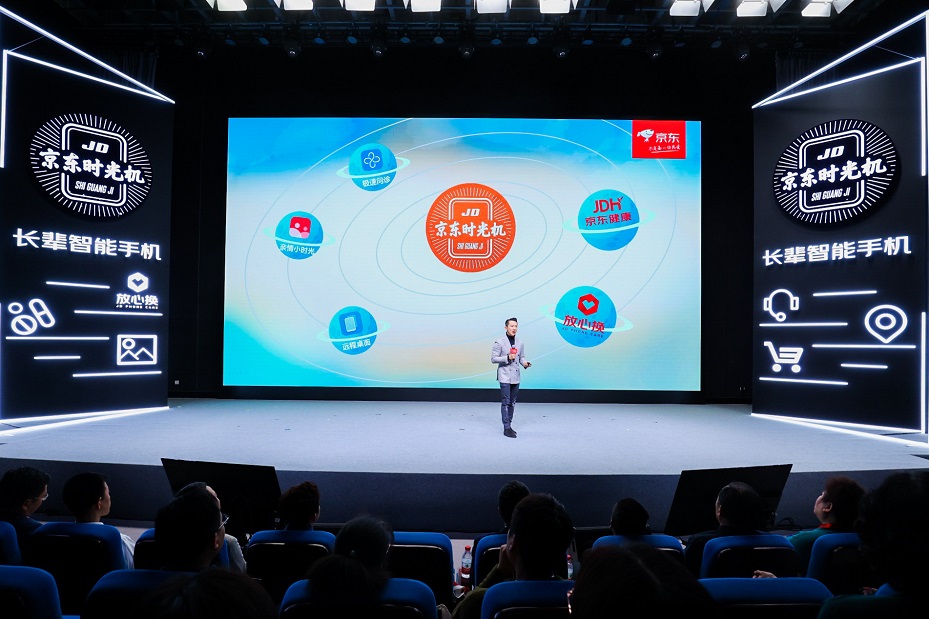
JD worked with several mobile phone brands to launch smart phones for elderly people through its Consumer-to-Manufacturer (C2M) initiative, helping seniors live more conveniently in a society filled with digital technologies. The project was announced at a press conference at JD headquarters in Beijing on December 2nd. Daniel Tan, president of JD Mobile Devices; Lijun Xin, CEO of JD Health and popular Chinese TV personality Jiong He, who is also Chief 5G Experience Officer of JD, attended the event.

The smart technology provides many conveniences for modern society. However, elderly people may encounter difficulties with mobile payment or online shopping, etc. JD identified those difficulties elderly people face related to entertainment, transportation and communication with their children, and worked with mobile phone brands to improve the functions on traditional smart phones.

“As a technology driven company, JD has the responsibility to leverage technology to make customers’ life easier,” said Tan. “The mobile phone that we developed is not just a phone, but a solution for elderly people’s lives, and a great product that customers can give to their parents.”

The 5G smart phone that JD launched with ZTE is equipped with services such as remote assistance, detailed instructions, fast medical consultancy and more. For example, customers can download the app called “family time” developed by JD, and connect to their parents’ smart phones. Then customers can remind their parents remotely to take medicine or share family photos with them. Parents can easily make emergency calls and share their locations with their children.

“We are very glad to work with JD to create a smart lifestyle for elderly people,” said Fei Ni, general manager of terminal business at ZTE.

“We are very glad to work with JD to create a smart lifestyle for elderly people,” said Fei Ni, general manager of terminal business at ZTE. “With JD’s big data on customers’ feedback and the health-related service provided by JD Health, I am proud that we can work together to leverage technology to make our customers’ lives better.”

“JD Health attaches great importance to the wellbeing of senior citizens,” said Lijun Xin, CEO of JD Health. “By working with JD Mobile Devices, we have implemented the health consultation related services of JD Health into the smart phone, hoping to provide more comprehensive services for our customers.”


(liuchang61@jd.com)

JD’s Data Shows Different Warming Consumptions Between Northern and Southern China

by Hui Zhang

JD’s data continues to demonstrate the vitality of the post-COVID economy in China, revealing how consumers from the northern and southern parts of China are keen on different household products to keep warm as the weather is getting colder.

According to JD’s data in November, consumers from northern China bought more heat warmers while those from southern China spent more on innovative heating products, such as electronic towel  racks, which may serve as towel dryer, heater and dehumidifier.

Since consumers in northern China started getting heat from the  public utility system in early November, radiators and wall-mounted furnaces have become best-sellers for local people who want to supplement the in-house heating. Sales of radiators and wall-mounted furnaces on JD increased by over 100% YOY on Nov. 1 alone. Sales of the two categories increased by 77% YOY from Nov. 1 to Nov. 26, with the majority of radiator consumers being women, accounting for 56.29% of the total number. Shandong province, Hebei province and Beijing are among the top three regions in terms of purchase volume.

Compared with the northern part of China, which is dry and warm (indoors) thanks to the public utility system, the southern part is relatively wet and cold, which is difficult for the drying of household necessities and clothes. Traditionally, as a national policy created in early 1950s, public utility system in cities and townships in southern part of China doesn’t provide heating services during the winter, due to the relatively higher temperature comparing with the northern part of China, in order to save energies.

As a result, innovative warming household products, such as electronic towel warming racks, are favored by local people in southern part of China. According to JD’s data in November, electronic towel racks are widely welcomed by consumers in the southern part of China, with married men aged 26-35 particularly keen on buying electric towel racks. Jiangsu, Sichuan, Guangzhou and Shanghai are among the top four regions, accounting for more than 50% of the sales of electronic towel racks.

“This year is expected to be one of the particularly cold years, and a new round of cool air is coming,” said a merchandising manager from JD. “JD has leveraged its big data capability to precisely recommend household warming products to potential consumers.”


(zhanghui36@jd.com)