JD Launches JD Esports, Its Own Mobile Gaming Team

by Hui Zhang

JD will launch a mobile gaming team- JD Esports – a move to further explore the e-sports industry after the establishment of JD Gaming (JDG) in 2017. The team is composed of members from the previous team for the Peacekeeper Elite game, and is preparing for the upcoming Peacekeeper Elite League 2020 Season 3.

The creation of JD Esports is also a key step since the company announced to launch an JD Esports plan with partners including Tencent, Black Shark, Red Magic, ROG, Lenovo, and telecoms and mobile hardware operators in July at ChinaJoy, the largest gaming convention in China. The initiative aims to accelerate the development of the gaming phone industry by focusing on gaming devices and e-sports competitions and providing a better gaming experience for players.

“JD will make full use of its advantages in traffic, technology, distribution, promotion, supply chain, and payment to help partners maximize business value by organizing e-sports events and related games,” said Daniel Tan, president of JD Mobile. He added that JD will also explore more distribution channels, establish a marketing integration platform, enable supply chain manufacturers, and apply cutting-edge technology to further drive business.

In addition, JD, as the first company to create the concept of a “gaming phone” back in 2017, will work with mobile phone brands to develop gaming phone products using the Consumer-to-Manufacturer (C2M) model in which JD uses a data-driven approach to develop products based on consumers’ demands.

JD is ambitious in constantly exploring the field of e-sports. In the PC gaming field, JDG has become one of the top teams loved by gamers, and it will be one of China’s representative teams to participate in the League of Legends World Championship 2020. In the mobile gaming field, JD was also the exclusive e-commerce partner for KPL Spring, KPL Fall, and the Honor of Kings Anniversary in 2019.


(zhanghui36@jd.com)

College Students Host Popup Shop in Dorm Courtesy of JD’s Free Exchange Service

by Hui Zhang

Have you ever shopped in a dorm? Six female students at a university in Jinan City, east China’s Shandong province, took advantage of JD.com’s free exchange service to host a popup clothing store in their dorm so friends and classmates could shop safely indoors during the pandemic.

Thanks to the service, JD customers can swap out the same item of clothing for another color or size almost instantly, with the app taking only 0.1 second to register the change—and delivery and exchange of the new item often taking place on the same day, thanks to JD’s effective fulfillment capabilities.

Students Shopping in Dorm Corridor

Students Shopping in Dorm Corridor

Organizers Chenchen and five roommates bought more than 100 items of clothing from JD.com, lining them up in their dormitory corridor on Sept.16th. That morning, nearly 100 students stopped by, ultimately purchasing more than 20 pieces of clothing.

“JD’s free exchange service eliminated our worries about the size and colors, and opened up a new way for us to enjoy shopping during the pandemic,” Chenchen said.

“JD’s free exchange service eliminated our worries about the size and colors, and opened up a new way for us to enjoy shopping during the pandemic,” Chenchen said.

Integrating AI and big data, JD’s free exchange service covers some of the clothes and shoes categories in JD’s first-party stores, and will be expanded soon. According to the guidelines of the service, consumers only need to select their desired replacement item and submit an application. After review, JD’s system takes advantage of big data to automatically arrange the nearest courier to ensure the exchange is completed as quickly as possible. Customers can track the process in the JD app.

JD also offers free replacements for damaged items and packages.


(zhanghui36@jd.com)

JDD IPO Perspectives: JD Digits by the Numbers

by Vivian Yang

JD Digits filed its IPO papers on the Star market in Shanghai on September 11th. Here is a quick summary of some key figures in its over 400-page prospectus:

The first: JD Digits’ IPO is widely expected to be the biggest digital technology IPO on the Star market. The company adopts a TIE (Technology + Industry + Ecosystem” service model focusing on providing comprehensive digital solutions to businesses. It is the first digital technology provider to join over 4,000 listed companies on China’s A-share market.

RMB 10.327 billion yuan is the revenue JD Digits reported in 1H 2020. In the past three years from 2017 to 2019, its annual revenues were RMB 9.07 billion, RMB 13.616 billion and RMB 18.203 billion respectively, with a compound annual growth rate of 41.6%, a heavy-weight for the one-year-old Star market.

239.05%: Though innovation businesses only account for 5.57% of the total revenues, they grew fast in the past three years with a compound annual growth rate(CAGR) of 239.05%. These emerging businesses mainly target providing digital solutions to city governments and other clients (as opposed to its many merchants and financial institution clients) in the areas of intelligent cities, digital agri-husbandry, digital marketing and more.

Numbers of clients:  Currently JD Digits has 600 financial institution clients including commercial banks, insurance companies, funds, trusts and securities companies. It has served one million small and micro enterprises, 200,000 small and medium-size enterprises and 700 large business centers with its business and technology solutions. In terms of government and other client services, JDD has served more than 40 urban public service organizations with the smart city operating system as its core product. It has a huge IoT marketing platform with over 15 million self-operated and alliance media points, covering more than 300 cities and more than 600 million people.

15.67% is the R&D spending as a percentage of revenue for JD Digits in 1H 2020.This percentage is higher than over 80% of companies listed on the Star market, and makes JDD rank among the top 5% of companies on the A-share market. The company steadily increased its R&D spending, reaching RMB 1.078 billion yuan, RMB 1.743 billion yuan, RMB 2.567 billion yuan respectively in the past three years and RMB 1.619 billion yuan for the first half of 2020 alone.

70%: By June 30th,2020, among JD Digits’ 9,989 employees, 70% are R&D personnel and staff in technology-related positions. The company targets hiring world-class talent, and so far, has gathered over 40 top-notch scientists from all over the world who work focus on AI and exploring the commercial value of technology and its products. More than 100 top technology experts are leading work on industrial-level applications of cutting-edge technologies such as machine learning, deep learning, knowledge graph, computer vision, voice and natural language processing.

72%: 72% of the funds raised during this IPO will be directly used for technology-related projects, especially for the expansion and upgrading of main business, and continuing to build up its R&D strength to stay ahead of the technological curve.

The post-90s generation: talented young people are the absolute main force for JD Digits. The prospectus showed that over 95.5% of JDD’s employees are born after 1980 with 48.7% of them belong to the post-1990 generation.

And many more “firsts”:  The 400-page prospectus listed a number of JD Digits’ business breakthroughs in its seven years of development. Many of the company’s achievements are also industry milestones, including being the first in China to introduce JD IOU (白条), a credit product on the internet; the first to issue consumer finance ABS; the first to create smart asset management technology solution products; the first to adopt blockchain in ABS issuing; the first to develop intelligent city operating system for China’s cities and more.


(Vivian.Yang@jd.com)

JD And China Telecom To Deepen Cooperation On Supply Chain

By Martin Li

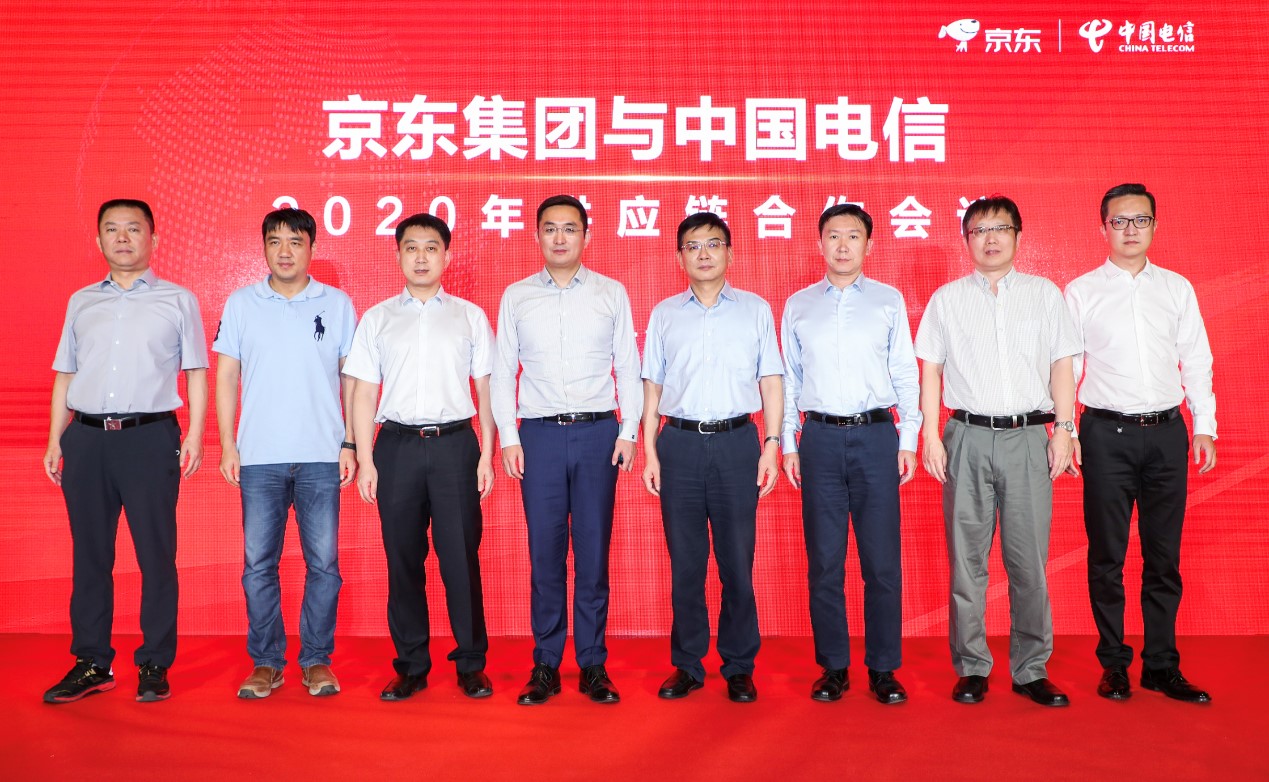
JD and China Telecom will deepen ongoing cooperation in sharing supply chain resources, building a procurement data system and ensuring emergency supplies during disaster conditions, based on a work meeting on September 21st . Additionally, the two companies will explore cooperation in standardization of industrial products and standard management.

One aim of the deepened cooperation is to complete a mechanism to ensure the availability and delivery of supplies during emergencies like flooding and the ongoing COVID-19 pandemic. A complete mechanism will be aimed at reducing cost and to speed up supply.

The two will also explore smart operation of supply chain and logistics.

“JD and China Telecom have achieved many innovations in smart procurement,” said Song Chunzheng, vice president of JD.com and president of JD’s enterprise business. “With changes in the market and industry, JD’s enterprise business will keep combining the most advanced technologies and new scenarios, in an effort to expand cooperation and improve related services.”

JD and China Telecom have been cooperating for seven years to improve the B2B procurement path via e-commerce. Their joint efforts have seen procurement time and efficiency decrease from eight days to within three days. By the end of August this year, the cooperation had saw total procurement volumes of over RMB 2.8 billion yuan.


(bjlihao3@jd.com)

JD Super Inks Deal With Wine Association To Boost Industry

by Martin Li

JD Super, JD’s online supermarket, will cooperate with China Alcoholic Drinks Association to drive digitalized warehousing and logistics services in the wine industry, as well as promote quality wine brands.

As part of the cooperation agreement announced on September 21, JD will open its Cloud and AI capabilities to participating wine brands to help digitalize the industry chain. Additionally, JD will make use of its e-commerce platform, which has over 400 million active users, to enhance wine branding and improve consumers’ awareness of quality wine-producing regions.

“We hope to work together with the association and wine enterprises to build an industry cluster of quality wines by taking advantage of JD’s strength in digital supply chain, logistics and branding,” said Chen Songfeng, head of JD’s liquor and alcoholic beverage division.

“The deepened cooperation between JD and the association is expected to boost development of China’s wine industry and innovation in the industry,” said Song Shuyu, president of the association, of which JD is a member.

JD Super contributed to more than half of sales in the B2C wine and drink market in China between January and July this year, according to Nielson data. During the same period sales of wine, beer and imported alcoholic beverages all saw robust growth on JD Super.

On June 18, JD’s annual mid-year grand promotion, JD Super saw its wine sales exceed RMB100 million yuan within the first minute after the event opened.

At the launch ceremony on September 21, JD also announced its plans to promote agricultural products. The program will extend to counties and towns which produce quality agricultural products.

“JD will use its supply chain, logistics, technology, finance and marketing strengths to better connect quality agricultural products and consumers,“ said Meng Xiangqi, who is in charge of marketing for JD’s platform business.

From January to June this year, JD Super helped promote more than 10,000 agricultural products from over 100 production areas, benefiting over one million farmers.


(bjlihao3@jd.com)


7FRESH LIFE Adds 3 Stores in Beijing, Demonstrating Innovative Model

by Ella Kidron

JD.com has opened three more 7FRESH LIFE community stores in Beijing offering round-the-clock meal time solutions for local residents. The three new stores (precise addresses can be found here) are located in Beijing’s busy Chaoyang district, and are expected to cover 250 residential compounds in a 1.5 km surrounding area, providing quality services to around 800,000 people. The steady opening of community stores demonstrates the value of this model to consumers. JD now operates six such stores in Beijing.

7FRESH LIFE combines community “restaurant + fresh food store + convenience store”, serving as a warm and caring neighbor. Parents will find quality fresh ingredients in 7FRESH LIFE, while busy professionals can also get nutritious prepared food. Taking advantage of its omnichannel capabilities, 7FRESH LIFE provides a location-based online channel through its app for consumers to buy from the shop any time and have their products delivered in as fast as 30 minutes.

Community stores are typically defined as those within a 0.5-1.5 km radius, or “life circle”. Jonathan Wang, head of 7FRESH, said in a byline article that was summarized by research analysis firm IGD that the growth of the community store model is in part due to urbanization, which increases the number of middle-class shoppers, who lack time but are unwilling to compromise on quality and lifestyle. Rather than simply being a slimmed down version of a convenience store, community stores focus primarily on meal occasions. As such, they carry a smaller range of products than what can typically be found in a supermarket. JD’s model upgrades the traditional neighborhood convenience store into an omnichannel meal solutions hub. Services like home delivery from 7:30 am to 10:00 pm each day and extended operating hours provide enhanced convenience to neighborhood consumers.

“In the next three years, 7FRESH LIFE will rapidly develop and copy the original prototype model to more communities, using fresher, more precise and more consumer-savvy products to satisfy family meal needs from the kitchen to the dining table,” said Sun Xichao, head of 7FRESH LIFE. By ensuring basic needs of the local community and improving supply capabilities of community stores, JD’s strengths can be used to empower community development.

JD opened its first 7FRESH LIFE in Huilongguan, Beijing at the end of 2019. The store trial data shows that it achieved average revenue of RMB 90,000 per day – strong performance for a store of its size and type.


(ella@jd.com)

JD.ID Marketing Chief Attributes Sales Growth to Customer-Centric Approach

by Martin Li

The robust success of JD.ID’s latest shopping campaign launched in Indonesia can be attributed to the company’s commitment to putting customers first, according to Mia Fawzia, the company’s marketing chief.

As the e-commerce joint venture of JD.com in Indonesia, JD.ID witnessed a sales spike of more than 200% in many categories during the three-day non-stop shopping campaign named 9.9 9reat Sale.

Robust sales growth during the three-day campaign

Robust sales growth during the three-day campaign

September 9th marks the start of an annual nation-wide shopping festival in Indonesia, which culminates in the HARBOLNAS on December 12th each year, a national online shopping day.

Categories including gaming, smart devices, sports and luxury products all saw a growth of over 200% this year, compared with the same period last year.

More noticeably, sales volume of toys and materials for personal hobbies even saw an increase of over 900% during the campaign.

“Everything is about customer first,” said Fawzia. “This achievement was reached by expanding our understanding of consumer behavior and how the company’s products are perceived. By looking deep into external and internal data, insights and trends in the market, we’re turning that information into a customer first strategy based on best offerings and what they might need or enjoy in their limited activities during the pandemic.”

A combination of direct-to-consumer and marketplace platform, JD.ID went into operation four years ago and has been committed to providing authentic products and fast delivery.

“To maintain the momentum for bigger double-date shopping festivals, including 10.10, 11.11 and 12.12, we’re tightening up relations and collaboration with partners including brands and sellers to grow together by prioritizing the far greater benefit that a ‘customer first’ approach can have on our branding and sales,” Fawzia added.


(bjlihao3@jd.com)


JDD Leaders Series: Dr. Yeren Xu: From Wall Street to JD to Build a China-tailored Asset Management Platform

by Yuchuan Wang

When Yeren Xu, JD Digits vice president and head of asset management technology, was studying for a Ph.D in mathematics at the University of Washington in Seattle in the 1980s, he realized he didn’t want to be a professor. He told himself that where there was a will, there was a way. He began studying computer science and financial modeling in his spare time, painstakingly teaching himself the advanced concepts.

Thirty years later, Dr. Xu is a seasoned finance expert, overseeing asset management department at JD Digits, one of the world’s leading digital technology providers and an innovator in fintech, defined as new technology that improves and automates financial services. Fintech is expected to bring disruptive transformation to the rapidly evolving financial industry.

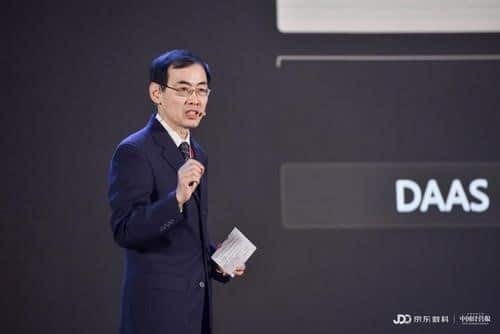
Yeren Xu, JD Digits vice president and head of asset management technology,


From a mathematics lover to a Wall Street alum

Born in Shanghai, Xu studied mathematics at Fudan University as part of the first waves of students admitted to university after Deng Xiaoping was back to power again in the late 1970s. Not long after graduation, inspired by a friend, he decided to go to the US for further study.

At that time, there were very limited applications for mathematics domestically, and Dr. Xu believed that a stint in the US might open up opportunities for him—but little did he know that it would lead him to the Wall Street.

After receiving his Ph.D, Dr. Xu worked as an assistant professor for three years, but it was his self-taught mastership of financial modeling that later landed him a job at Lehman Brothers, the fourth largest investment bank in the United States at that time.

Since then Dr. Xu has accumulated extensive expertise and experience, serving as a managing director at Nomura (a Japanese financial service group with a global footprint) and CTO of China Renaissance Group and the General Manager of CITIC Information and Quantitative Service Company, a subsidiary of the largest securities house in China.


Building a China-tailored asset management platform

In April 2018, China released new guidelines regulating asset management businesses of financial institutions. In the same year, JD Digits founded its own asset management technology department and launched an intelligent asset management technology platform, called JT2, in 2019.

The new rules herald major, positive changes in how financial institutions operate in the longer term, with significant positive implications for the financial industry and related services, according to Aidan Shevin, head of Asia liquidity fund management for J.P. Morgan.

Under the new regulations, Dr. Xu believes JD Digits will be even better positioned to be a first mover on innovative technologies in this sector.
Under the new regulations, Dr. Xu believes JD Digits will be even better positioned to be a first mover on innovative technologies in this sector.

“To date, in China, we do not have an integrated platform that can provide all the technical support needed by investment transactions,” Dr. Xu explained. “There is no Chinese fintech company that can run its name through all transaction nodes yet.”

As an example, he points to the operating platform Aladdin, developed by the US company BlackRock. Aladdin is seen as a pioneer and model in the industry, providing clients with a common language across the investment lifecycle in both public and private assets, enabling a culture of risk transparency. Aladdin currently holds more than $20 trillion worth of assets on the platform, with more than 25,000 investment managers using the platform every day.

Dr. Xu believes JT² has enormous potential as well. With over 100 employees, it serves more than 1000 institutions including banks, security firms, funds, trusts and more.

The JT² asset management technology platform offers services related to risk management, efficient transaction, intelligent investment, and an intelligent information module led by the former editor-in-chief of Reuters China, designed to provide useful insights based on analysis of big data and AI algorithms.

Last year, JT² partnered with the Agricultural Bank of China to launch a one-click, integrated and comprehensive custody platform that covers the whole investment process. The intelligent custody platform saw a transaction volume of over RMB 100 million yuan in the first week after its launch.

Dr. Xu and JD Digits CEO Shengqiang Chen have clear goals for JT2, which means ‘JD Technology Trust,’ Xu said. “We share the same vision for helping traditional financial institutions transform by providing the necessary digital tools.”

Dr. Xu admires Chen’s way of thinking, he said. “It’s very advanced, and talking with him about our plans for the company is both challenging and exciting.”

“Together I hope we can establish a unique asset management platform which is highly based on China’s actual capital market environment,” Dr. Xu said. “We are focused on building the technology infrastructure for asset management covering transaction, risk control, data analysis and more. It will not only provide asset management institutions with an intelligent transaction and technological system but also save at least 50% of time for a common dealer collecting and researching relevant data.”


Future development

In order to achieve these goals, Dr. Xu’s plans for developing the platform include:

  • China’s capital and asset management market is highly unique and requires a tailored approach, Dr. Xu said. For example, non-standard assets typically account for a higher percentage of a product portfolio. Strategies that work overseas may not be appropriate in China. “There are many products that only work in the Chinese market,” he said.
  • Intelligent solutions. “We happen to be in a time when technology is developing so quickly and is becoming so advanced that big data and AI are becoming commonplace in everyday life,” Dr. Xu said. JT² utilizes AI to improve the efficiency of investment and research processes. JT² provides “alternative data” services in which it can provide customized data-mining analysis of industrial data, market data, public opinion, macro data and even climate data, saving significant time for companies that are eager to see the larger picture.
  • An open platform: Xu wants to develop JT2 to become a global platform that connects technology, capital and assets across markets.

Dr. Xu is confident that new technologies will usher in huge improvements for the domestic asset management industry, and that JT² is ready to tackle that transformation.

“We are focused on building the technology infrastructure for asset management covering across transaction, risk control, data analysis and more for China’s actual capital market environment,” he said.

“We want to help financial institutions better manage the money of their clients.”


(yuchuan.wang@jd.com)