JD Logistics Awarded Digital Transformation Solution Provider from SCMR

by Brad Burgess

JD Logistics is awarded “Digital Transformation Solution Provider” by Supply Chain Management Review (SCMR), a leading global supply chain industry media. Winners were notified on March 2nd, with an in-person award ceremony to take place in Chicago on April 28 during the NextGen Technology Supply Chain Conference sponsored by SCMR.

JD Logistics was selected for the Digital Transformation category primarily because of its strategy of opening up its services to third parties, a key part of its Open Platform Digital Supply Chain (OPDS)

JD Logistics was selected for the Digital Transformation category primarily because of its strategy of opening up its services to third parties

OPDS was launched during JD Logistics’ annual 2019 Global Smart Supply Chain Summit. The goal of the platform is the enable players of all shapes and sizes to reap the benefits of an agile supply chain regardless of whether or not they have the resources to operate their own supply chain and logistics departments.

JD Logistics advocates for agile supply chains, confident that this is an inseparable part of a successful future-facing business.

Zhenhui Wang, CEO of JD Logistics has said that an open supply chain will “enableveryone, not just the world’s smartest or most technologically advanced companies to participate.” It is this spirit of inclusivity, enshrined within a dynamic framework, that will drive innovation for all.

The NextGen Technology Supply Chain Conference will “recognize companies leading the way in new technologies.” Award categories include AI, Robotics, Analytics, Blockchain, and Digital Transformation.


(brad@jd.com)

Lei Xu: JD Has A Significant Role to Stabilize the Market

by Rachel Liu and Tracy Yang

During the company’s earnings conference call on March 2nd, Lei Xu, CEO of JD Retail,  pointed out that JD has played a significant role in stabilizing the market, especially in the supply of fresh produce and health-related products.


Rapid increase of new customers

According to JD’s latest financial results, since September 2019, the company saw 28 million net additional customers. This is the company’s biggest quarterly net addition for the past three years. Impressively, 70% of new customers in Q4 came from lower-tier markets. JD has been providing premium products and service to customers all over the country, and as more and more lower-tier cities customers are experiencing online shopping, many of them tend to go to JD for the products they want. Some lower-tier market customers have more disposable income than customers in 1st and 2nd tier cities, and they demand high quality products. For other customers, JD has also been working with quality manufacturers to provide them with affordable products.

A key to attracting new customers is providing them with products that meet their specific demands. JD’s C2M (Consumer-to-Manufacturer) initiative that helps brands tailor their products also made further progress in Q4. During the Singles Day Shopping Festival in 2019, sales of tailored personal computers increased by over 490%.


Growth of social e-commerce platform orders

Social e-commerce is playing an increasingly important role in customers’ daily shopping behaviors, and JD’s social e-commerce also grew rapidly in Q4 2019. For example, the Jingxi platform that mainly targets lower-tier markets saw orders exceed one million per day before the epidemic outbreak. On the customer profile of social e-commerce platform consumers, Xu said, their shopping habits tend towards more social interactions. They are more impulsive in shopping decisions and have a very high conversion rate. The attraction of new customers to social e-commerce and a focus on their entire consumer lifecycle will be a key focus of JD from now on.

JD has also collaborated with manufacturers from over 100 industrial belts to expand its products base. The industrial belts will be mainly supply suitable products for social e-commerce customers, and JD Logistics will be closely involved to fulfill the whole supply chain.


Competitive advantage

The breakout of COVID-19 in China in the beginning of 2020 has largely impacted Chinese people’s daily lives and the development of many industries. During the epidemic, JD’s self-built supply chain and logistics infrastructure have supported the successful delivery of donations and daily necessities to people in Wuhan and all over the country. As a result, more customers are turning to JD for their demands. More new users are being more active and making repeated purchases on JD. “We see more old customers returning to JD and some inactive users on our platform are becoming more and more active. We are waking them up,” said Xu. “In the future, we will leverage our operation abilities with these existing and new users to improve their experience and increase their stickiness.”

Brand partners and merchants recognize the advantages of JD’s business model and looking for deeper collaboration. JD has been actively working with them to stock their products in its warehouses and develop omnichannel solutions to get their products into customers’ hands more easily. Deepening of cooperation with first party partners also extends to advertising. “As we leverage the advantages of our self-operated model, we have seen strong advertising demand from our first-party partners too,” said Xu. The company has also worked closely with merchants to support their warehousing and stocking, which has enabled the first-party business to perform strongly during the epidemic.


(liuchang61@jd.com; tracy.yang@jd.com)

In Line of Fire: A Driver at JD and His Wife in Wuhan

by Ling Cao

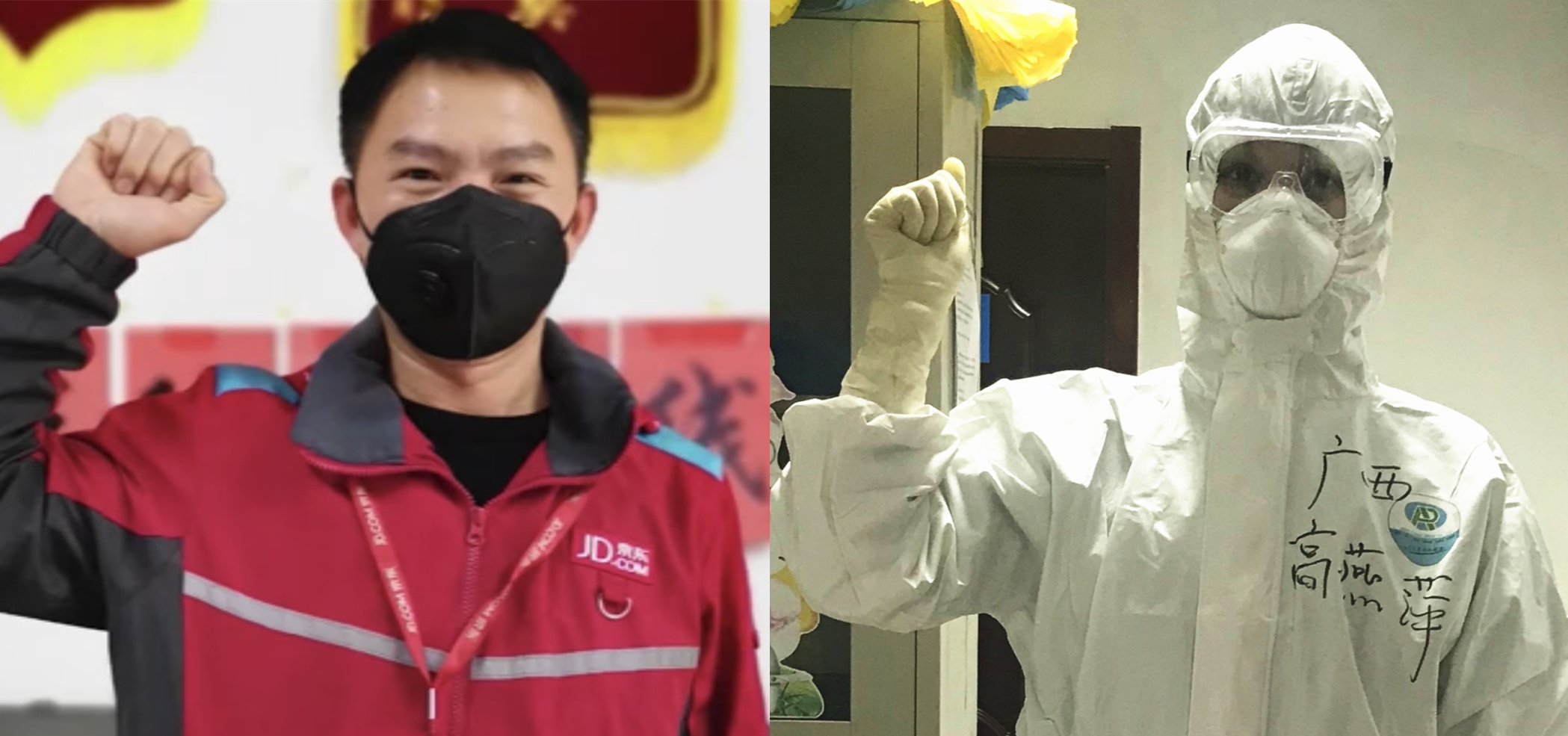
“You can do it! Our son and I will be here for you when you return!” Bo Ye, a JD Logistics driver, sent a WeChat message to his wife, Yanping Gao, the head ICU nurse at the Maternal & Child Health Hospital of Guangxi Zhuang Autonomous region, is volunteering in Wuhan.

Since Chinese New Year at the end of January, Bo and Yanping have been 1,000 kilometers apart from each other. Yet, both of them are working on the frontlines to aid the fight against COVID-19. While Yanping is in the epicenter of Wuhan, Bo is working in logistics at Nanning, capital of Guangxi, to ensure delivery of daily necessities and medical materials.

January 25: On the Chinese New Year’s Day, Yanping gave Bo a quick call to inform him that she decided to enlist to help the people of Wuhan. Bo expressed that he fully supports her decision, and then decided to return from his hometown Chongzuo, about 120km away, to Nanning, the next day.

January 26: Bo returned to Nanning, while Yanping stayed at her hospital working through the night.

January 27: Yanping quickly packed while Bo drove her to the hospital for departure with the medical team to Wuhan. When Bo returned from the hospital alone, he couldn’t help but ask himself how they will make it apart during the Chinese New Year holiday. That same night, Yanping – who is among the 137 members of the Guangxi medical aid support team – arrived in Wuhan.

January 28: While Yanping prepared to provide medical aid to the people of Wuhan, Bo returned to work, transporting medical donations to and from warehouses. He said, “No matter what it is, there will be someone to offer support when it arrives.”

January 31: The medical aid support team is divided into three groups to manage three areas: two in public ward and one in ICU. A nurse with over a decade of experience, Yanping said, “I have more experiences dealing with more medical equipment when working at ICU in the past, let me do that.”

Bo met Yanping years ago through her father’s work. The couple married in 2013, and had their first son in 2014. In 2015, when JD.com built a warehouse in Nanning, Bo – an experienced driver hoping building his future in logistics industry – decided to work as a driver at JD.

Bo calls Yanping every night to connect with her. They didn’t want their son to worry about his mother, and so decided to not tell him about her staying in Wuhan. Their son, who is with his grandmother in Qinzhou, about 100km south of Nanning, figured it out and sent mom an encouraging video to continue her fight in Wuhan.

Bo and Yanping were moved by their son’s message. Their hope is very simple: to conquer the epidemic and reunite as early as possible.


(ling.cao@jd.com)

JD Sales Data Shows Strong Trend of Returning to Work

by Yuchuan Wang

A report by JD Big Data, a market research body of JD.com, reveals that e-commerce has played a prominent role in the return to work for employees and companies in China. Beginning Feb. 3, “return to work” became a highly popular search keyword on JD, as people looked for protective gear, must-buy products, sets of equipment for returning to work and more. At the same time, third-party stores on JD’s marketplace started to resume operation, and enterprise procurement orders also increased significantly.


Consumer end

Sales of fresh food storage containers increased by 352% while sales of electric lunch containers increased by 347% month-on-month during February 3 to February 25.

Disinfection and sterilization products also saw large increases. Sales of hand sanitizer and disinfectant increased by 112% and 254% month-on-month respectively. Compared with the same period last year, sales of hand sanitizer increased 2.3 times, while the sales of disinfectant increased more than 8 times. Sales of antibacterial wipes and small spray cans have increased nearly 4 times and 14.5 times year-on-year respectively.

JD’s offline supermarkets, 7FRESH, 7FRESH Life and SEVEN FUN also launched lunch delivery service for enterprises in February

At the same time, as people seek transportation methods that require minimal human-to-human contact, sales of electric bikes increased 638% year-on-year and the sales of hover board scooters for adults increased 147% in the same period

To help people going back to work meet their lunchtime needs, JD’s offline supermarkets, 7FRESH, 7FRESH Life and SEVEN FUN also launched lunch delivery service for enterprises in February. Since the launch, the number of orders has increased nearly 9 times on a weekly basis.

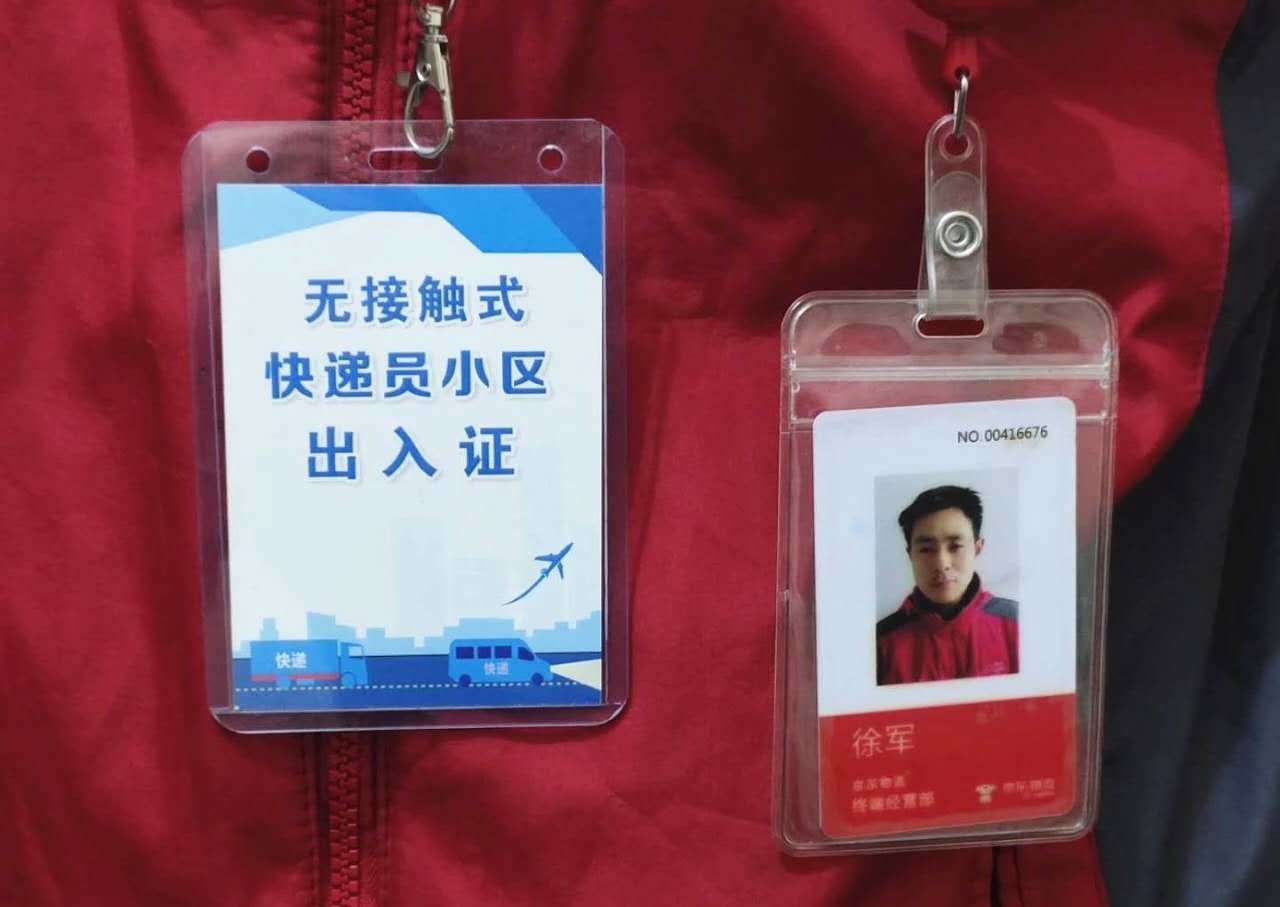
Card with temperatures and other health information for preparation and delivery staff on a SEVEN FUN lunch service delivery boxCard with temperatures and other health information for preparation and delivery staff on a SEVEN FUN lunch service delivery box


Industrial end

As compared with the Spring Festival period, orders over the week of February 13 to February 19 from JD Logistics open logistics business have increased 126%, among which supply chain services have nearly doubled, express delivery, large-size package delivery, and cold chain services have nearly tripled and cargo express is up nine times.

The number of active online stores on JD.com increased 32% month-on-month with the orders from third-party marketplace stores up 109%.

Within enterprise procurement, orders for MRO  (maintenance, repair and operation) products increased by 140% on a monthly basis. Orders for computers and office furniture also increased by 69.5% and 57.1% respectively. Sales of disinfectants also increased significantly at a rate of 400% year-on-year, as employers seek to protect their employees when they return to work.

Data shows work resumption is highest in Zhejiang, Shanghai, Beijing and Guangdong.  Enterprise procurement orders from Shanghai and Guangdong have increased 27.7% and 26.6% month-on-month respectively.


(yuchuan.wang@jd.com)

JD.com Tops Market Share for Online Home Appliances in China

by Tracy Yang

JD.com topped online sales of home appliances in 2019, according to a report on China’s Home Appliances Market released by the China Electronic and Information Industry Development Research Institute. In the report, JD accounted for 22.39% of the market share, while SUNING and Tmall ranked second and third, respectively.

The report points out that China’s home appliance retail sales market reached RMB 891 billion in 2019 with the penetration of online sales reaching 41.17%, the first time to surpass 40%.

Air conditioners accounted for the largest share of this market, with retail sales of large air conditioners reaching RMB 216 billion, accounting for 24% of overall sales. Retail sales of color TV sets, refrigerators, washing machines, kitchen appliances and household appliances reached RMB 152 billion, RMB 99.5 billion, RMB 78.1 billion, RMB 164.4 billion and RMB 180.3 billion, respectively.

The outbreak of COVID-19 has not only had a negative impact on the sales of offline retailers, but also negatively impacted online sales of home appliances. JD.com recently announced several measures to support home appliance brands and merchants throughout the COVID-19 epidemic, including lowering barriers of entry for merchants to join JD.com, reduction of platform operating fees and providing support to partners, including logistics, advertising, health, finance, traffic and others.

Lei Xu, CEO of JD Retail believes consumer demand for home appliances is still robust, as recent consumer surveys indicate. “When the epidemic subsides, consumer demand will return,” said Xu during JD’s Q4 and 2019 annual results earnings call yesterday.


(tracy.yang@jd.com)

In-Depth Report: Trust, Trust, Trust

by Ella Kidron

On March 2, JD reported its fourth quarter and full-year 2019 financial results (full press release here). The company saw strong performance across key metrics including user growth, net revenue and profit, reflecting the strength of its retail business model, and its dependability, to customers and partners alike. An infographic with highlights from the release can be found at the bottom of this article.

JD has made ongoing efforts to improve its service. This has enabled the company to not only meet, but to anticipate and exceed consumer expectations.

At the same time, a strong supply chain and logistics infrastructure and technology expertise has made JD a partner of choice for companies in a wide range of industries far beyond retail. JD’s guarantee of authenticity, combined with its promise of fast delivery, including same-day or next-day deliver as standard – a level of service matched by any company globally – keeps people coming back again and again. It all really comes down to trust.


Trust: Foundation for development

Continued commitment to the customer and to the customer experience has cemented customers’ trust and reliance on JD. JD has been investing in lower tier cities for years, establishing its nationwide logistics network to cover these areas early on. It has also leveraged its supply chain resources to provide quality products and different price points.

JD customers come in all shapes and sizes, ranging from people in lower-tier cities, to tier one cities, and from Chinese nationals to expats. Their impressions differed based on their experience, but trust came up repeatedly in conversations with them. For some, it’s trust from being a veteran user, while for others it has built up based on repeated positive experiences in a short period of time.

Ms. Niama is a five-year expat resident, currently living and working in Beijing’s Chaoyang district. She shared, “I started to shop on JD a few years ago and it was revolutionary for me. I find everything I need with just a click.”

Ms. Niama often turns to JD from everything from clothes and electronics, to cosmetics and gifts for her family back home in Morroco. She continued, “The beauty is the delivery speed. When I leave China, JD will be the thing I miss the most.”

Ms. Wu is a Chinese national from Tongdao, Hunan, who is currently living and studying in France. She remembers her years as a JD customer fondly. “It’s quick. Also the delivery service is a huge advantage. With others you have to worry about other delivery services throwing your packages around, but with JD, you never have to worry. Sometimes you can even become friends with the couriers. And the coupons help me save a lot.”

Whether it has been in customer engagement initiatives, especially in lower-tier cities, improvement of experience through unique omnichannel initiatives, or expanded product selection by giving consumers the products they ask for through Consumer-to-Manufacturer (C2M), trust is the common thread that has driven the company to a strong 2019, and positions JD for future growth.

Loyalty: Robust customer growth

JD saw robust user growth in Q4, especially in lower-tier cities (defined as 3-6 tier cities), with annual active customer accounts increasing to 362 million in Q4, due to innovative marketing, superior product selection and better customer service.

During the 2019 Singles Day(November 11th)sales festival, growth in lower-tier cities drove new customer growth, with the number of lower-tier cities users placing orders increasing 60% YoY and over 70% of new users on JD during the period from lower-tier cities.

Mr. Dai, who resides in Urumqi, is a regular customer who also participated in the Singles Day festival. He was brief yet resolute in explaining why he shops with JD. “Quick! I order today and get it tomorrow. The couriers are well-dressed and polite. They deliver to your door.”

Ms. Harrison, an expat resident of Beijing who was just a few months into her China journey and joined JD ahead of Singles Day said, “To be honest, I don’t fully understand it because I can’t read Chinese, but all I know is that once I make an order, before I know it, the JD courier is calling me to let me know my package has arrived. It’s unlike anything I experienced in my home country.”

Convenience: Enhanced customer experience

JD has continued to leverage its supply chain and logistics strength to push into omnichannel with several models. JD’s Omnichannel Fulfillment supply chain innovation program sources products that customers order on JD from offline stores closest to customers. What it means is that, particularly for every day necessities like bottled water, when an order places an order through JD’s first-party retail model online, JD’s supply chain system can source the product from a partnering offline outlet in the customers’ surrounding area, instead of the product having to travel from JD’s warehouse to a delivery station and ultimately to the customer.

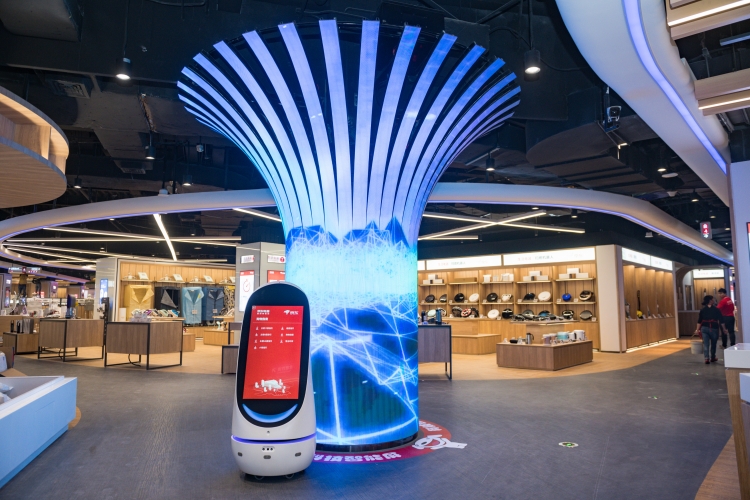
Launched on Singles Day last year, JD’s E-Space, is a 50,000 square meter mega store that offers consumers the chance to try virtually anything in the store, including washing machines, vacuums and even go-karts and Segway-type devices. To buy anything in the store, consumers simply scan a QR code next to the product which will take them to JD.com where they can purchase the product and choose to have it delivered home. What it means is that even consumers who are not located in the Chongqing area where E-Space is, can enjoy same- or next-day delivery of products in the store.

Jeff Towson, Peking University and CEIBS professor with a 3.1 million-person following on LinkedIn, wrote in a post, “The store is also focused on dramatically improving the customer experience. [JD is] attempting to reinvent the retail experience – with a focus on ‘experiential retail’”.

JD E-Space in Chongqing

7FRESH, JD’s offline fresh food supermarket brand also launched two new store models. 7FRESH LlFE is focused on becoming the “go-to” store for the surrounding community. With a store area of between 300 to 400 square meters, 7FRESH LIFE combines restaurant + fresh food grocery +convenience store and provides more than 3,000 items, including fresh produce and daily groceries as well as ready-to-cook and ready-to-eat food. The first store is located in the Huilongguan residential area of Northern Beijing and services 38 surrounding residential compounds and three office areas, reaching 50,000 families and 1,000 office professionals. Delivery is available within a 1.5 km radius in as fast as 30 minutes. At the same, consumers will find an extended selection of products online, such as large-size products, beauty and baby and material products.

Ms. Chen is a middle-aged professional living in Beijing’s Dongzhimen area while her parents live in Northern Beijing. She often goes to 7FRESH for groceries for the week for both her and her parents’ houses, but now her parents can also go to 7FRESH LIFE. “When the first 7FRESH opened, I’d make a special trip out to Yizhuang just to go there. Now there are more stores closer to my parents’ house, it’s much more convenient.”

SEVEN FUN, the lifestyle brand launched under 7FRESH is aimed at servicing the working professional. With 12 food stalls, many of which are part of popular local or national chains, three bars and a full-grocery section, SEVEN FUN can cover all meals – breakfast, lunch and dinner – and also offers a place to hang out, catch up and even catch live music on occasion. For the busiest of professionals, delivery is also available within a 1km radius of the store.

Selection: Consumers benefited from C2M initiative

Launched several years ago, JD placed even more emphasis on its Consumer-to-Manufacturer (C2M) initiative this year. JD’s C2M model leverages the company’s big data and customer analysis capabilities to optimize a brand’s products specifically to meet the unique demands of the Chinese market. As China’s largest retailer, JD has access to a vast database of customer feedback, as well as specialized data analytics tools which can perform sophisticated key word searches and trend analyses.

During the 2019 Singles Day shopping festival, sales of C2M PCs increased 491% YoY and 2 of 5 monitors sold were C2M monitors. Recent data from JD revealed that sales of C2M health-related home appliances from January 25-February 21 tripled compared with the same period last year.

Challenge: Bringing in more trust

The trust cited by several customers in conversation is not just a big driver of a strong 2019 for JD. It is also why, when the COVID-19 outbreak struck in mid-January, in the most trying period of time for people from all walks of life in China, people turned to JD.

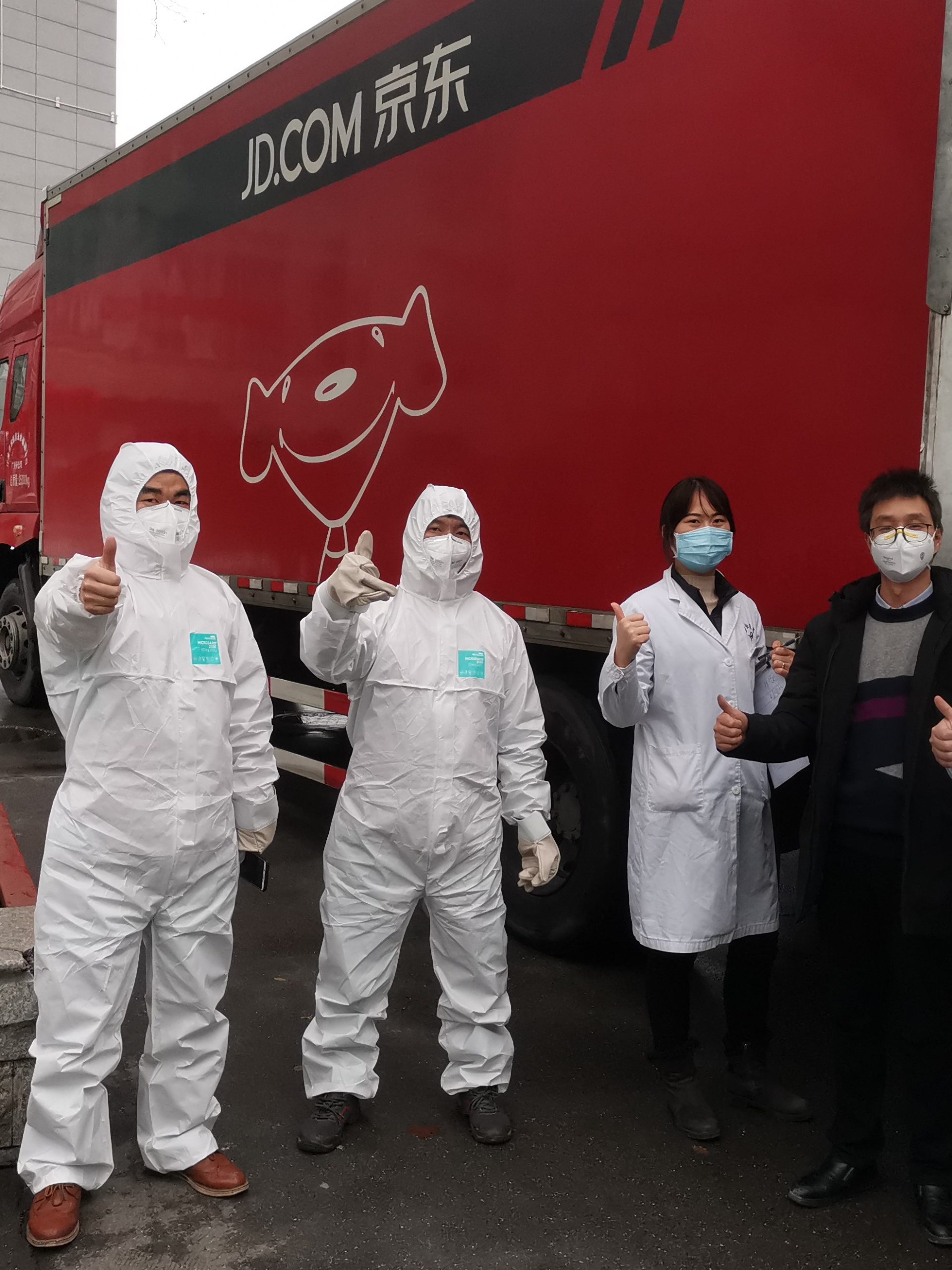
JD has spared no efforts in the fight against the coronavirus. The company immediately stepped up and mobilized its resources across retail, logistics, technology, health and other areas – to provide immediate support for the anti-virus fight.

It has ensured people’s livelihoods through regular supply and delivery of daily necessities across the country, while providing much needed support to ensure a continuous supply of emergency medical goods in the epidemic epicenter in Wuhan.

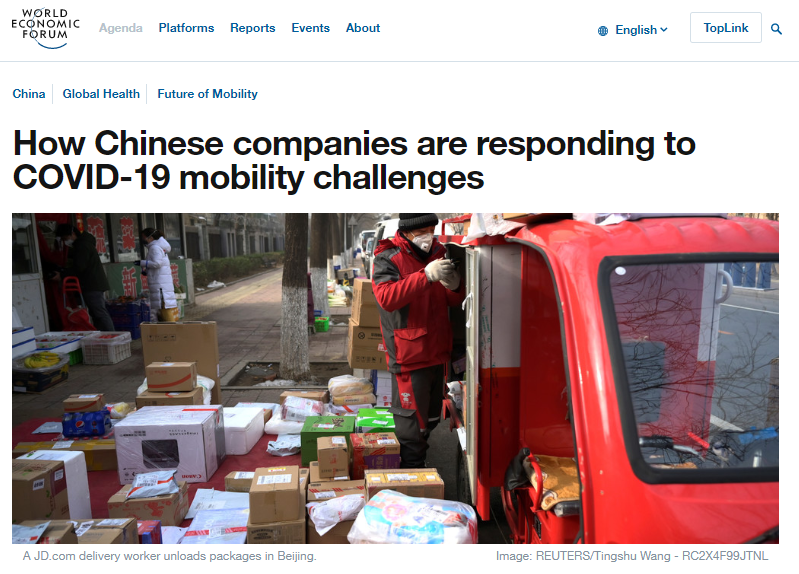
Ms. Wang, a middle-aged JD customer in Beijing’s Daxing district mentioned while picking up her latest package from JD’s makeshift delivery station outside of her apartment, “The only time I’ve gone outside since the virus hit is to pick up my packages from JD. I only trust them. I don’t know what I’d do without [the JD couriers].”

Today, well over a month into the outbreak, this sentiment remains. In fact, JD’s net promoter score, a measurement of customer satisfaction, reached record high levels in January. In addition to providing basic needs and medical supplies, customers have turned to JD pick up healthy habits while at home.

Ms. Fan, a young professional who has been in self-quarantine in Beijing for the past month, said, “During this special period, with restaurants closed, you have no choice but to become a ‘big chef’ at home, exploring your own way to cook something tasty. I’m no exception.”

According to JD data, in the month of February, sales of kitchenware, such as multi-purpose knives, woks, pots and baking tools have all increased significantly, with baking tools taking the lead, increasing 332% compared with the same period last year.

Ms. Fan continued, “My friend in Shanghai has been teaching me how to cook remotely. The other day, she showed me some pictures of her dishes and recommended a pot she’d bought on JD. I didn’t order immediately because I didn’t believe that in the epidemic it would still get to me on time. But when I finally made the order, JD surprised me. Even in this period, I got the package the next day.”

Whether it is now during COVID-19, or in the future when it passes, JD will continue to deliver trust, and to empower its partners to do the same.

(ella@jd.com)


JD.com Announces Fourth Quarter and Full Year 2019 Results

Beijing, China—March 2, 2020—JD.com, Inc. (NASDAQ: JD), China’s leading technology driven e-commerce company and retail infrastructure service provider, today announced its unaudited financial results for the quarter and the full year ended December 31, 2019.


Fourth Quarter and Full Year 2019 Highlights

  • Net revenues for the fourth quarter of 2019 were RMB170.7 billion (US$[1]5 billion), an increase of 26.6% from the fourth quarter of 2018. Net service revenues for the fourth quarter of 2019 were RMB21.0 billion (US$3.0 billion), an increase of 43.6% from the fourth quarter of 2018. Net revenues for the full year of 2019 were RMB576.9 billion (US$82.9 billion), an increase of 24.9% from the full year of 2018. Net service revenues for the full year of 2019 were RMB66.2 billion (US$9.5 billion), an increase of 44.1% from the full year of 2018.
  • Income from operations for the fourth quarter of 2019 was RMB529.5 million (US$76.1 million), compared to loss from operations of RMB9 million for the same period last year. Non-GAAP[2] income from operations for the fourth quarter of 2019 was RMB704.0 million (US$101.1 million), compared to RMB313.0 million for the fourth quarter of 2018. Income from operations for the full year of 2019 was RMB9.0 billion (US$1.3 billion), compared to loss from operations of RMB2.6 billion for the same period last year. Non-GAAP income from operations for full year of 2019 increased by 364% to RMB8.9 billion (US$1.3 billion) with a non-GAAP operating margin of 1.5%, as compared to RMB1.9 billion for the full year of 2018 with a non-GAAP operating margin of 0.4%.
  • Net income attributable to ordinary shareholders for the fourth quarter of 2019 was RMB3.6 billion (US$0.5 billion), compared to a net loss attributable to ordinary shareholders of RMB4.8 billion for the same period last year. Non-GAAP net income attributable to ordinary shareholders for the fourth quarter of 2019 was RMB810.7 million (US$116.5 million), compared to RMB749.9 million for the same period last year. Net income attributable to ordinary shareholders for the full year of 2019 was RMB12.2 billion (US$1.8 billion), compared to a net loss attributable to ordinary shareholders of RMB2.5 billion for the full year of 2018. Non-GAAP net income attributable to ordinary shareholders for the full year of 2019 increased by 211% to RMB10.7 billion (US$1.5 billion), compared to RMB3.5 billion for the full year of 2018.
  • Diluted net income per ADS for the fourth quarter of 2019 was RMB2.44 (US$0.35), compared to diluted net loss per ADS of RMB3.32 for the fourth quarter of 2018. Non-GAAP diluted net income per ADS for the fourth quarter of 2019 was RMB0.54 (US$0.08), compared to RMB0.51 for the same quarter last year. Diluted net income per ADS for the full year of 2019 was RMB8.21 (US$1.18), compared to diluted net loss per ADS of RMB1.73 for the full year of 2018. Non-GAAP diluted net income per ADS for the full year of 2019 was RMB7.25 (US$1.04), as compared to RMB2.35 for the full year of 2018.
  • Operating cash flow for the full year of 2019 increased to RMB24.8 billion (US$3.6 billion) from RMB20.9 billion for the full year of 2018. Free cash flow, which excludes the impact from JD Baitiao receivables included in the operating cash flow, for the full year of 2019 increased to inflow of RMB19.5 billion (US$2.8 billion), compared to outflow of RMB7.9 billion for the full year of 2018.
  • Annual active customer accounts[3] increased by 18.6% to 362.0 million in 2019 from 305.3 million in 2018. Mobile monthly active users[4] in December 2019 increased by 41% as compared to December 2018.

“We achieved robust top-line growth for the fourth quarter as Chinese consumers increasingly associate the JD brand with trust and reliability,” said Richard Liu, Chairman and Chief Executive Officer of JD.com. “We also saw strong customer growth, especially in China’s lower-tier cities, driven by innovative marketing, superior product selection and better customer service.”

Richard Liu continued, “Since late January, we’ve spared no effort in the fight against COVID-19 in China. Our leading supply chain and logistics network have been called upon to address unmet needs across China. We’ve been ensuring consumers’ livelihoods while partnering with public institutions to ensure access to emergency supplies. In Hubei, the epicenter of the outbreak, we have been providing medical supplies and facilitating relief organizations to maintain continuous supply to hospitals, in addition to rolling out a suite of innovations across our business to help the country. All of us at JD will continue working around the clock to help Chinese consumers, merchants and communities get through this challenging time.”

“We are pleased to conclude 2019 with another strong set of results in the fourth quarter,” said Sidney Huang, Chief Financial Officer of JD.com. “The year 2019 sets a new milestone in our corporate history with record earnings and excellent cash flow on an annual basis as our continued investments in infrastructure and technology began to yield solid financial results. Our vertically integrated ecommerce model, resilient self-built logistics network and high level of consumer trust allow us to continue serving consumers effectively now and in the long term.”


Business Highlights

Environment, Social and Governance

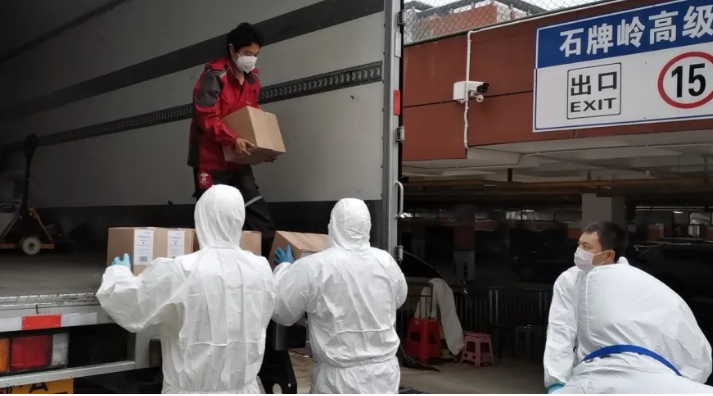
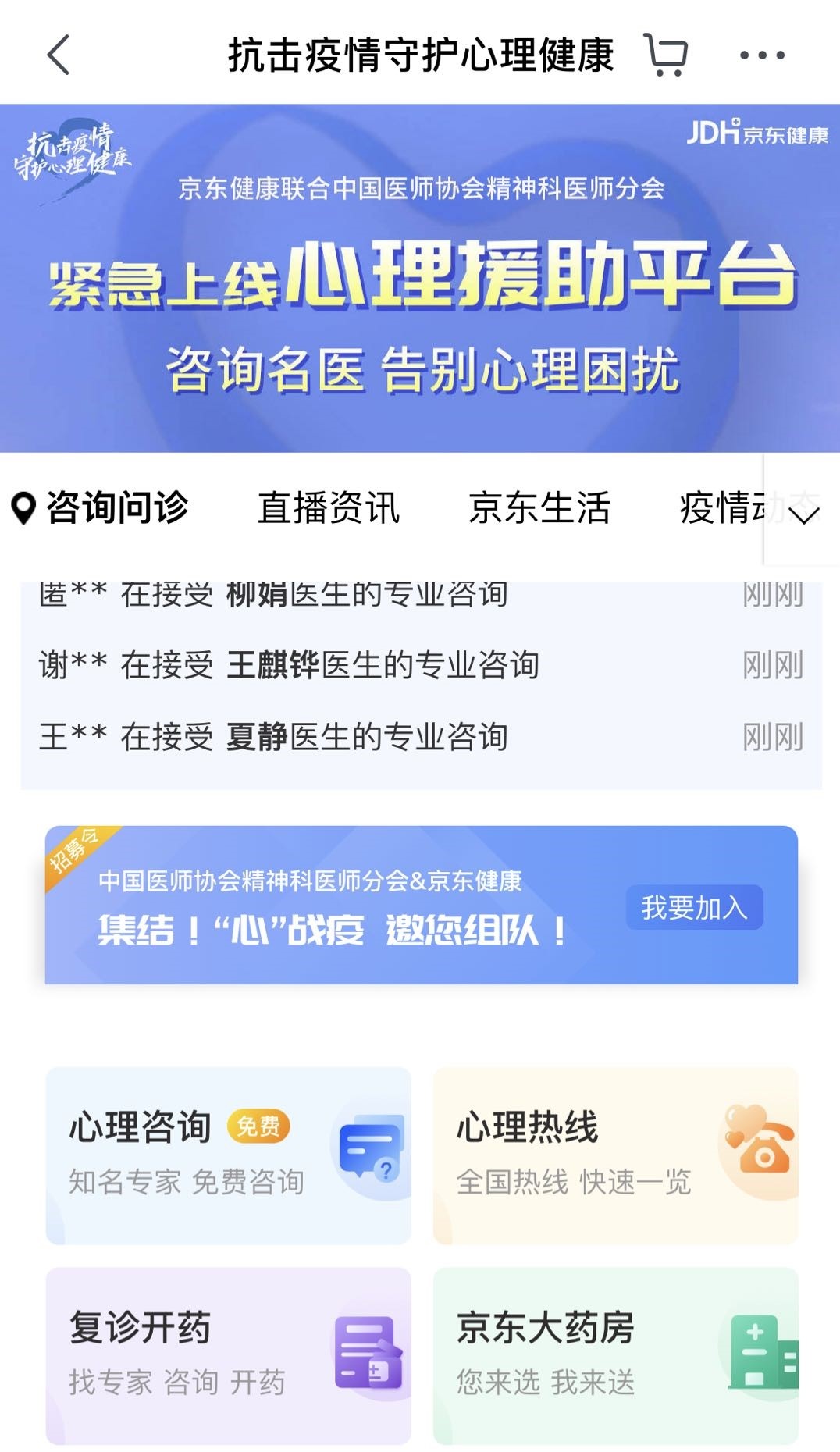
  • Following the coronavirus outbreak, JD reacted swiftly to ensure the smooth transportation and supply of key medical resources and daily necessities nationwide by leveraging its in-house delivery team and its capabilities in areas including supply chain, logistics infrastructure and related technologies. JD Retail promptly donated over one million face masks, as well as a significant amount of drugs and medical supply items on January 24th, 2020, to help residents in Hubei, the epicenter province. JD Logistics, one of three logistics companies recommended to offer logistics solutions in Wuhan, the epicenter of the outbreak, has made emergency medicine deliveries for local pharma companies, prioritized orders from hospitals and medical institutions and established an express route for transporting relief supplies from throughout China to Wuhan. Cooperating with over 30,000 doctors, JD Health launched 24/7 free online medical consultation and psychological counselling services. JD Health also invited leading medical specialists to hold livestreaming sessions, providing the public with clinical disease information and preventative measures. In addition, JD has rolled out a series of measures to subsidize and support coronavirus-hit merchants on its platform, including fee reductions and waivers as well as financing, logistics, marketing and technology support. JD has also introduced additional preferential policies for merchants in Hubei province.


JD Retail

  • In the fourth quarter, JD.com made further progress in its Consumer to Manufacturer (C2M) initiative, which helps brands to provide tailored products on JD’s platforms by leveraging the company’s big data capabilities and consumer insights. During the Singles Day Shopping Festival in 2019, JD saw increasing popularity with its C2M products. Sales of tailored personal computers increased by over 490%, and sales of customized refrigerators and washing machines also increased substantially.
  • As part of the company’s omnichannel strategy, on November 11, JD.com launched JD E-SPACE, a 50,000 square-meter experience store in Chongqing. The super store provides customers a unique and immersive experience in which they can fully interact with innovative electronics and smart products from over 1,000 brands. In-store customers can purchase products online through the JD platform and enjoy fast direct-to-door delivery. In the fourth quarter, 7FRESH, JD’s offline fresh food supermarket brand, launched two new omnichannel store formats: 7FRESH LIFE and SEVEN FUN, in Beijing. 7FRESH LIFE is a 24/7 fresh food supermarket that provides in-store purchase and online order delivery options of groceries as well as meal solutions for customers in the surrounding local community. SEVEN FUN is a lifestyle space located in Beijing’s business district and provides various meal and leisure options for local professionals.


JD Logistics

  • In the fourth quarter, JD Logistics launched its largest Asia No.1 warehouse in Dongguan, located near Shenzhen, greatly improving product availability in the Guangdong-Hong Kong-Macao Greater Bay Area and helping enterprise customers lower logistics costs. As of the end of 2019, JD has established Asia No.1 mega warehouses in 17 cities across China, forming the largest smart warehouse cluster in Asia. In the fourth quarter, two ultra-large sorting centers began operations in JD’s Chengdu and Wuhan Asia No.1 warehouses, each able to handle over one million daily orders, greatly enhancing JD Logistics’ ability to serve consumers in southwest and central China.
  • In the fourth quarter, JD Logistics formed a partnership with Mannings, Hong Kong’s largest health and beauty products chain store. JD Logistics will provide Mannings with comprehensive logistics solutions including international transportation, customs clearance, sorting and delivery. JD Logistics’ strong network and international supply chain capabilities will help Mannings to deliver high-quality products to customers in China in a highly effective and transparent manner.
  • As of December 31, 2019, JD Logistics operated over 700 warehouses, which covered an aggregate gross floor area of approximately 16.9 million square meters, including warehouse space managed under the JD Logistics Open Warehouse Platform.


Equity Investees Update

  • com joint venture, DADA Group, formerly known as Dada-JD Daojia, China’s leading on-demand logistics and omnichannel e-commerce platform, saw robust growth during the 2019 Singles Day Shopping Festival, with sales on the JD Daojia platform almost doubling year over year and sales surging 5.7 times in the third and fourth tier cities compared to last year as consumers welcomed the convenience of its one-hour shopping delivery service. To date, JD Daojia has formed partnerships with over 70 first-tier international and domestic FMCG brands, and Dada Now, its logistics network covers over 2,400 counties and cities across the country, adding important supplementary capacity to JD Logistics’ infrastructure. In response to the coronavirus outbreak, JD Daojia has partnered with over 50 supermarket chains as well as nearly 30 community grocery chains to meet the enormous demand for to-door delivery of fresh produce. DADA Group has also launched a fast track allowing retailers and brands to join the platform within 24 hours, helping merchants to offer on-demand fulfillment solutions in the current capacity-constrained environment.


Operational Metrics Update

  • As of December 31, 2019, JD.com had over 270,000 merchants on its online marketplace, and over 220,000 employees excluding part-time and interns.


[1] The U.S. dollar (US$) amounts disclosed in this press release, except for those transaction amounts that were actually settled in U.S. dollars, are presented solely for the convenience of the readers. The conversion of Renminbi (RMB) into US$ in this press release is based on the exchange rate set forth in the H.10 statistical release of the Board of Governors of the Federal Reserve System as of December 31, 2019, which was RMB6.9618 to US$1.00. The percentages stated in this press release are calculated based on the RMB amounts.

[2] See the sections entitled “Non-GAAP Measures” and “Unaudited Reconciliation of GAAP and Non-GAAP Results” for more information about the non-GAAP measures referred to in this press release.

[3] Annual active customer accounts are customer accounts that made at least one purchase during the twelve months ended on the respective dates, whether through online direct sales or online marketplaces.

[4] Mobile monthly active users in a given month are the number of unique mobile devices that were used to visit JD mobile app at least once during that month.


Read more: http://ir.jd.com/news-releases/news-release-details/jdcom-announces-fourth-quarter-and-full-year-2019-results

In-Depth Report: How JD Health Built the Largest Pharmaceutical Retailer in China

by Hui Zhang

  • JD Health has built the largest pharmaceutical retailer in China, accounting for more than 15% of China’s pharmaceutical retail market.
  • JD Health’s pharmaceutical business has been extended to cover B2C (Business-to-Consumer), B2B (Business-to-Business) and O2O (Online-to-Offline), aiming to build the most extensive and complete retail ecosystem in the industry.


To help patients in need to buy the right drugs at a fair price, JD Health, as a veteran of pharmaceutical e-commerce in China, initiated a charity project in which the company provided drug subsidies of RMB 1,000 per person to those registered with the local government. At the same time, JD Health is taking advantage of JD’s nationwide logistics network, which covers 99% of the population in China, to ensure drug supply to people living in China’s remote areas.

“I rely on my labor to be able to support my family, however, more than 20 years of back pain brings me a lot of suffering. Usually, I can bear the pain to do farm work, if it’s windy or rainy, it will be pretty difficult for me to even get out of bed. Not to mention not being able to do farm work, I might need my young children to take care of me,” said Wanhe Pan, a farmer from Zhumi Village of Fushun county in southwest China’s Sichuan province.

The only source of income for Pan’s family is farming, and his chronic back pain brings much difficulty to the less well-off family. Pan’s story is just one of many cases in the remote mountainous areas in China where access to medical care is limited. Apart from the burden of medical expenses, remote locations and limited transportation options also become obstacles in the treatment of disease. Faced with sudden illness, many people like Pan can only choose to procrastinate, which would lead them to miss the best window for treatment, leave them unable to work, and exacerbate their poverty.

There is an even more alarming figure behind the lack of medicine in rural areas in China. According to official data, China produces as many as 15,000 tons of expired drugs every year, a considerable part of which is circulated to small rural clinics through illegal second-hand drug markets. People from not only rural or remote mountainous areas, but also low-tier citers or towns are faced with limited drugs selection, expired drugs, inability to access to drugs for chronic diseases, high prices, and more.

JD Health started its pharmaceutical e-commerce business by selling health products online for the first time in 2013, marking an official step into the pharmaceutical retail business. Its pharmaceutical e-commerce business has been extended to cover B2C (Business-to-Consumer), B2B (Business-to-Business) and O2O (Online-to-Offline), or omnichannel, aiming to build the most extensive and complete retail ecosystem in the industry. JD Health has become the largest pharmaceutical retailer in China, accounting for more than 15% of China’s pharmaceutical retail market, with more than half of the drugs sent to fourth tier cities and below, according to JD’s data.

. JD Health has become the largest pharmaceutical retailer in China,


B2C: Largest Retail Platform

JD Pharmacy, as a core part of JD Health’s B2C business, was established in May 2016. It has become China’s largest pharmaceutical retail platform, online or offline in just three years, and its growth rate is four times higher than the industrial average rate in China. JD Pharmacy is also the first of its kind providing both medication consultation and drug purchase services in the industry. JD Pharmacy has a team of doctors and pharmacists to provide patients with medical consultation and services of medication usage. Relying on JD’s big data to help consumers in health management, JD Pharmacy’s health management team follows up with patients who have purchased medication from the platform, and offer furthers medication usage suggestions.

A rich supply of drugs, and an efficient and convenient drug purchase experience have made JD Pharmacy widely welcomed by Chinese consumers.

“It’s not only convenient for me to buy medicine from JD Pharmacy, but also for my parents living in different places. The elderly can’t always go out to buy medicine due to poor physical condition. I can place an order on JD Pharmacy today, and my parents can receive the medicine the next day, which is a huge help to us,” said Chen Xue, who works in Beijing.

In addition to medication retailing, JD Pharmacy also launched a medication purchase service for families to solve problems encountered by consumers in daily drug purchase. The ‘Family Medicine Kit’ service is committed to providing families with one-stop medication and health management services ranging from drug recommendation, medical consultation, and health knowledge sharing to pharmaceutical after-sales services. It provides consumers with not only commonly used medicines at home, such as medicine for cold, fever and cough, but also medication usage instructions, and free medication consultation from professional pharmacists according to their needs. Considering household medicine expires easily, JD Health also worked with JD’s insurance business team and JD Logistics to offer free one-time replacement services for expired drugs.

JD Pharmacy has already established partnerships with many well-known pharmaceutical companies both home and abroad, such as GlaxoSmithKline, Johnson & Johnson, Novartis, BMS, Bayer, Tongrentang, Yunan Baiyao Group, and Dong-E-E-Jiao.


B2B:One-Stop Drug Trading

In addition to the B2C business, JD Health started its B2B business by setting up a medicine procurement platform called ‘JD Medicine Procurement’ in 2017 to improve the circulation efficiency of traditional channels, and increase the transparency of information.

The main target of JD Medicine Procurement is to provide a ‘one-stop’ drugs trading platform for pharmaceutical industry enterprises, commercial enterprises, retail enterprises, medical institutions and pharmacies. Most of the customers in the lower reaches of drug wholesale are mainly drugstores, small and medium-sized chain drugstores, clinics and other medical institutions that are under great pressure to survive in the unprecedentedly competitive environment of China’s pharmaceutical market. Nearly half of them come from counties or towns in fourth tier cities and below. They have been faced with many challenges, such as incomplete drug procurement varieties, inability to compare prices, and long procurement cycles, for a long time.

JD Health started its B2B business by setting up a medicine procurement platform called ‘JD Medicine Procurement’

“A few months ago, we still used the traditional method of procurement by phone and onsite purchase. It’s both inefficient and time-consuming as we lack of product information. I’m grateful that JD Medicine Procurement makes one-stop drug procurement a reality,” said Qiang Wang who owns a drug store in a fourth-tier city in China. He is also the No. 120,000 customer of JD Medicine Procurement.

Suppliers, who are mainly pharmaceutical enterprises in the upper reaches of drug wholesale, are facing quantity and inventory challenges from lower-tier cities.

“Pharmaceutical enterprises can mainly reach the first, second, and third -tier cities. It is very difficult for them to penetrate into cities below the fourth-tier cities, ” said Xiaomeng Mu, head of JD Medicine Procurement business.

The platform has been among China’s large-scale third-party pharmaceutical wholesale platforms since its establishment, covering 21 provinces and more than 400 cities, with more than 120,000 retail terminals and more than 600,000 items.


O2O: Covers 25 Provinces

Through cooperation with offline pharmacies, JD Health developed an omnichannel medicine delivery service to help pharmacies benefit more financially, while providing rapid drug delivery services to patients. The service now covers nearly 150 cities in 25 provinces across China. Consumers can place orders in nearby pharmacies through the service base on their locations, and the drugs are guaranteed to be delivered in 30 minutes.

Since the outbreak of coronavirus, more and more consumers use the omnichannel medicine delivery service to buy drugs through mobile phone in order to avoid cross-infection by going outside. The service has seen a significant increase in users and orders, with new users accounting for 80% of orders in the last month.

Compared with other pharmaceutical O2O platforms, JD Health has a team of professional doctors and pharmacists to provide comprehensive medical consultations and drug usage instructions to consumers, which attracts more offline pharmacy partners.

In January this year alone, Nepstar Drugstore’s order numbers from JD Health’s ominichannel medicine delivery service increased by more than 300% compared with the same period last year. One of Nepstar Drugstore’s operation managers said consumers are more likely to shop on JD thanks to the quality guarantee and fast delivery speed. In addition, JD Health also offers free 24/7 online consultation for all diseases during the outbreak of coronavirus, providing professional and convenient medical services to help avoid cross-infection. The free consultation services have also brought a lot of consumers to their offline pharmacies.

Apart from delivering medicine from pharmacies nearby consumers’ home, JD Health is also experimenting a new medicine delivery services which can link consumers with pharmacies in the whole city in Chongqing, Chengdu and Shenzhen. JD Health plans to promote the new service model to more than 20 cities across the country in the near future.

JD Health started its B2B business by setting up a medicine procurement platform called ‘JD Medicine Procurement’

Lijun Xin, CEO of JD Health

The pharmaceutical business is only part of JD Health’s ambition and strategy in health industry. Lijun Xin, CEO of JD Health, previously announced that JD Health’s business focused on online retail and wholesale of medical products, internet hospital, medical services, and intelligent healthcare solutions. However, Xin readjusted the business focus to pharmaceutical supply chain, internet hospitals and chronic disease health management in the second half of 2019. JD Health is targeting the whole health industry, and is endeavoring to help JD’s over 300 million consumers in full life cycle health management.

“JD Health was only a pharmaceutical e-commerce company in the past. But now we want to grow into a real health company by offering consumers full life cycle health management services,” Xin said.


(zhanghui36@jd.com)