Topic

JD’s Data: Highlights of Third-Party Merchants’ Growth on JD.com

by Doris Liu

As digital and real economies are further integrated in China, JD.com has been devoted to creating more space for the growth of its third-party merchants with its new ecosystem and new business model.

Several key results of the merchants’ growth were highlighted in a recent report released by JD Research Institute for Consumption and Industrial Development:

1. In 2021, the number of product launches on JD.com increased by more than 150 percent year-on-year (YOY), and more than 25,000 brands saw the sales volume of their new products doubled YOY.

In the past five years, the number of the total product categories sold on JD have increased by 83 percent and the new brands by 40 percent. C2M (Customer-to-Manufacturer) products have been more commonly seen, allowing consumers to enjoy the customized products and services that best suit their needs.

2. In the first three months of 2022, the daily sales volume of more than 11,000 stores on JD surged over 10 times YOY.

3. Due to a healthier market environment, the number of merchants in the Fashion and Lifestyle category grew rapidly, with the number of industrial, pharmaceutical, health, agricultural, and apparel stores increasing the highest, reflecting the robust growth potential of expanding product categories.

In 2021, the number of merchants operating in the industrial and pharmaceutical categories grew by more than 170 percent YOY, while the number of merchants in personal care, nutrition and health, agriculture and gardening, and apparel and underwear grew by more than 70 percent YOY.

4. JD’s business ecosystem has attracted and retained customers with higher purchasing power. In the first three months of 2022, the average daily users of JD’s third-party stores grew 84 percent YOY among the group aged 26-45, which is normally regarded as the customers who spend the most per capita with the strongest purchasing power.

5. In the first three months of 2022, the average daily GMV (Gross Merchandise Value) for each third-party store in the categories of skiing , pharmaceuticals, and jade and jewelry went up more than 100 percent.

6. To continuously improve the consumer experience, JD has optimized its after-sales services. In January 2022, the merchants’ after-sales service length was shortened to 50 percent of that in January 2020.

Thanks to JD’s open ecology, the two different models, first-party and third-party merchants, are developing together and making contributions with their respective values.

Many small and medium-sized enterprises have been affected by the pandemic, and are confronted with challenges such as rising production costs and insufficient orders. With its experience in promoting third-party stores, JD.com has made it a top priority to further support and help relieve the pressure for third-party merchants.

Thirty measures benefiting the merchants on JD.com have been announced for the upcoming 618 Grand Promotion, which is China’s largest mid-year shopping festival. Click here to read more about the supportive measures.

 

(liujun215@jd.com)

JD.com to Support SME Merchants and Brace for Opener 618 Grand Promotion

Vivian Yang

JD Retail pledged to reduce operating burdens for its merchants with emphasis on supportive measures for SME merchants, promising to increase their ROI by no less than 20 percent during the upcoming 618 Grand Promotion, said Lijun Xin, CEO of JD Retail, at a JD’s merchants meeting held on April 26 ahead of the mid-year shopping festival.

Thirty supportive measures for merchants were introduced during the meeting based on “Three Reductions” in terms of operating cost, performance tests, and risks, and “Three Optimizations” for operating rules, efficiency and services.

The announcement comes at a time when China’s retail activities continue to face COVID disruptions and sluggish consumption recovery. JD’s moves aim to foster resilient teamwork with its merchants and help them rebuild confidence for business growth.

“We strive to create a healthier, opener and more orderly ecosystem in which tens of thousands of JD merchants can achieve sustainable development” said Xin. “By enabling these small and medium-sized merchants, we can jointly contribute to stabilizing tens of millions of jobs across their industrial chains,” he added.

The company revealed that in the past four months, its rate reductions for merchants exceeded RMB 200 million yuan.

On top of its advantageous first-party sales model, JD has been making it a priority in recent years to integrate a significant number of third-party merchants on its marketplace. Thanks to this “open ecosystem” strategy, in the past five years, the variety of product categories on JD.com expanded by 83 percent and the amount of new brands increased by 40 percent.

The company will unveil the new version of JD App, v11.0 ahead of 618 Grand Promotion to bring simpler, more transparent and consistent operating experiences for its merchants. Traffic generating policies will be upgraded, covering the areas of searching, marketing, recommendation and advertising, in which small and medium-sized stores and products with special features have greater  exposure.

JD also developed a simplified operating system catered to SME new merchants to facilitate their on-boarding process.

Moreover, merchants will benefit from JD’s integrated supply chain capabilities covering warehousing, delivery service, customer service and after sales service to create a premier shopping experience for their customers in an efficient way. For example, in the past two years, thanks to JD’s product return services including the speedy review and flash refund functions in its APP, merchants’ average after-sales service time has been shortened by 28.25 hours and this January, the duration was further reduced by half year on year.


(vivian.yang@jd.com)

JD.com Increases Living Necessity Inventory by 3-5 Times in Beijing

by Vivian Yang and Yuchuan Wang

As multiple COVID cases have occurred in Beijing since April 24, JD.com has increased inventory of key living necessities by 3-5 times the usual amount to ensure adequate supplies in the capital city. According to the company’s announcement today, local residents’ needs can be sustained for more than three months at fair prices with sufficient stock of product categories ranging from food, fresh produce, products for household disinfection and cleaning, baby and maternity, and personal care, etc.

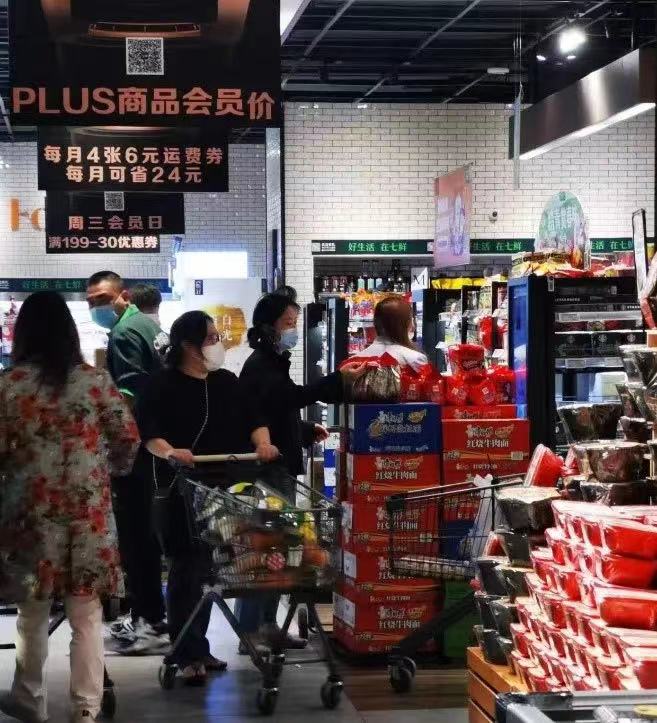
SEVEN FRESH supermarkets in Beijing on April 25th 

At the same time, JD Logistics has arranged over 1,000 frontline workers to back up the warehousing and delivery work of high-demand goods, especially rice, flour, cooking oil and alike, to maintain smooth operation around the clock.

The company is also supporting Walmart, China Resources Wanjia, Yonghui and other supermarkets, as well as a number of milk, meat, and frozen food brands to quintuple stock and leverage its intra-city on-demand retail network JDDJ to deliver products to consumers in a timely manner. JD’s omni-channel supermarket SEVEN FRESH has tripled its stock from the usual amount as part of the epidemic response mechanism.

JD’s everyday life shopping platform Jingxi mobilized its fruits and vegetable suppliers from Shandong, Henan, Hainan, Yunnan provinces and other partner production bases, and has purchased 1,000 tons of fresh produce from over 500 large farms to ensure supplies to Beijing.

To ensure smooth logistics procedures, JD Logistics has built an emergency response mechanism which covers from warehousing and sorting to transportation and delivery. The company has allocated 2,000 logistics vehicles to expand transportation capacity. Thorough disinfections are performed three times a day at warehouses, sorting centers and delivery stations.

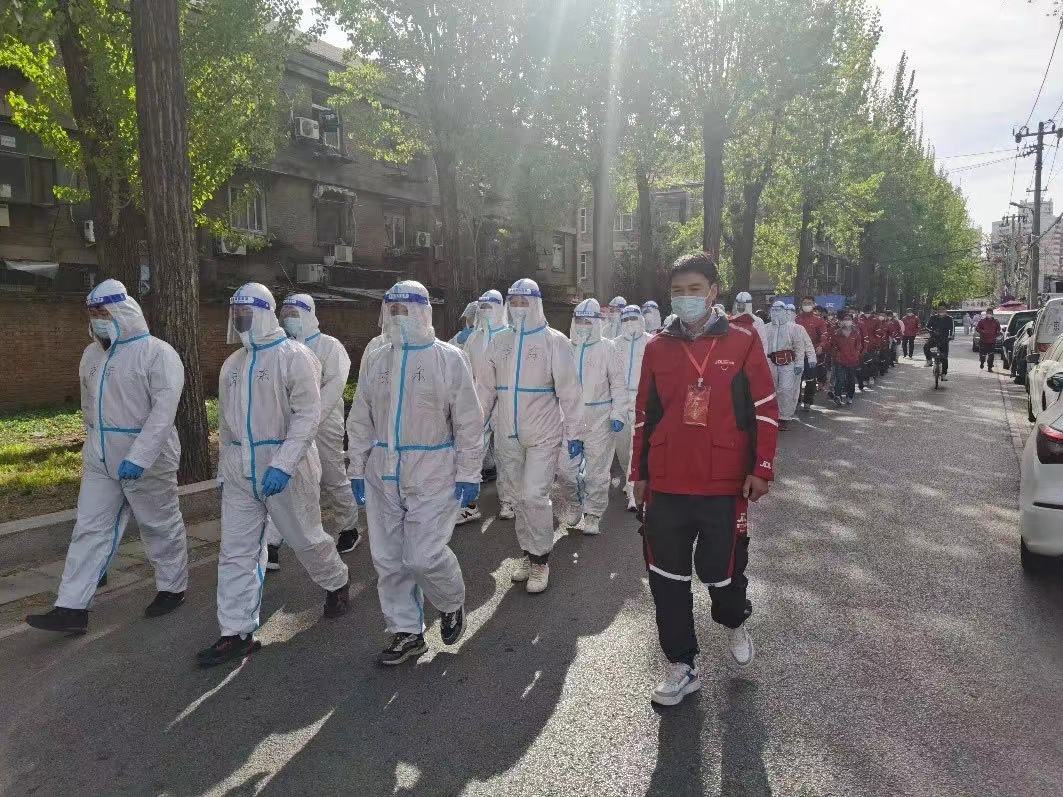
JD’s couriers in service at  Jiuxianqiao area

The company has also explored a delivery model for lockdown neighborhoods with the municipal government and districts. Previously, as part of an effort organized by Jiuxianqiao Sub-district in Beijing’s Chaoyang District, more than 80 JD couriers joined the volunteer team and provided daily necessity delivery services for five locked down communities.


(Vivian.yang@jd.com; Yuchuan.wang@jd.com)

Posted in ESG

JD.com Data: China’s Sports Products Consumption

by Xiaoqian Han

The sales of yoga and dance-related products have increased at a remarkable rate in recent months, according to a new trends report released by JD’s Consumption and Industry Development Institute. Yoga stretchers, yoga shoes, dance shoes, yoga balls, and yoga bags all had a year-over-year growth of 868 percent, 816 percent, 700 percent, 110 percent, and 104 percent, respectively.

In addition to yoga and dance, the report also noted that the most popular sports activities for JD’s consumers in the past month include ball-related games, fishing, fitness training, and cycling.

The following are some of the report’s primary takeaways:

  • Specialized training packages are popular
  • Consumers are more likely to workout at home
  • Consumers in North China prefer to workout indoors
  • Products for sports protection are popular among people aged 26 to 35

Ball products and specialized training products

According to the data, badminton, basketball, and table tennis-related products were among the top three sports categories in terms of turnover, possibly because ball sports have a significant social dimension. People can make friends while playing and exercising. At the same time, specialist training devices, such as equipment for strengthening the abdomen and leg muscles and developing arm strength, are quite popular.

Home-use equipments

Exercising at home has become a popular approach to maintain a healthy lifestyle. Consumers prefer to exercise at home, which is why exercise equipment, yoga and dance equipment, and other similar items are in high demand. Additionally, many consumers have acquired a variety of sports accessories that are appropriate for them, such as sports shoes, skirts, underwear, and so on.

Consumers in North China VS northeast

Consumers in different locations have varying fitness needs, according to the report. Consumers in Liaoning, Heilongjiang, and Jilin provinces prefer fitness equipment for home appliances; consumers in Tianjin, Beijing, and other North China provinces prefer ball products for indoor sports; consumers in Ningxia and Inner Mongolia autonomous regions purchased a large number of cycling equipment products for outdoor sightseeing; and consumers in Hunan and Hubei provinces purchased a large number of leisure sports products for fishing. Guangdong, Jiangsu, Beijing, Sichuan, and Shandong are the top five provinces and municipality in China that buy sports equipment.

Sports protective items

Ball sports products are preferred by consumers aged 16-25, fishing products are preferred by consumers aged 26-35, and cycle sports products are preferred by consumers aged 36-45. Consumers between the ages of 16 and 25 prefer to buy sportswear, shoes, and bags, while those between the ages of 26 and 35 tend to buy a lot of sports protection products, according to the report.


(hanxiaoqian3@jd.com)

JD Opens the Industry’s First Digital Warehouse for Commodity Trade in Qingdao

by Doris Liu

A digital warehouse platform, the first of its kind in the international commodity trade, warehousing and circulation areas, was launched on April 22 in the coastal city of Qingdao, Shandong province, with support from JD Technology (or JDT), creating an ecosystem of digital warehousing, digital trade and digital finance.

JDT, the core platform of JD.com that provides external technology services, has accumulated leading comprehensive capabilities such as cloud computing, artificial intelligence, IoT and blockchain. By fully integrating digital intelligence technology with industrial practice, together with JD’s experience in supply-chain financial technology, JDT helped the bulk commodity industry realize industrial and financial digitalization, said Li Bo, a Vice President of JD.com and President of JDT’s financial technology unit.

Along with the launch of the platform, the model of turning a digital warehouse’s Bill of Lading (BOL) into warehouse receipt pledge financing was also put into practice for the first time. On April 20, 200 tons of rubber bulk goods sourced from Vietnam were stored in the digital warehouse after customs clearance. Through the digital warehouse platform, the warehouse side, the trader and the bank could the rubber goods, the goods’ owner and the warehouse in real time, and a loan financing of US$316,000 was issued to the goods’ owner on the second day.

Utilizing IoT technology and the digitization of cargo information as its core, the platform used in Qingdao’s free trade zone builds IoT monitoring and supervision solutions for overall management, warehouse scheduling and cargo safety.

For instance, high-definition monitoring cameras are deployed to capture the outline of the goods; storage, prohibited and dangerous areas are classified by the electronic fence so that an alarm will go off if the outline of the goods changes, or if restricted vehicles and people enter into such areas without permission; and high-sensitive sensors for temperature and humidity are set for certain goods that have strict requirements to achieve intelligent environmental monitoring and to avoid damage caused by environmental changes.

As an important transit base for iron ore, crude oil, rubber, cotton and other bulk commodities in China, the free trade zone in Qingdao has continuously improved its level of trade facilitation and innovated the regulatory model to promote the digital transformation of commodity management. The digital construction will be deepened in the future to make it a smarter free trade zone.
 

(liujun215@jd.com)

JD Health’s Support to Shanghai: Online Consultations, Medicine Supplies, Livestream Sharing, Donations and More

Vivian Yang

According to JD Health’s latest data released on April 22nd, as the COVID lockdown in Shanghai has continued this April, the company had been providing an average of over 7,000 Shanghai users with online healthcare consultations on a daily basis, with high demand concentrated on subjects of respiratory, dermatology, gynecology, cardiovascular, gastroenterology, etc.

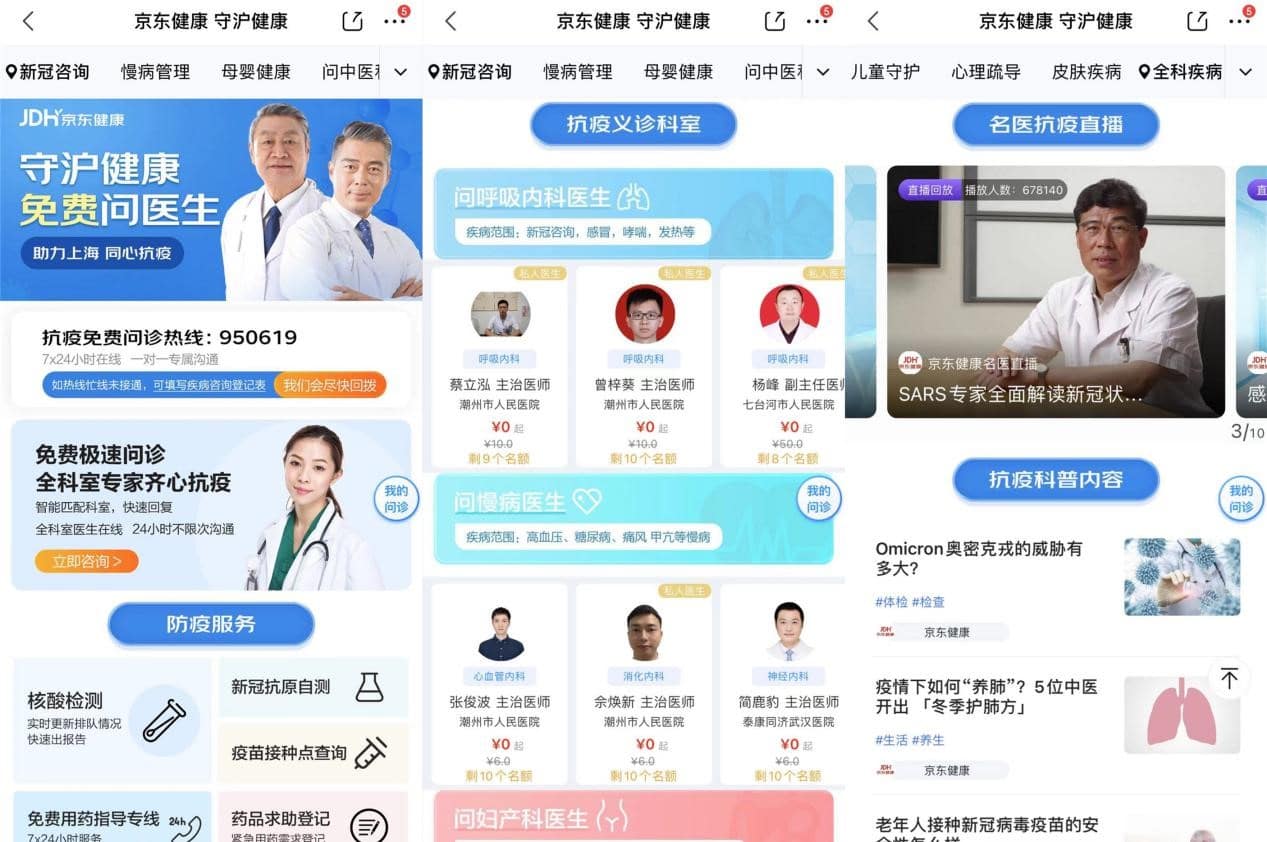
JD Health has gone to great lengths in coordinating doctors both online and offline in order to provide people in Shanghai with 24/7 support on physical and mental health, medicine administration, and COVID prevention knowledge. Users having difficulty utilizing the App can call JD Health’s service hotline at 950619 for a free consultation.

JD Health’s online consultation pages

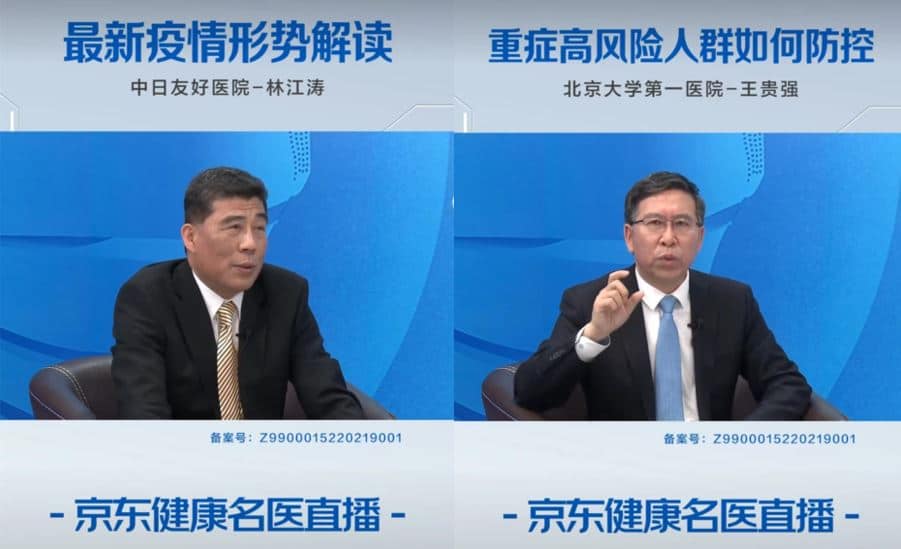
Renowned experts including Dr. Wang Guiqiang, director of the department of infectious diseases from Peking University First Hospital, and Professor Lin Jiangtao from the department of respiratory and critical care medicine of China-Japan Friendship Hospital, have been invited to JD Health’s livestream events this month to keep the public informed of professional and trustworthy expertise on the virus development and proper prevention and treatment measures. They answered a variety of queries, which was especially helpful for those who face high risks, such as elderly people and those with underlying diseases.

Professor Lin Jiangtao (left) and Dr. Wang Guiqiang shared COVID prevention knowledge via JD Health’s livesteam 

The company created a registration platform to collect medicine supply requests in affected areas to assist patients with chronic diseases in obtaining medications. As of April 20th, the platform had received over 80,000 help requests, with more than half of those validated requests being met, and additional logistics and coordination work is underway in collaboration with the local government and in accordance with the current COVID prevention policy in Shanghai to ensure adequate supplies of medicines and PPEs.

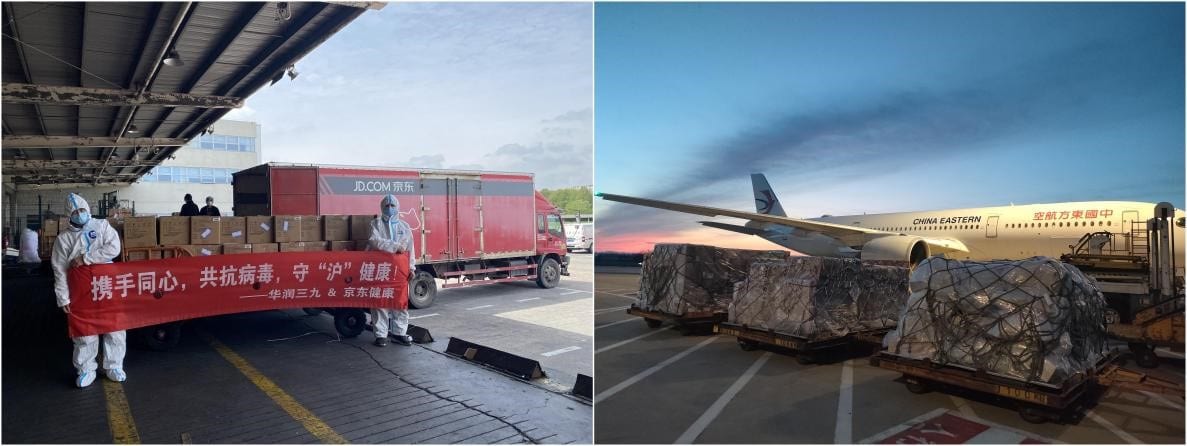
Donations of Sanjiu anti-virus oral solutions airlifted by JD Logistics to Shanghai 

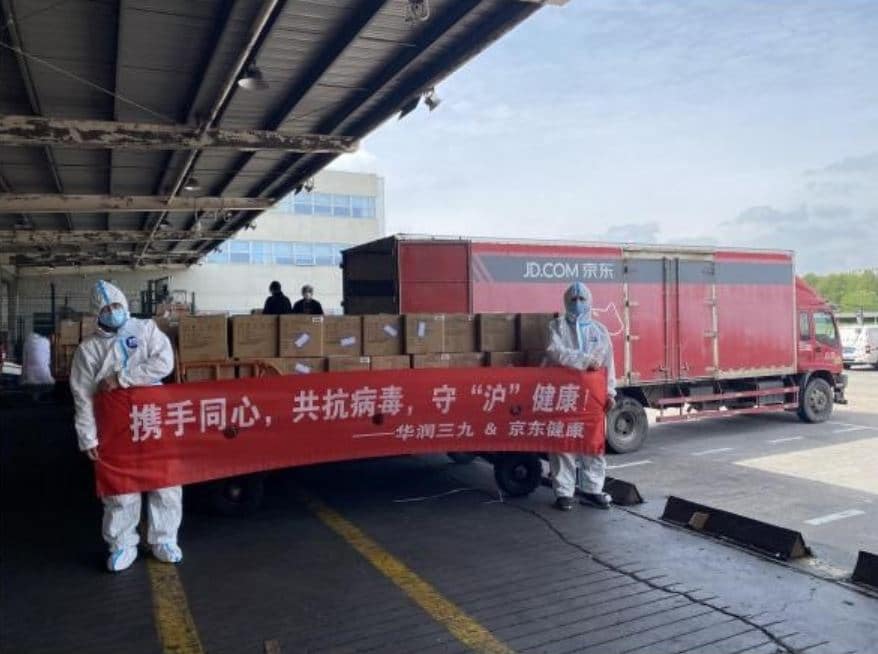
On April 20th, JD Health and the Shenzhen-based medical and pharmaceutical business CR Sanjiu donated over 360,000 doses of Sanjiu anti-virus oral solutions, a TCM electuary, to Shanghai, which were airlifted by JD Logistics under a special taskforce. Earlier this month, JD Health teamed up with the Red Cross Society of China and Hainan-based pharmaceutical company Poly Pharm to provide RMB 430,000 worth of medicines to Shanghai General Hospital. The company has also donated 100,000 sets of Wondfo Health’s COVID antigen self-test kit to Shanghai’s frontline logistics workers.

JD couriers using COVID antigen self-test kit on the frontline 

To meet people’s various virus-prevention needs, JD Health created a specialized online portal to provide relevant products for consumers’ easy selection, such as clinical thermometers,  oximeters, home oxygenators, anti-virus kits, and more, which can be used in various situations at home, on the road, when experiencing minor symptoms, and so on.


(vivian.yang@jd.com)


City of Beijing and JD.com Join Hands to Promote Sports Industry

by Xiaoqian Han

The Beijing Municipal Sports Bureau and JD.com will join hands to invest 100 million yuan each year from 2022 to 2025 to support citizens’ fitness and sports-related consumption activities. In addition, the two parties will collaborate to create a Beijing Digital Sports Service Platform to digitalize and visualize sports events and activities, as well as explore the creation of incentives and procedures to encourage more people to participate in sports activities.

The annual capital of 100 million yuan will be used to fund themed activities including offline sports activities, online sports events, sports venues subsidies, and the 8.8 Beijing Sports Consumption Festival, which falls on August 8 each year and has successfully held two previous sessions. During the activity last year, the sales turnover of JD.com’s sports products increased by 100 percent month on month.

This year, JD Sports will continue to support this festival by providing sports consumption coupons, promotional banners, and live broadcasts of sports competitions through brand marketing, consumption promotion, events management system, and smart stadium upgrades.

The two parties will jointly build the Beijing Digital Sports Service Platform, which will allow users to digitally enjoy Beijing’s sports events. This platform is well-suited to delivering more scientific digital services related to citizens’ fitness and sports activities.

JD.com will work with the Beijing Municipal Sports Bureau and other top sports companies to explore sports incentive mechanism rules, which will allow consumers to reward sports points for participating in the activities of sports fitness, venue reservations, training courses, and events. The Sports points can be exchanged for merchandise and services on JD Sports. This collaboration will boost the vitality of Beijing’s sports market and help the city’s sports industry upgrade more quickly.


(hanxiaoqian3@jd.com)

JD.com Transported 14,000 Tons of Goods to Shanghai Last Week

by Yuchuan Wang

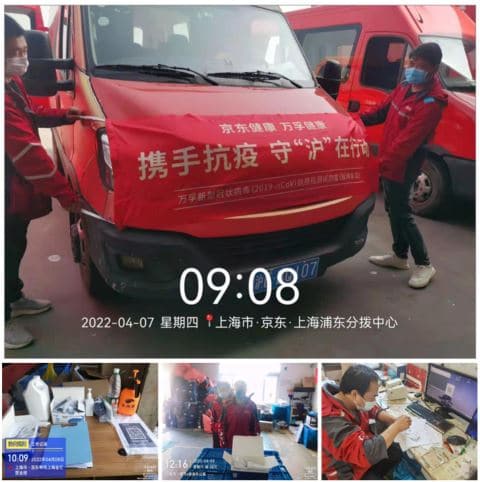
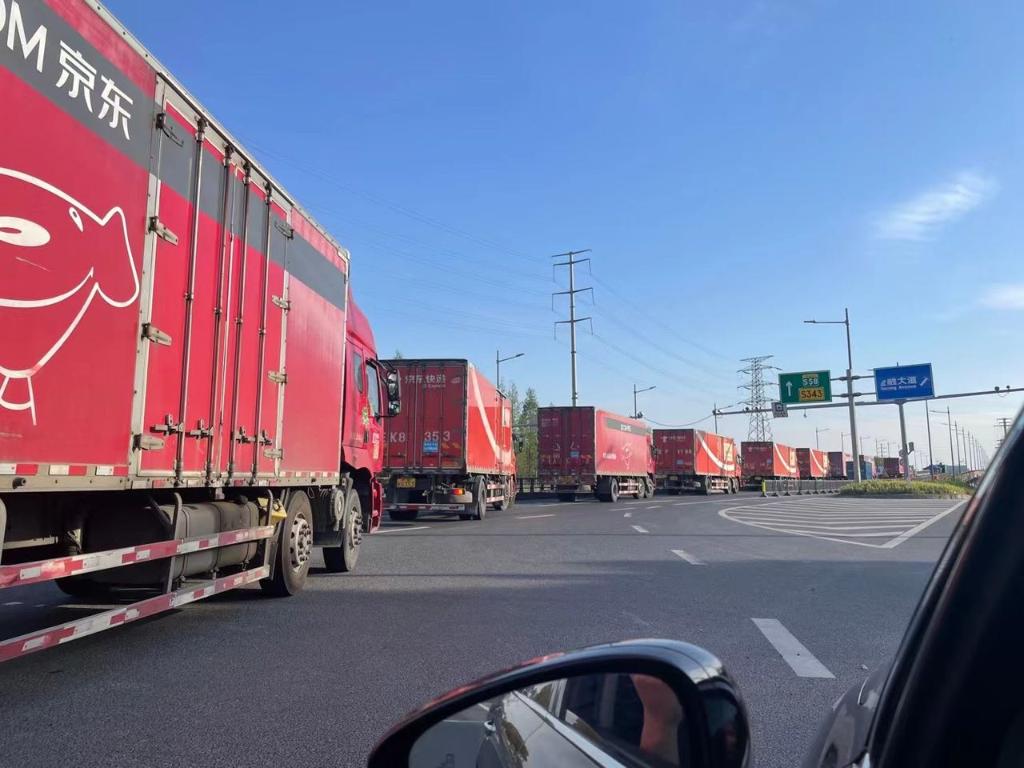
In the past week, JD.com has transported approximately 14,000 tons of daily goods and medical products to Shanghai from its warehouses nationwide including Beijing, Guangzhou, Wuhan, Chengdu and more.

Since April 14, the company has been transporting a variety of goods in-need to Shanghai by air, sea, railway and road. Over one hundred railway containers and 517 truckloads of daily necessities have arrived in Shanghai. The “closed-loop” model is adopted for goods transportation.

With the support of local governments, JD.com’s warehouses near Shanghai gradually re-opened for operations. Wenbo Wang, vice president of JD.com and head of JD Logistics’ East China branch, said that the company’s fulfillment ability in Shanghai has been improved continuously, while due to the complexity of the pandemic, it hasn’t reached to the status before the lockdown.

An addition of 800 frontline employees including couriers and sorters also arrived in Shanghai. So far, the company has called over 4,000 employees nationwide to Shanghai to reinforce customer order delivery.


(yuchuan.wang@jd.com)