Prada Partners with JD.com to Integrate Online and Offline Inventory

by Hui Zhang

JD.com opened its omnichannel solutions to Prada Group’s Prada and Miu Miu brands by integrating JD’s inventory with their internal inventories to bring a wide range of products to JD’s consumers.

So far the inventory of Prada and Miu Miu’s offline flagship stores across Beijing, Shanghai, Shenzhen, Wuhan, Chengdu and Shenyang have been integrated with JD’s inventory, covering a total of 700 products which include limited editions and runway series.

Thanks to the inventory integration, consumers who shop online on Prada and Miu Miu’s flagship stores on JD will also have access to a wider range of products.

Thanks to the inventory integration, consumers who shop online on Prada and Miu Miu’s flagship stores on JD will also have access to a wider range of products. Additionally, consumers who buy these products can enjoy the 7-Day No Reason Return services, whether they buy online or offline.

“JD’s omnichannel solution will help brands to improve offline stock efficiency and satisfy consumers’ needs,” said Kevin Jiang, president of International Business at JD Fashion and Lifestyle.

International Business at JD Fashion and Lifestyle.

The cooperation model, which was officially launched in Prada’s official flagship store on July 29th, has already been highly successful. It brought sales of more than RMB 300,000 yuan to Prada and Miu Miu from July 29th to August 13th. Prada’s sales on Chinese Valentine’s Day (July 7th of the lunar calendar) exceeded a million yuan, boosted by the omnichannel cooperation.

JD is now the only Chinese e-commerce platform presenting four brands under the Prada Group, involving Prada, Miu Miu, Car Shoe and Church’s, since JD partnered with Prada Group during the “June 18 (“618”) Grand Promotion” last year.

Since the cooperation began, sales of Prada on JD.com have grown rapidly, performing well despite the pandemic. Prada has many high-end and young customers on JD, among which over 75% are senior white collar consumers and around 50% were born after 1985.


(zhanghui36@jd.com)

GSSC Series: Cars, Down Jackets, Crabs, And Supply Chain in China

by Vivian Yang

Logistics is often considered a behind-the-scene industry, but this year it has been brought into the spotlight amid the disruption of the Covid-19. “China’s logistics industry is facing a challenge that has never been seen before, but the challenge is also creating an opportunity for the revolution of productions and businesses,” said Xiaobo Wu, a well-known Chinese business writer, at the Global Smart Supply Chain Summit held online on Oct. 22nd.

As a writer who spends quality of time studying companies and new business trends in China, Wu shared three stories that reveal how supply chain capacity can reshape China’s manufacture industry and the way people do business.

The first story is about the Wuhan-based Honda car assembly plant. Its quick production recovery from the coronavirus impact has been widely reported in the media. The plant was shut down on January 23rd when the city lockdown started. After the height of the pandemic had passed, it reopened with twenty cars rolling off its production line on March 11th.

The plant’s director told Wu that there are more than 600 processes and 10,000 components supplied from different places to produce the cars. Their assembly line would not have been restarted without a strong support provided by supply chain and logistics services.

The second example is China’s famous down jackets manufacturer BOSIDENG, which produces over 3 million jackets a year and delivers orders to its customers across China within 24 hours. Even for bespoke items, like jackets customized by size or style according to customer’s personal preferences, customers can also receive their tailor-made products within a day. How can they do this? Wu visited BOSIDENG and found that its warehouses are seamlessly connected with JD’s warehouses. This e-commerce-driven warehouse integration has greatly helped manufacturers improve their fulfillment efficiency and production capacity for more customized products.

The third story is about the sales of hairy crabs from Yangcheng Lake in eastern China’s Jiangsu province, the premiere origin of the popular autumn delicacy. Because it was previously very difficult and costly to deliver live crabs, as of three or four years ago most crabs were consumed within this region, with a transaction volume of less than RMB 20 billion yuan a year. But nowadays, thanks to logistics companies’ cold chain delivery services via flights and hi-speed trains, hairy crabs from the famous lake can be shipped to over 1,000 cities across China within 24 hours, activating a market that is now worth more than RMB 100 billion yuan a year.

Watch the replay of Xiaobo Wu’s speech online

Watch the replay of Xiaobo Wu’s speech online

In his speech, Wu identified four areas of remarkable progress in China’s logistics industry in the past few years. First, internet-based e-commerce has triggered the explosive growth of logistics services. Second, traditional manufacturers are propelled to upgrade or even re-build their production lines to meet the demand of continued e-commerce growth. Third, an increasing number of integrated warehousing and distribution centers are built to enhance logistics efficiency. On this point, JD’s self-built integrated fulfillment centers have become an economic moat that distinguishes itself from other competitors. Fourth, highly efficient last-mile delivery networks are ready in place across the country sustained by 4.5 million couriers on a daily basis.

“The revolutionary changes that have taken place in China’s logistics sector are the result of joint efforts by many people, including entrepreneurs in the manufacturing, transportation and other sectors, as well as those young couriers running on the road for the last-mile delivery services,” Wu said. “All of these contributed to China’s unique logistics landscape. Any broken link in the chain will hinder success.”

Wu also touched upon the role of technologies such as AI, 5G, big data, self-driving vehicles and more in driving logistics development. With the application of these technologies in recent years, JD Logistics’ networks are now able to cover all the administrative counties in China now, including more than 20,000 small townships and over 99% of the total national population, with 90% of orders delivered within 24 hours.

“At my home in Hangzhou city, it only takes 12 hours,” Wu said. “When I place an order on JD in the morning, the parcel will arrive around 4 to 5 pm at my doorstep in the afternoon of the same day. China has the most imaginative environment in the world for the revolution of the logistics industry.”

GSSC summit is an annual event held by JD Logistics that focuses on logistics innovation and technology communication on a global scale. Under this year’s theme of “Open Capabilities, Shared Growth”, the GSSC gathered the world’s leading experts in the industries of logistics, commerce, science and technology to discuss how to seize the opportunities provided by the macro environment and policy, with an aim to reshape the industrial supply chain and promote high-speed growth.


(vivian.yang@jd.com)

Sales of JD’s Private Label Products Surge amid Singles Day Promotion

by Ling Cao

JD’s private label J.Zao(京造) saw sales surge amid the Singles Day shopping festival, with sales on the super brand day held on October 21st increasing by 278% compared with the last super brand day held on October 23rd last year.

Hengsheng Tang, head of J.Zao, JD’s in-house consumer goods brand at JD said, “What we are doing is providing more new and high end products to general public. This is based on supply chain optimization and narrowing the middle process for lower cost and higher effectiveness.”

According to JD’s data for J.Zao, sales of one design of children’s learning chair set increased 233% in the first eight hours compared with the same period on 618 Grand Promotion earlier this year; and the product also topped all of JD’s private label products by sales.

J.Zao’s second and third top products by sales were smart toilets and a latex mattresses. For Huixun, another of JD’s private labels, the top three products by sales were baby’s napkins, men’s underwear and laundry detergent. Customers were mainly located in Beijing, Shanghai and Shenzhen.


(ling.cao@jd.com)

‘Long Johns’ Popularity Goes Up Among Young Shoppers as Temperatures Go Down

by Kelly Dawson

Thermal underwear (or “Long Johns,” as they are sometimes called) have long been a contentious clothing item among China’s younger generation. Sometimes “forced” to wear them in childhood to protect against frigid temperatures, many young adults have refused to don the undergarments due to their focus on functionality over style.

But that may be changing. JD Data reports that on October 21st, the first day of this year’s Singles Day promotion period, 5 million people searched the Chinese term for “long underwear”, ranking first in searches in the apparel and underwear category— and 55% of those who purchased the thermal underwear were between 26 and 35 years old, making this demographic the absolute majority.

Rising health awareness is likely behind the surge in thermal underwear sales, according to analysts. Even as COVID-19 has been effectively contained within China, fears of the virus or other infectious diseases prevalent in winter have led to increased vigilance against the onset of cold weather.

In a heartwarming role reversal, the younger generation may now be the ones encouraging their elderly family members to wear thermal underwear to protect their health. According to JD data, 28% of customers who searched for “thermal underwear for the elderly” were between 26 and 35 years old.

Of course, old habits are hard to break: JD’s customer service center reported a surge in calls from older customers calling into the hotline to inquire about new styles of thermal underwear for the younger generation, and practical concerns regarding delivery to younger family members. Additionally, sales for older customers remain robust, with 27% of sales coming from people aged between 46 and 60.

Those older callers can rest assured: JD is stocking more than 80 new brands for thermal underwear this year, with more than 50,000 new styles on sale. Among the younger generation, new styles of thermal underwear include those for body-shaping, self-heating and more. Within older age groups and particularly in colder regions, popular categories include wool and camel hair for extra warmth.

Key brands in the thermal underwear category include Threegun, Hongdou, Hengyuanxiang and Septwolves, all of which are increasing promotion efforts and offering more styles in hopes of catering to the younger generation.

JD has also boosted marketing efforts for the item, adjusting resources and inventory in anticipation of higher sales as temperatures drop.

(kellydawson@jd.com)


GSSC Series: China Has Comparative Advantages: Justin Lin

by Yuchuan Wang

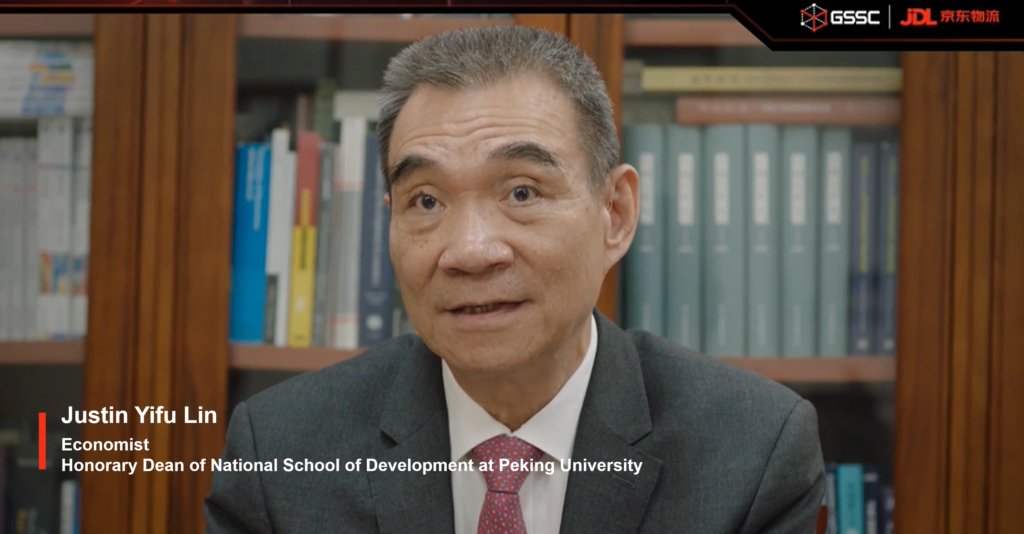
“I believe that China in the new development pattern will remain the place with the most development areas in the world. New technological innovations and new platforms have great prospects in China,” said Justin Yifu Lin, former chief economist of the World Bank and Honorary Dean of the National School of Development at Peking University, during the 2020 Global Smart Supply Chain Summit (GSSC) held by JD Logistics on October 22nd.

As the global economy has been significantly impacted by COVID-19, Lin suggests enterprises should fully make use of domestic and international markets and resources. “We need the ‘dual circulation’ in which domestic and international resources and markets promote each other.”

Justin Yifu Lin, former chief economist of the World Bank and Honorary Dean of the National School of Development at Peking University,

Every country has advantages and disadvantages in its economy, he said. “(Developed countries) are advantaged in highly capital-intensive and highly technology-intensive industries, while we are not—but we have comparative advantages in some traditional industries, such as the labor-intensive processing industry.”

Supply chain is a key infrastructure to drive growth both domestically and internationally.

As early as during the 2018 GSSC, JD Logistics announced the expansion of the company’s international logistics network, to connect the world by achieving two-day shipping from China to other countries, and vice versa. As of now, JD is operating over 110 warehouses overseas that support import, export and localized e-commerce businesses such as in Thailand and Indonesia.

Domestically, during the 618 Grand Promotion this year, JD announced the upgrade of its lower-tier markets program to provide 24-hour delivery service in over a thousand counties and tens of thousands of townships in China, including either the expansion or new construction of 13 local warehouses and transfer centers.

Lin’s point of view echoes that of Zhenhui Wang, CEO of JD Logistics, who also spoke during this year’s GSSC. “We aim to make our company a world-leading supply chain logistics enterprise headquartered in China, serves the world, and brings value to global customers,” Wang said.

“Under the new round of technological and industrial revolution, we see unprecedented opportunities on the horizon for the logistics industry,” Wang added. “The integration of logistics and technology has changed the way the world is connected and become a driving force in promoting global openness and growth.”


(yuchuan.wang@jd.com)

JDD Contributed to Federated Learning IEEE Standard

by Hui Zhang

JD iCity, an intelligent brand of JD Digits, as one of the earliest Chinese enterprises to study and productize federated learning (FL), has participated in standard-setting for the framework and application of federated machine learning. Titled IEEE P3652.1, the publication was recently approved by the Institute of Electrical and Electronics Engineers (IEEE) for release at the end of this year.

Federated learning is a type of machine learning that utilizes lower latency, less power consumption and higher privacy, by eliminating the need to store training data in the cloud. The IEEE P3652.1 guide will be the first in the world dedicated to industry standard-setting for the technology. More than 30 companies contributed to the guide both home and abroad, including Intel, Tencent Cloud, China Telecom, Baidu, Xiaomi, Ant Group, Eduworks and AI Singapore.

At present, FL has been widely implemented in the areas of finance, healthcare and smart cities. The introduction of the first international standard will enable more enterprises and institutions that want to apply and are applying FL to further expand cooperation and build a more complete and powerful FL ecosystem together.

As one of the contributors to the IEEE P3652.1 guide, JD iCity’s self-developed federated digital gateway product is committed to providing solutions for both government and enterprise consumers to solve the problem of data sharing difficulty.

As a leader in smart city construction, JD iCity’s federated digital gateway product has been applied in various areas including credit, smart address selection, precise marketing, and municipal governance modernization. The product has been deployed in over nine projects involving government entities and enterprises.

In the scenario of intelligent site selection, JD iCity analyzed data from multiple sides to not only help enterprises with site selection, but also to provide monitoring of people flow to assist in store operations, and to attract consumers to the stores, thus providing comprehensive support.

With regards to credit, the Federated Digital Gateway product uses multi-party data to build a credit scorecard model, which can be used to quantitatively analyze the credit information of enterprises or individuals, thus reducing the risk of credit application.


(zhanghui36@jd.com)

GSSC Series: Uncertainty can Represent Opportunity for Agile Companies

by Kelly Dawson

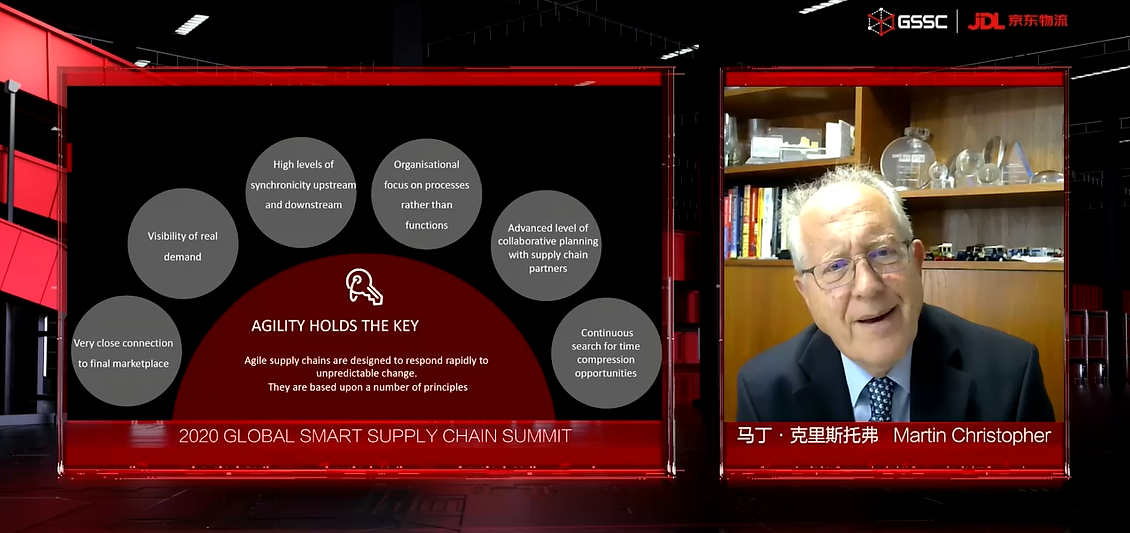
Companies that are able to capitalize on the opportunities presented by upheaval and uncertainty are the ones who will be the long-term winners in the global supply chain industry, said Martin Christopher, emeritus professor of marketing and logistics at Cranfield School of Management, United Kingdom.

Speaking during JD’s Global Supply Smart Supply Chain Summit (GSSC) on October 22nd, Christopher said that many companies have been caught unprepared for the disruption presented by the pandemic.

“This has never been a more challenging time,” he said. “It doesn’t matter what industry we are in or which part of the world we work in, global supply chains are having to be re-evaluated and reassessed.”

He described current conditions with the acronym VUCA: Volatility in the market; Uncertainty about the future; Complexity in the links of the global supply chain; and Ambiguity in analyzing current conditions.

In order to succeed in these conditions, companies must be agile, he said.

“Companies who are most likely to succeed in today’s world are those companies who are faster on their feet,” he said. “They can make decisions quickly, they can change direction quickly, they don’t have investments which have been made some years ago in brick-and-mortars [that] they can’t change.”

One of the critical elements to being more agile is staying extremely close to the market in order to see it more clearly, he said. A successful company “reads what’s happening not just day-by-day, but hour-by-hour— and new developments in information technology are making it possible for us to do this.”

These companies are also “sharing that information upstream and downstream so that we can synchronize across our supply chain so we’re all marching to the same drumbeat. Supply chains have their forecasts, we [as analysts] have our forecasts, and our customers have a different forecast.”

For JD, agility is baked directly into the corporate strategy—and data plays a significant role in realizing that vision.

For JD, agility is baked directly into the corporate strategy—and data plays a significant role in realizing that vision. For example, during the spike in online shopping in the early months of the pandemic this year, JD Logistics immediately increased inventory in warehouses across the country based on consumption big data, to ensure smooth, fast delivery. In fact, despite the pandemic most customers still enjoyed same- or next-day delivery.

When Wuhan went into lockdown earlier this year, JD quickly deployed logistics staff and introduced automated delivery robots to minimize human contact during deliveries, ensuring the safety of both customers and JD couriers.

JD has also implemented the “Big Boss” approach, which delegates decision-making power to the managers of various districts and divisions. The thinking behind this strategy is that these lower-level “big bosses” are in fact best equipped to make decisions related to their work, as they are closest to the customers. Eliminating the need for multiple layers of top-down approval has made the company more agile in responding to customer demand—ultimately the most important aim of an agile approach.

Ultimately this kind of strategy will prepare a company to take advantage in times of uncertainty, Christopher said.

“It’s not just about the downside of risk, it is also about the upside of risk,” he said. “If we can prepare ourselves as companies and organizations to take advantage of that upside, we could indeed be the winners.”

Christopher’s comments came amidst the fifth GSSC summit, which is an annual event focused on logistics innovation and technology communication on a global scale, hosted by JD Logistics. Under this year’s theme of “Open Capabilities, Shared Growth”, the GSSC gathered the world’s leading experts in the industries of logistics, commerce, science and technology to discuss how to seize the opportunities provided by the macro environment and policy, with an aim to reshape the industrial supply chain and promote high-speed growth.

(kellydawson@jd.com)

Who is JD.com?

by Ella Kidron

Many people know JD.com as a retailer – in fact, China’s largest – in recognition of its first party retail model, which is unique in China. Others refer to JD as China’s second largest e-commerce company, a gross oversimplification of the business. If you ask people who truly understand JD, however, they express an understanding that JD is not purely a retailer, but in fact a technology company with much of its technology having been first proven viable in retail scenarios.

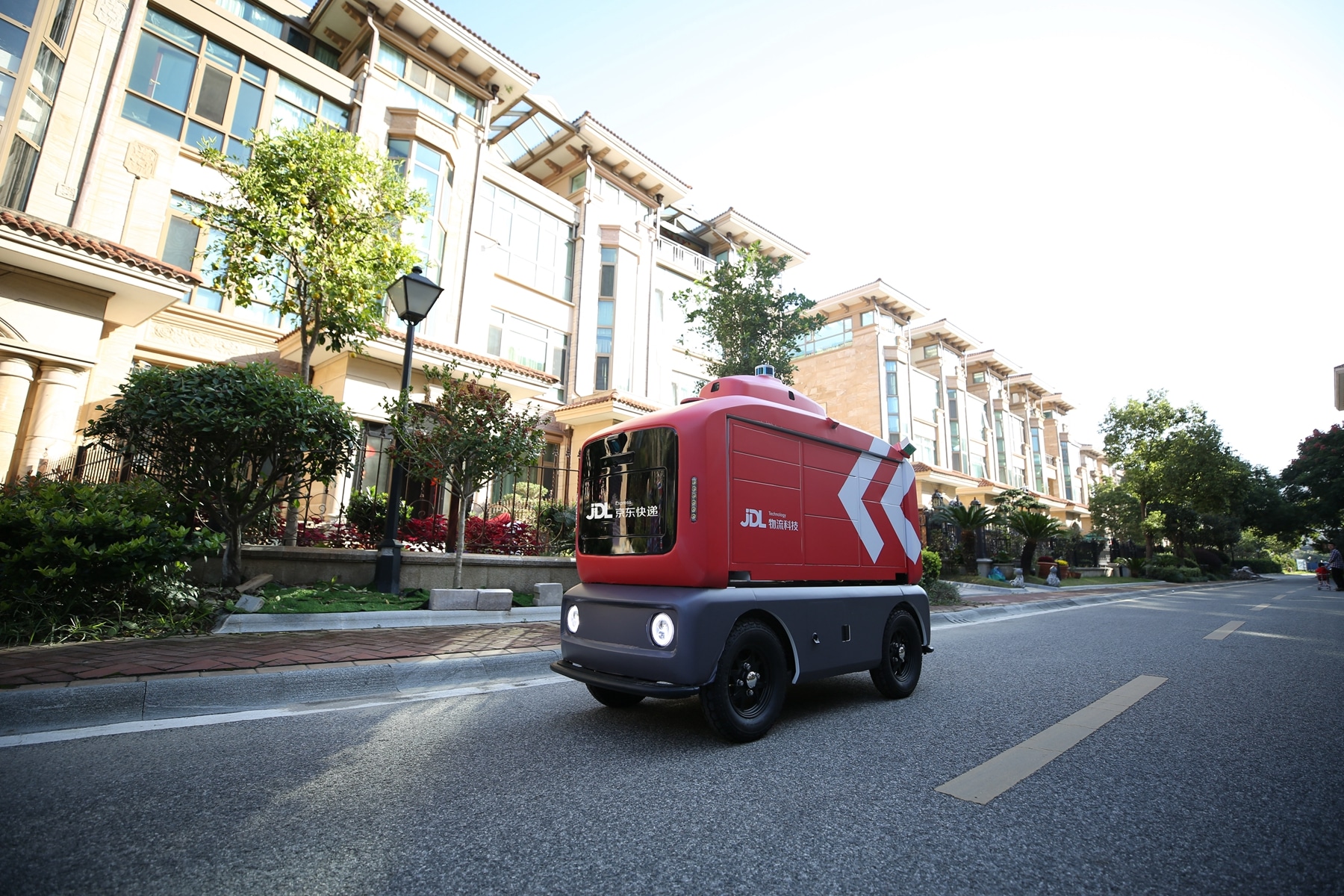
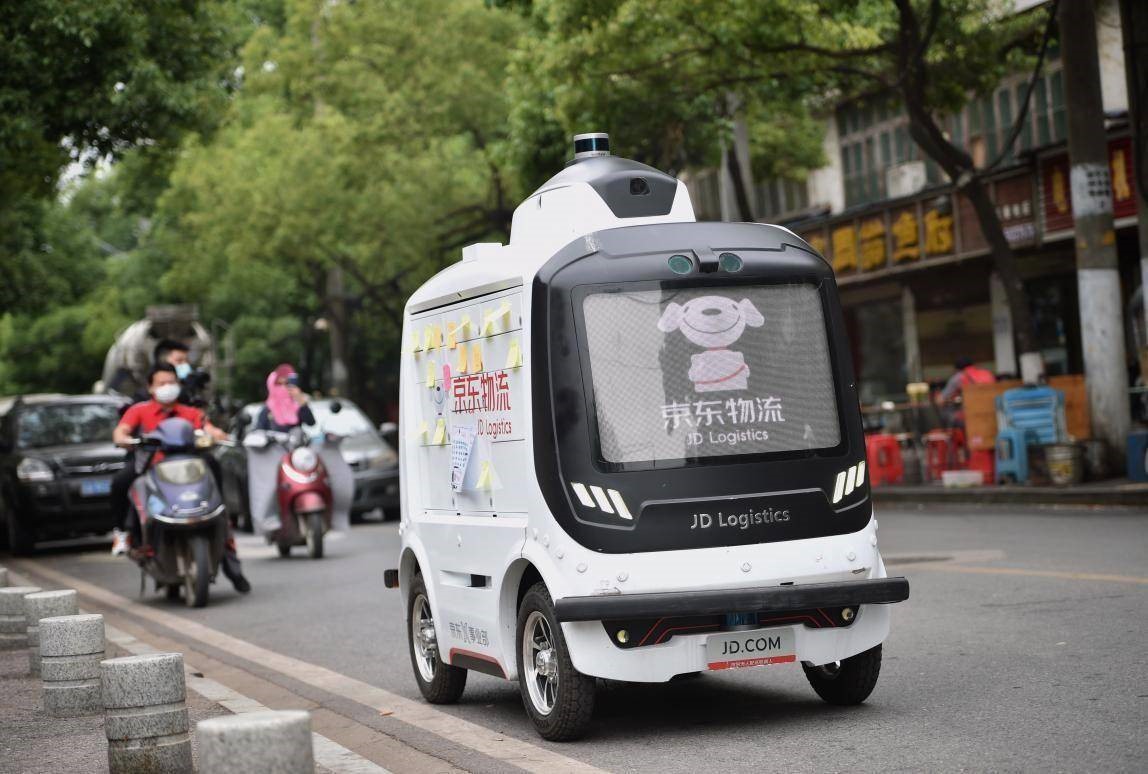
Today, JD defines itself as a technology and services company with supply chain at its core. But what does that mean in practice? There are many examples of this throughout the JD business. The announcement of mature and commercially scalable Level-4 (L4) autonomous delivery robots in Changshu, Jiangsu province, provides a classic demonstration of how JD’s capabilities, from hardware, to software, to real-world application, position the company to provide value far beyond the retail domain, and far beyond the doors of JD.com. The announcement was made at JD’s fifth annual Global Smart Supply Chain Summit (GSSC) on October 22nd, held online for the first time. Going forward, JD will work closely with Changshu, a top five county-level city in China by GDP, to develop a smart city. The company plans to put 100 delivery robots into operation in Changshu by the end of this year.
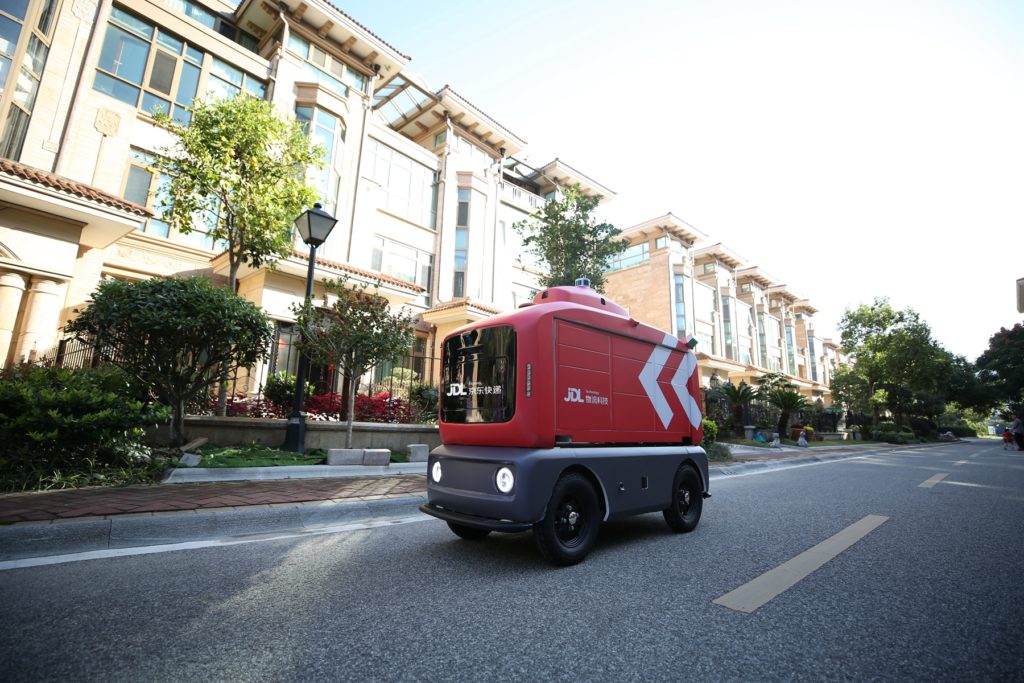
JD.com’s Level 4 autonomous delivery robot

JD.com’s Level 4 autonomous delivery robot


Hardware and software

At JD’s delivery Dongnan delivery station in Changshu, a courier packs the robot with packages for the delivery run according to a system which indicates matches each secure cubby hole and its associated order. The design of the hardware, from ensuring the right size for the cubby holes based on various package sizes, to the selection of the laser beams and cameras have all been carefully overseen by JD to ensure that they will work for the intended application scenario. Furthermore, the robot has been designed to appear friendly, and approachable, making it less intimidating for consumers who are used to receiving packages directly from couriers. The robot’s autonomous driving system developed in-house and its arithmetic logic unit which has lowered the power consumption of the robot to 10% of the industry average – equivalent to that of a standard lightbulb.

From there, the robot is sent on its way. It follows routes it has planned based on the delivery addresses, ensuring the most efficient end-to-end journey. When it arrives, it sends a message to customers with a retrieval code. The robot is programmed to wait a certain amount of time, and if the customer doesn’t go pick up their package, the delivery will go back into the system and be delivered by a courier at a convenient time.

At JD’s delivery Dongnan delivery station in Changshu,

While other companies in China and globally are using robots for last mile delivery, they have yet to leave the confines of controlled traffic scenarios like university campuses. Using a robot on open roads has special considerations and algorithms and a perception system developed in-house by JD ensures smooth operation. When a robot is just going to be used in a closed park, the technology is generally similar to that of a fixed robot, which is relatively simple to develop but has limitations. But for a public road, the technology must be similar to that of a robo-taxi, which uses highly autonomous driving technology and is verified by a cloud simulation platform, which is based on accumulated data from real road conditions.

JD’s cloud simulation platform is able to discern how the robot should behave in numerous traffic scenarios –someone riding a bike against traffic, the sudden stop of the car in front, etc. – so that when it comes in contact with such scenarios it can respond quickly and act appropriately. AI-based machine learning is used to train this behavior. Qi Kong, Chief Scientist of Automation at JD Logistics, explained that the simulation platform serves to exercise the “brain” of the robot, but it needs to be combined with the “muscle memory” of actual application on the open road. That said, the robot is able to learn extremely fast. Within two hours, it can learn half a year’s worth of cases.

Simulation platform for autonomous delivery robots

Simulation platform for autonomous delivery robots

Right now, autonomous driving is at a point where robots know to stop if the car ahead stops, however it is difficult for autonomous driving technology to discern the reason for the stop – is the car in front waiting for the light to turn green? Is it parked temporarily waiting for someone? Or has there been some sort of breakdown? Because of this, a central command center of sorts enables someone to be looking over all of JD’s robots, and have oversight into why the robot is behaving a certain way. On the command screen, people appear as undiscernible rectangles, allowing the person looking over it to see what is going on without intruding on privacy. There is no need for anyone to follow the robot as it can be monitored from afar.


From operation to commercialization

One of JD’s key tenets in developing technology is to avoid a steep learning curve for the end user. Technology should be used to improve experience, increase efficiency and decrease costs. This is true of the autonomous delivery robots. Jie Wang, a courier with a personal interest in technology volunteered to be the first to “adopt” the robot for his delivery. Through the Adoption Program, JD couriers are able to use the robot to handle some of their deliveries freeing them up to do more pickups. Wang used to have to deliver 170-180 packages a day. The robot can cover 50% of Wang’s deliveries to office buildings, residential compounds and universities, giving him more time to do more pick-ups (thanks to the opening up of JD Logistics to parties beyond JD Retail, businesses and individuals can also use JD Logistics’ to send packages) and earn more income. Wang’s income increased by over 30% in September alone. The robot can travel as far as 50 km on a single charge, but is intended to take more frequent, shorter trips.

JD began researching autonomous driving technology and released its first autonomous delivery robot in 2016. Earlier this year, in the face of COVID-19, the company deployed version 4.0, which was the world’s first L4 autonomous delivery robot to be put on public roads without human interaction, in Wuhan, the epicenter of the outbreak in China. During its 107-day deployment in Wuhan, the robot was used to make contactless deliveries to the hospitals in an effort to reduce cross-contamination. It traveled over 6,800 kilometers and delivered over 13,000 packages. The saying goes that “luck is when preparation meets opportunity”. While the coronavirus was by no means welcomed, the need for contactless delivery under a highly contagious virus, has demonstrated the long-term viability of autonomous delivery robots for last mile delivery. Previously, autonomous driving technology was more of a “nice to have” – a demonstration of technology prowess – in the short term, with potential in the long-term. With the coronavirus, the need for deployment and further development has become more imminent.
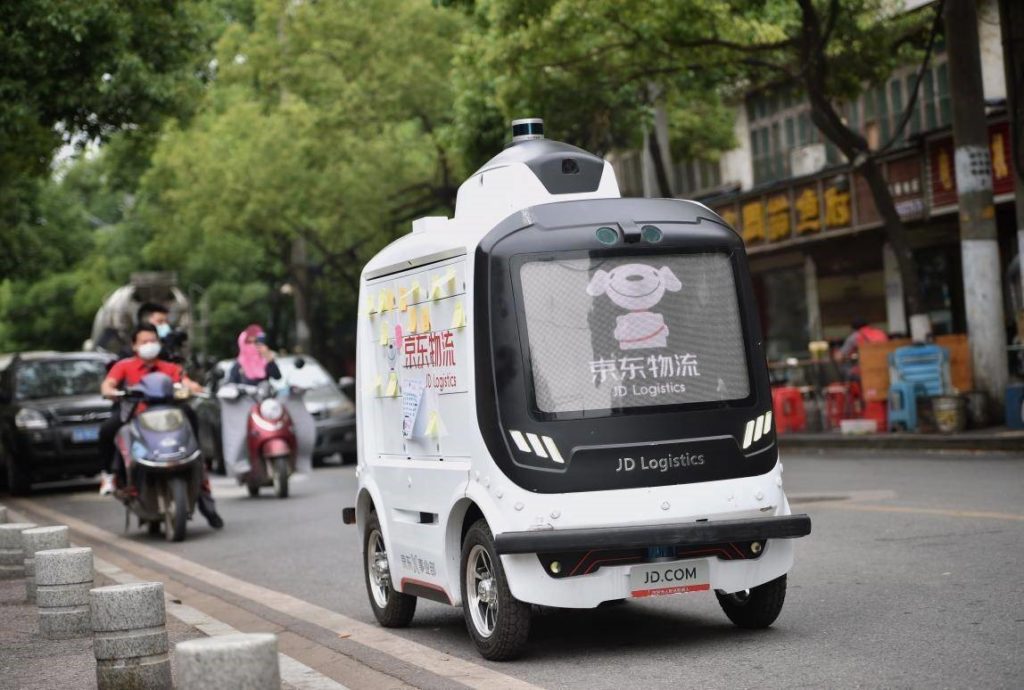
The autonomous delivery robot in Wuhan

The autonomous delivery robot in Wuhan

Through several iterations and improvements in the technology in the last several years, JD is already at a point where its technology can be commercialized. Today, its robots are one third of the original price and that cost will continue to decline with increased scale.

JD has already demonstrated and realized the commercial potential of this technology. A partnership announced between JD Logistics and King Long, a leading bus manufacturer in China, will see JD contributing the autonomous driving system, operations platform and relevant standards to a joint project to research and manufacture commercial use low-speed autonomous delivery vehicles.


More than meets the eye in tech application

Autonomous driving technology just scratches the surface of JD’s technology capabilities. Take for example, this upcoming Singles Day (November 11th) and the associated grand promotion. Before customers have even placed an order, JD’s algorithms are calculating the likelihood of consumers in certain areas buying particular products and mapping out inventory according to those calculations, or advising its brand partners on an inventory allocation strategy ahead of the sale.

For pre-sale products, JD will put some of the stock in delivery stations nearby residential compounds of business centers, making the end delivery stations as warehouses so that consumers will be able to receive their products in minutes even during the busiest shopping season. When the customer places an order, JD again determines where to source that order so that it can be delivered as quickly as possible, in the most efficient way possible. The algorithms that determine where a product should be placed and the route it should take, are simplified into highly accessible information on the customer front – real time tracking of every touch point in the delivery process, including the name and phone number of the courier who will deliver the package.

For pre-sale products, JD will put some of the stock in delivery stations nearby residential compounds of business centers

In some cases, JD’s Omnichannel Fulfillment system will determine that said product is in fact located at a partner offline store near the customer, and instead of fulfilling the order from a JD warehouse, it will be delivered by the partner store, possibly located just steps away from the customer.

Spikes in demand for certain products will also send signals to the systems for restocking, or for a need to stabilize prices. Take for example when JD’s supply chain team noticed a spike in mask sales at the very start of the COVID-19 outbreak. With the information in hand, the team was able to reallocate mask supply to the places where it was needed most.


Tech meets healthcare

JD Health, JD’s healthcare subsidiary, combines medical and health e-commerce, internet-based medical services, intelligent hospital solutions and consumer healthcare services. Leveraging JD.com’s core strength of supply chain, JD Health has become the largest online pharmaceutical retailer in China, accounting for more than 15% of the market with extensive presence in B2C (Business-to-Consumer), B2B (Business-to-Business) and O2O (Online-to-Offline) services. Of the many technological applications at JD Health, the company uses an AI-integrated system called PharmCOO (“Pharma chief operating officer”) to optimize the clinical prescription process and improve patient safety.

JD Health, the company uses an AI-integrated system called PharmCOO

At the core of the prescription review system is a knowledge graph based on Peking University Third Hospital’s vast database of pharmaceutical information. The knowledge graph-based system acts as a highly attuned and comprehensive expert for pharmacists. Using JD’s natural language processing and deep learning technology, PharmCOO can provide doctors timely reminders on contraindications, and consultant on the use of various drugs and the dosage. It can draw subtle, intelligent connections between a patient’s condition, allergies to medicine and more. Unlike a unique database, the knowledge graph-based system is constantly learning from the experience of medical professionals, enabling it to improve accuracy and taking the burden off pharmacies to memorize troves of medical data, allowing them to prioritize learning the most pertinent information.

JD Health and Huaxi second hospital of Sichuan University Jointly built an AI-powered customer service robot system to enhance patient consultation interaction experience and triage accuracy and efficiency. At present, the triage accuracy has reached more than 80%. With AI self-learning, a more accurate triage rate will be achieved in the future.


Application of digital technology

JD Digits, which will IPO on the Star market in Shanghai, combines digital technology with a rich variety of application scenarios spanning many industries. As a testament to its innovation, the company was named to Fast Company’s prestigious annual list of the World’s Most Innovative Companies for 2020 as the only Chinese company under the Data Science category. The company’s digital solutions also have been deployed across multiple sectors, including financial services, agriculture, intelligent cities, and digital marketing. For instance, JD Digits is helping financial institutions to achieve digital transformations through its one-stop financial digital solution T1 and credit card digital operation solution and intelligent asset management technology platform JT².In marketing, the company has succeeded in making digital advertising and outdoor media much more accurate and effective in reaching their audiences. Leveraging AI as core technology capability and other pillars including data, IoT, and blockchain, JD Digits is fully committed to driving forward the digitalization of industries. Over the years, JD Digits has continuously expanded its R&D investments. More than 60% of the company’s global employees are technical personnel while over 95% of its projects are focused on achieving smart and highly automated operations.
JD Digits, which will IPO on the Star market in Shanghai

JD Cloud & AI

Earlier this year, JD announced that JD Cloud & AI would be the fourth core business to provide technology services, joining the ranks of JD Retail, JD Logistics and JD Digits. JD Cloud & AI, consolidates JD’s strength in advanced technologies to provide a wholesale technology solution, internally for different segments of JD.com and externally for partners.

Dr. Bowen Zhou, president of JD Cloud & AI and chair of JD Technology Committee has a clear vision for the business: “Our research and development is broken down into ABCDE (AI, Big Data, Cloud, Devices, or IoT, and Exploration). Looking more closely, if we are to imagine ABCDE as representing different parts of the human body, AI represents the brain, IoT represents the nerve endings, Cloud Computing represents the torso, muscles and blood vessels, and Big Data represents the oxygen that runs up and down the body. Finally, E is about maintaining a degree of curiosity, exploring new practices and pushing the edge of the aforementioned ABCD technologies.” The smart customer service robot developed by JD Cloud & AI which is able to sense sentiment and respond accordingly, has now been deployed across several other businesses such as most recently retail, municipal governance and medical services.


Technology, Technology, Technology

Through JD’s 16 years of development, the company has acquired extensive technological capabilities and infrastructure from retail to logistics to digital technology. JD’s R&D team now has over 18,000 personnel, among which over 80% hold masters or above degrees. In 2019, total investment by listed and unlisted affiliates of JD exceeded RMB 17.9 billion yuan (US$ 2.6 billion). Back in 2017, founder and CEO Richard Liu said it best that JD would focus on three things: “Technology, technology, technology.”

At the GSSC, Zhenhui Wang, CEO of JD Logistics, said that more than 100,000 robots will join the JD logistics family in the next five years. As demonstrated by the Changshu project and numerous others, technology represents not just a new growth area for JD, but is mapping its future development, and the impact it will have on society as a whole.


Yuchuan Wang, Ling Cao, Vivian Yang and Hui Zhang, all staff members in the Global PR Division at JD.com, contributed to this article.


(ella@jd.com)