Topic

JINGDONG Industrials Highlights AI and Local Supply Chains at World Economic Forum ASEAN Digital Economy Dialogue

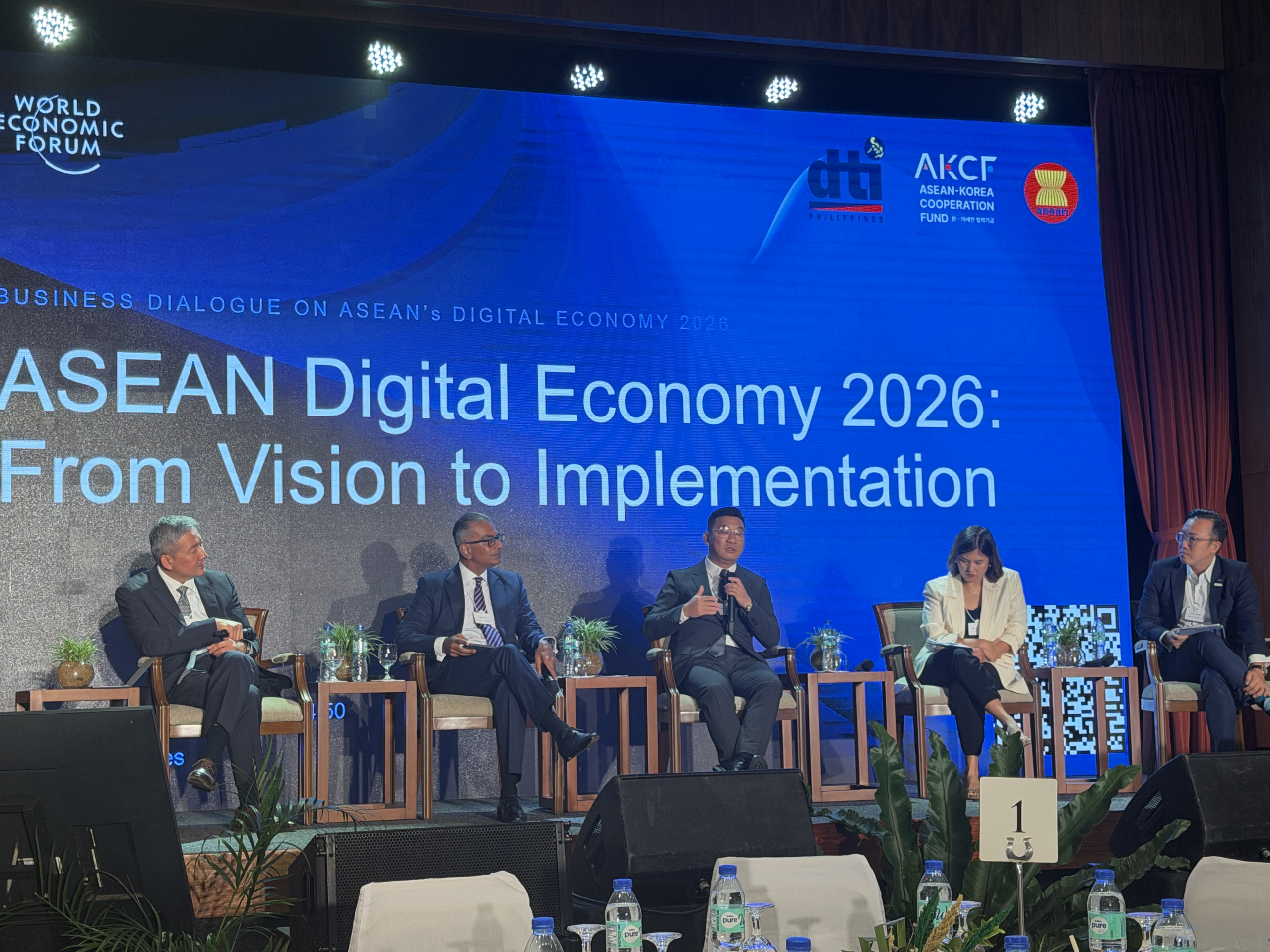
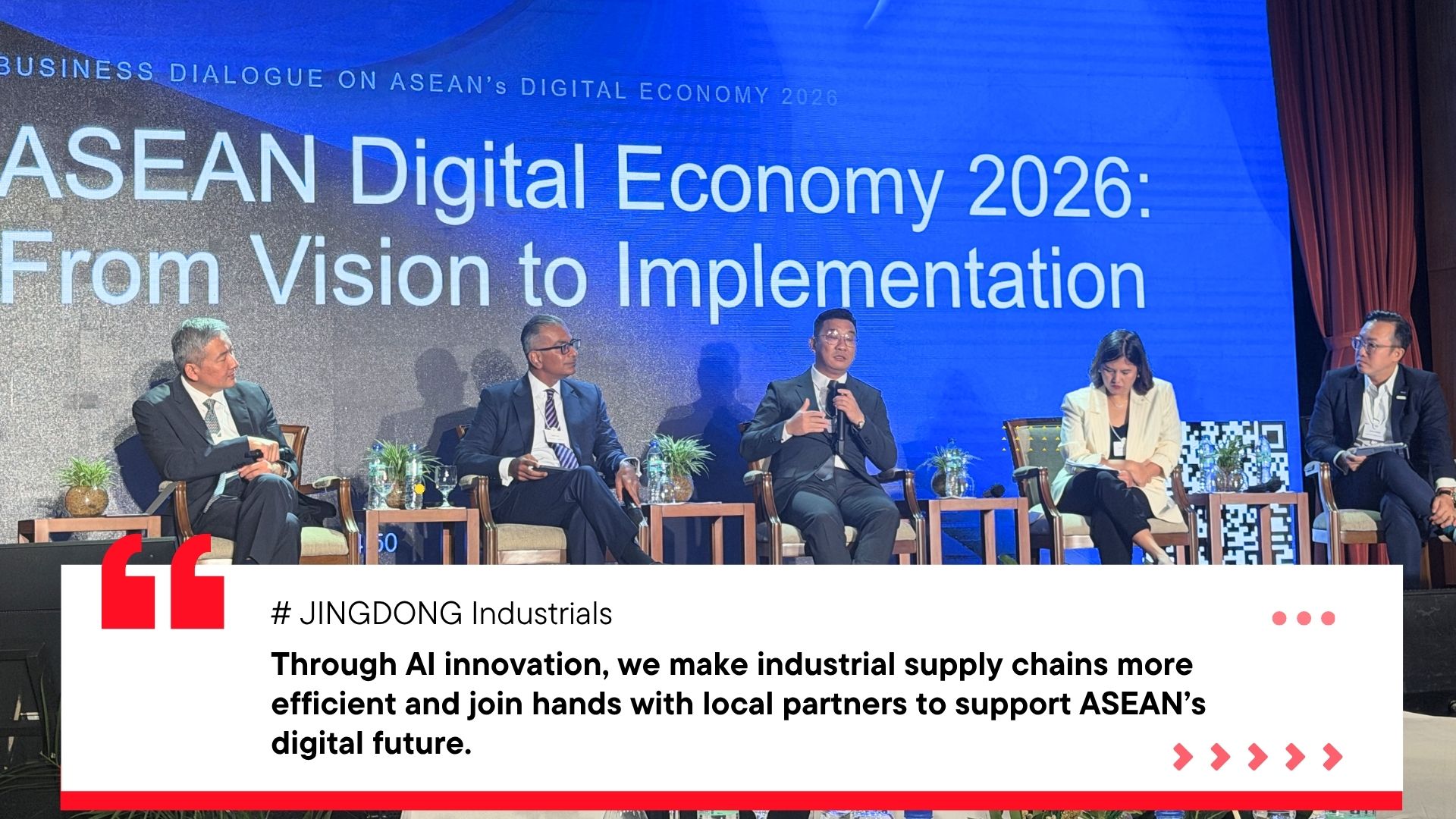
JINGDONG Industrials (also known as JD Industrials), the industrial supply chain technology and service provider under JD.com, joined government and business leaders in Manila on September 19 for the World Economic Forum’s Business Dialogue on ASEAN’s Digital Economy 2026. The event offered an opportunity to share perspectives on how AI, localized supply chains and talent development can support the region’s digital transformation.

Peter Chen, Head of JINGDONG Industrials Asia Pacific, participated in the high-level panel “ASEAN Digital Economy 2026: From Vision to Implementation”. The discussion explored how public- and private-sector collaboration can translate ASEAN’s digital ambitions into tangible outcomes for businesses and the wider economy. His main argument was that technology brings the most value when it is applied to real-world problems. AI becomes meaningful when it reaches warehouses, customs processes, small businesses and other everyday parts of the economy.

Chen also exchanged perspectives with senior government and business representatives during the programme on the development of ASEAN’s digital economy and opportunities for deeper regional collaboration.

Bringing AI into Real-World Supply Chains

For JINGDONG Industrials, the value of AI lies not simply in advances in model capabilities, but in how effectively the technology can be integrated into real business operations.

The company is applying AI across industrial supply chain scenarios including procurement, production planning, equipment maintenance, warehousing, transportation and quality management. Its recently upgraded JoyIndustrial 2.0 industrial foundation model supports an AI application framework spanning different stages of procurement, helping businesses improve decision-making and operational efficiency.

As AI is increasingly woven into industrial operations, Chen noted that technology needs to work alongside supply chain expertise and a strong understanding of local business environments. “Localization is not about simply replicating a model from another market. It is about building capabilities with local partners, developing local talent and strengthening local supply chains, while improving the transparency and connectivity of the broader network,” he said.

Building Supply Chains Around Local Needs

JINGDONG Industrials has been expanding its local supply chain and service capabilities across Southeast Asia, including Thailand, Indonesia, Malaysia and Vietnam, serving businesses in sectors such as automotive manufacturing, electronics, electrical equipment, energy and automotive components.

In Thailand, for example, the company has developed multiple fulfillment models to accommodate different procurement needs. Locally sourced products can be delivered through local supply channels, while longer-cycle procurement can draw on a broader sourcing network. For more time-sensitive requirements, locally stocked inventory can support delivery within two to three days. Its inventory facility in the Laem Chabang port area also provides proximity to key industrial areas, with materials able to reach Rayong in around one hour and the Bangkok area in around two hours.

This localized approach extends beyond logistics and fulfillment. JINGDONG Industrials is also working to strengthen local partnerships and develop local teams as its business grows across the region.

“As we grow internationally, our goal is to become part of the local business ecosystem,” Chen said. “That means working with local partners, building local supply chain and fulfillment capabilities, and investing in local talent. Southeast Asia has an impressive pool of young talent, and developing those capabilities locally will be important for the region’s long-term industrial growth.”

Contributing to ASEAN’s Digital Economy Dialogue

The World Economic Forum’s Manila dialogue brought together around 150 senior representatives from governments, businesses, international organizations, civil society and academia to explore how ASEAN can turn its digital ambitions into practical outcomes. The programme also featured the launch of the ASEAN Digital Economy Outlook 2026 and discussions on the implementation of the ASEAN Digital Economy Framework Agreement (DEFA), AI and digital trade, MSME participation, interoperability and digital trust, with a broader focus on strengthening regional connectivity and building a more integrated and inclusive digital economy.

JINGDONG Industrials’ participation reflects its continued focus on Southeast Asia as an important long-term market and its commitment to engaging in regional conversations on digitalization, supply chains and industrial development.

As ASEAN moves from digital ambition toward implementation, JINGDONG Industrials will continue to engage with local businesses, partners and stakeholders, while investing in local capabilities, partnerships and technology applications that respond to the practical needs of businesses across the region.


(vivian.yang@jd.com)

JD.com Opens Its First 101HOME in Shanghai, Bringing the Art of Living to an Innovative Retail Experience

SHANGHAI, China, September 23, 2026 – JD.com today announced that its first 101HOME store will open on September 28 in Jing’an District Shanghai, introducing a premium home and lifestyle retail destination that brings together global design, home furnishing solution, smart technology, fashion, renovation services, dining, art and cultural experiences under one roof.

With JD.com’s global sourcing capabilities, self-operated retail model and omnichannel infrastructure, 101HOME will offer a seamless “shopping upon seeing” experience, allowing consumers to explore new possibilities for their homes and discover the art of everyday living.

Spanning approximately 12,000 square metres across four floors, 101HOME is designed to meet the evolving needs of consumers from age 0 to 101, across different life stages, household structures and lifestyles.

This slideshow requires JavaScript.

The Shanghai 101HOME brings together more than 1,000 full category home and lifestyle brands, including over 30 international brands making their China debut and more than 150 domestic and international brands making their JD.com debut. It features more than 15,000 carefully selected products, including over 2,000 exclusive products and more than 1,000 new product launches. Some of its international brand portfolio includes Swiss furniture brand Vitra; US design and office furniture brand Herman Miller; Italian furniture brand Gervasoni, lighting brands Flos and Artemide; Danish design houses Fritz Hansen, ferm LIVING, and GUBI; Chinese original brands include U+, which blends traditional Chinese craftsmanship with contemporary furniture design, and FNJI, known for understated modern Chinese furniture, and more.

At the heart of 101HOME are 33 “Dream Homes”, designed for different living situation, family structures, lifestyles and interests. The Shanghai store features spaces created by British designer Kelly Hoppen CBE, and Japanese designers Shuhei Aoyama and Takashi Honma. Chinese designer Wang Heng (Ryan) draws on Song dynasty-inspired aesthetics to create a three-generation family home. Consumers can step into fully designed home settings and see how furniture, lighting and furnishings come together, offering inspiration for their own homes.

This slideshow requires JavaScript.

“101HOME is designed to go beyond traditional home retailing, bringing together home design, lifestyle trends and social experiences under one roof,” said Billy Bao, Head of 101HOME at JD.com. “We want to create a unique experience where consumers can discover new products, explore different ways of living and find inspiration for their own homes. With JD.com’s global sourcing and supply chain capabilities, we can help turn that inspiration into reality, making it easier for consumers to create a home that reflects their individual lifestyles.”

Building on the launch of its online flagship store in May 2025, 101HOME connects physical experiences with JD.com’s directly sourced and self-operated retail model. Consumers can explore complete home designs, feel the products in person and scan to purchase directly in store. Through 101HOME CARE service, Dream Home designs can be adapted to individual homes, while JD.com’s logistics and supply chain capabilities support integrated delivery, installation and after-sales services.

Technology is integrated throughout the experience. Powered by JD.com’s JoyAI and JoyInside technologies, highly integrated smart home solutions demonstrate applications across entry systems, kitchens, bathrooms, sleep and health management. The store also features dozens of robotic products, allowing visitors to explore how robotics could become part of everyday family life.

This slideshow requires JavaScript.

Moving beyond traditional home retail, 101HOME further combines shopping with design discovery, exhibitions, dining and social experiences, creating a dynamic retail environment that evolves with changing consumer interests. The Shanghai store features here cafe, a popular coffee brand from Kyoto; ICE BOUQUET, known for its floral-inspired gelato; JUANZONG Books; DEVINE’R NYC, a New York coffee and lifestyle brand; and Foyer de Lumiere, a Japanese-French bistro, several of which are making their mainland China or Shanghai debuts. 101HOME also offers more than 300 Burgundy wines sourced through limited allocations, with over 100 available by the glass, making it China’s most extensive by-the-glass selection of allocated Burgundy wines. Seven public artworks are also integrated across different floors and public 101HOME spaces, bringing together architecture, art and contemporary living as part of the overall retail experience.

This slideshow requires JavaScript.

The opening of 101HOME marks a new milestone in JD.com’s physical retail strategy. Moving beyond a product-led model, 101HOME places greater emphasis on experience, discovery and social interaction, while introducing a range of new-to-market retail and lifestyle concepts, supported by JD.com’s capabilities in retail, digital supply chain and logistics.

101HOME is also accessible digitally through its WeChat mini programme and the JD.com app.


(yuchuan.wang@jd.com)

JD.com Delivers iPhone 18 Pro Series to Over 30,000 Customers Within First Hour of Launch

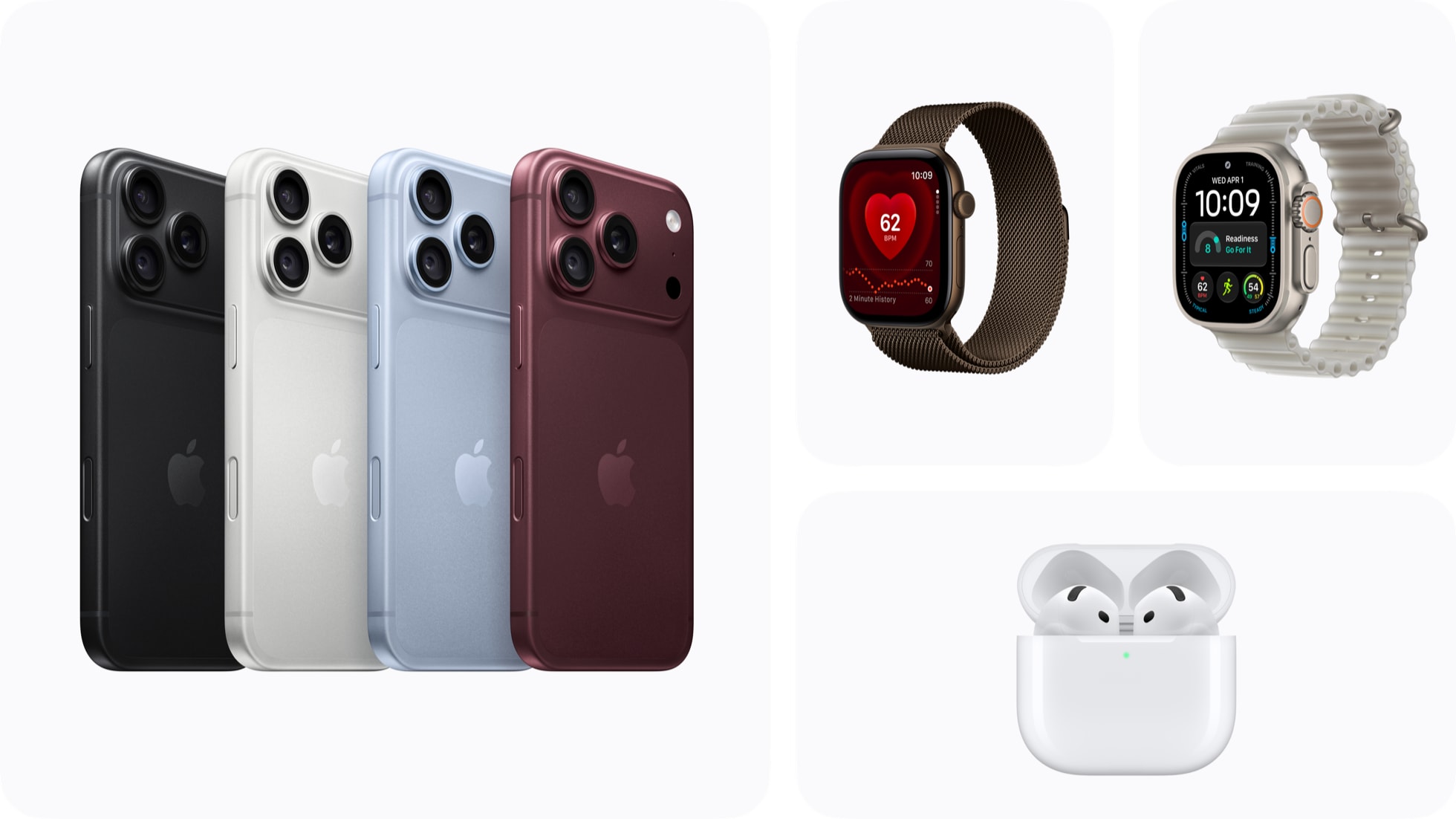
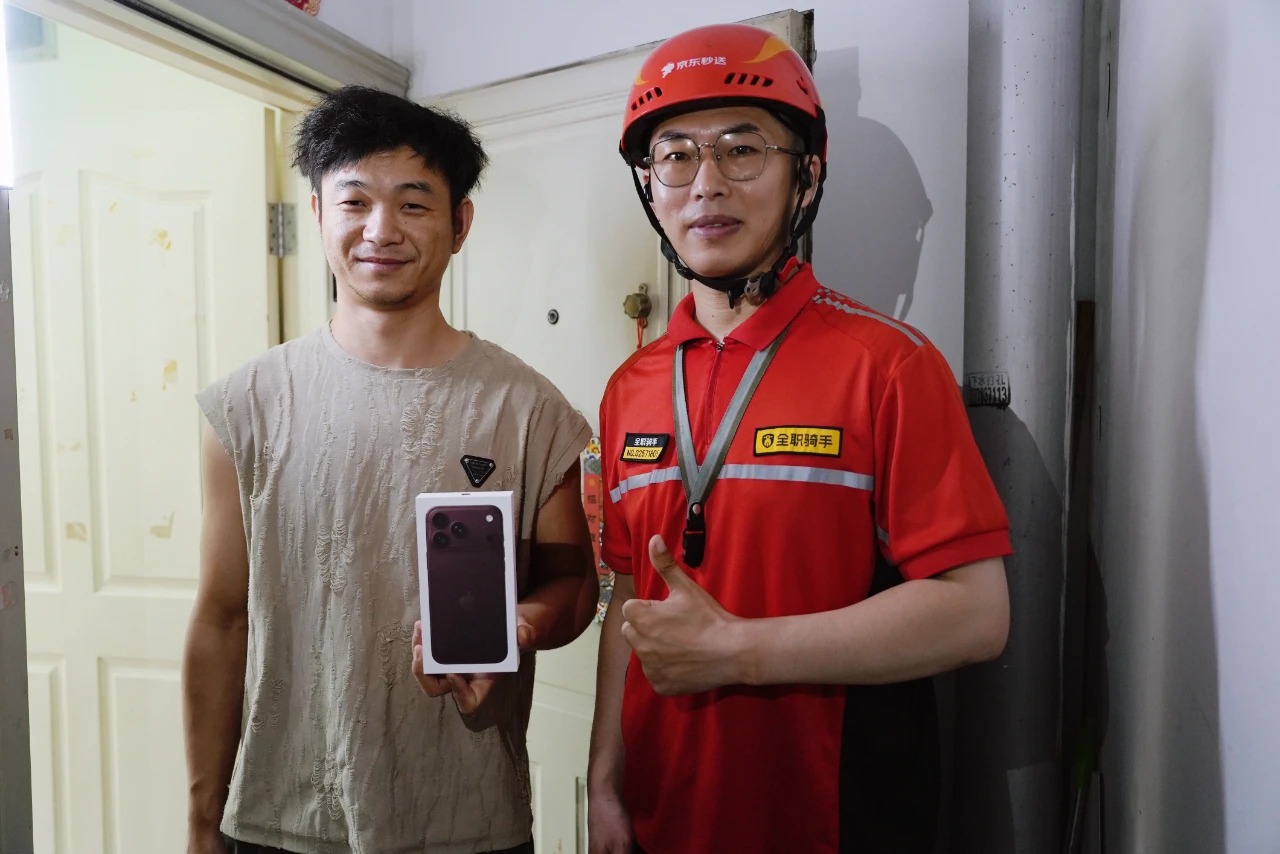
Within the first hour of the iPhone 18 Pro series officially going on sale in China, more than 30,000 customers nationwide received their new devices from JD.com, with some deliveries completed just minutes after the 8 a.m. launch.

In Beijing’s Fengtai District, Mr. Wang received a call from a JD Now delivery rider shortly after 8 a.m., informing him that his new iPhone had arrived. Having secured a 512GB iPhone 18 Pro through JD.com’s early-bird pre-order programme on September 12, he had expected his device to be dispatched on launch day, but was surprised by just how quickly it arrived.

“I knew it was going to be shipped today, but I never expected it to arrive this quickly. My alarm hadn’t even gone off yet!” he said.

Ms. Liu, a customer in Shanghai’s Pudong District, was equally impressed after receiving her pre-ordered iPhone, remarking that buying a new phone felt even faster than ordering takeaway.

Customers in dozens of cities across China, including Beijing, Shanghai, Guangzhou, Shenzhen and Wuhan, were among the first to receive their new devices on launch morning.

To prepare for the launch, JD.com forecast consumer demand in different regions and planned inventory allocation in advance, positioning stock across its nationwide network of warehouses, local fulfilment centres and service stations, bringing products closer to customers before the official release. Once sales began, its warehousing, inventory management, retail and delivery operations worked together to process and fulfil a large volume of orders within a short period.

JD.com also leveraged its network of more than 10,000 front warehouses and stations, alongside tens of thousands of offline retail stores across China, to bring the new iPhones closer to customers. This extensive network allows popular new products including iPhone to reach customers within minutes in major cities, while also supporting deliveries to more remote areas.

Alongside fast delivery, JD.com introduced a range of services for customers purchasing the new iPhone 18 Pro series including trade-in. JD.com’s nationwide network of more than 3,000 Apple product service stations also provided support including trade-in, device activation, data transfer, screen protector installation and assistance with eSIM services. More than 20,000 service appointments had been booked ahead of the official launch.

According to the 2026 iPhone Consumer Survey by Nanfang Metropolis Daily, more than 60% of respondents identified JD.com as their preferred channel for purchasing new Apple products. Product authenticity, availability at launch, delivery speed and reliable delivery times were among the key factors influencing their purchasing decisions.


(yuchuan.wang@jd.com)
JD.com Launches CHEFRESH, Bringing AI Meal Planning and Robotic Cooking into the Home

  • JD.com introduces CHEFRESH, an AI-powered healthy eating companion for the home that turns personalized dietary guidance into everyday meals.
  • CHEFRESH combines Health Brain AI, JD.com’s fresh food supply chain and an intelligent cooking robot, connecting personalized meal planning, ingredient delivery and cooking in one service.
  • CHEFRESH also announced partnerships with Raffles Hospital, the UK Butler Guide and OriginX, bringing together expertise in health management, premium household services and AI innovation.

BEIJING, September 16, 2026 — JD.com, also known as JINGDONG, today launched CHEFRESH (七鲜大厨), a new AI-powered healthy eating service for the home. Designed to turn personalized dietary guidance into everyday meals, CHEFRESH brings together AI, JD.com’s fresh food supply chain and robotic cooking in an integrated service.

At the heart of CHEFRESH is Health Brain AI, powered by JoyInside, JD.com’s AI-powered integrated software and hardware solution. Users can provide health check reports and dietary preferences, which Health Brain AI uses together with nutritional knowledge to create personalized meal plans and daily menus tailored to their health and dietary needs. High-quality fresh ingredients are then selected, cleaned, portioned and delivered through JD.com’s fresh food and cold-chain network. An intelligent cooking robot completes the process at home, automatically managing cooking, seasoning and  even self-cleaning.

“Our goal is not simply to give people advice on healthy eating, but to help turn that advice into the meals that reach the family table every day,” said the head of CHEFRESH. “Health, convenience and taste all need to come together.”

CHEFRESH has opened its first pre-orders in Beijing, Shanghai, Guangzhou, Shenzhen and other cities. Initial orders will be delivered progressively in the order in which reservations are placed.

CHEFRESH is also exploring how AI can help preserve family recipes. A special edition allows families to digitally record recipes, including ingredient proportions, seasoning, cooking steps, temperature and heat control. The intelligent cooking robot can then reproduce these dishes consistently, offering a new way to preserve and share family recipes across generations.

At the launch, CHEFRESH announced strategic partnerships with Raffles Hospital, the UK Butler Guide and OriginX, connecting professional health expertise, household services and AI innovation.

“Professional medical advice only creates lasting value when it becomes part of everyday life,” said Dr. Charles Poon, Medical Director of Raffles Medical North China and General Manager of Raffles Hospital Beijing. “Through our collaboration with CHEFRESH, we hope to better connect professional health management with the meals people eat every day.” This reflects Raffles Hospital’s emphasis on extending dietary guidance beyond the clinical setting and into patients’ daily lives.

“For premium households, quality is not only about good ingredients. It is also about having a trusted service that brings together nutrition, taste and convenience,” said Liang Guo, Chief Representative for Greater China at the UK Butler Guide Service Group. “That shared focus on trusted household service is what makes this collaboration meaningful.”

“What interests us is how CHEFRESH brings AI and intelligent devices into an everyday setting such as the family kitchen,” said Daojun Sun, Co-founder of OriginX, a leading Chinese company integrating AI research, industry and real-world applications, and Director and Professor at the Institute of AI Marketing, Communication University of China. “We look forward to exploring how AI, intelligent devices and quality retail can work together to create new consumer experiences.”

CHEFRESH reflects JD.com’s broader exploration of bringing AI from the digital world into everyday physical activities. Rather than stopping at recommendations about what people should eat, CHEFRESH connects AI-powered planning with the physical execution of sourcing, delivering and cooking food. By combining AI, supply chain capabilities and intelligent hardware, JD.com is exploring how AI can help turn digital intelligence into practical, real-world experiences.


(vivian.yang@jd.com)


From AI Models to the Physical World: Highlights from JDDiscovery 2026

AI is often discussed through models, benchmarks and digital productivity. At JDDiscovery 2026 in Beijing, JD.com focused on what AI can accomplish in the physical world from warehouses and delivery routes to retail, healthcare, smart homes, industrial supply chains and beyond.

Under the theme “JoyAI: Leaping into the Physical World,” JD.com outlined its goal to build the “World’s Largest Operational Platform for the Physical World”. As Cao Peng, Chairman of JD.com’s Technology Committee and President of JD Cloud, noted, JD.com’s AI was not born only in research papers. It has been refined “order by order” across production lines, warehouses, delivery stations and the full supply chain process.

Here are three highlights from JDDiscovery 2026 that show how JD.com is putting AI to work.

World Models Move AI Closer to the Physical World

An optimal route for hundreds of millions of parcels, calculated in seconds. A mechanical component designed through a simple conversation and turned into a 3D-printed prototype. A medical imaging agent that can proactively examine a scan. These examples show what becomes possible when AI moves beyond the screen and into real-world operations.

Behind them is JD.com’s JoyAI foundation model portfolio, which spans speech, image, video, real-time interaction, world models and embodied AI.

At JDDiscovery, the company added its new world model, JoyAI-Echo WM, an interactive audiovisual model that combines native audio-video generation with user control. It takes AI-generated content beyond something users simply watch, transforming it into virtual environments they can enter, interact with and explore.

JD.com also showcased industry-specific models and AI agent applications. JINGDONG Logistics’ Meta Brain 3.0 coordinates decision-making across warehousing, transport and delivery, reducing the time needed to calculate optimal routes for hundreds of millions of parcels from minutes to seconds.

JoyIndustrial 2.0, meanwhile, allows engineers to describe a mechanical design in everyday language and turn it into a physical prototype through 3D printing. In healthcare, JoyAI-Med 3.0 brings medical imaging, research, clinical documentation and multidisciplinary consultation into a unified model that is already being used across JINGDONG Health services.


AI Moves into Everyday Life: Shopping, Health and the Home

Of course, AI is not limited to robots on warehouse floors. It can also help someone choose a washing machine, collect a blood pressure reading with healthcare services, or allow devices across the home to respond more intelligently.

With the release of JD.com app ver.16.0 on 9 September, users can now access “Dongdong”, JD.com’s AI shopping assistant, throughout the shopping journey.

Instead of simply returning search results, Dongdong is designed to understand what customers are trying to accomplish. It can break down broad or unclear requests and match them with relevant products and services across JD.com’s ecosystem.

Users can also interact with Dongdong through voice and video. Someone looking for furniture or an appliance, for example, can show the assistant their available space, interior style or a problem they want to solve. Dongdong can then use that visual context to provide more relevant and practical suggestions.

In healthcare, JINGDONG Health introduced its first end-to-end specialist AI agent, designed to reproduce the diagnostic logic and clinical expertise of leading doctors. JINGDONG Health is also linking AI with devices and services.

In the home, JoyInside gives connected devices an “AI brain”, helping them move from responding individually to providing more proactive, whole-home services. The technology has already been adopted through partnerships with more than 200 brands across appliances, home products, toys and robotics.


From Prototype to Scale: Building the Infrastructure for Robotics

Building a robot is difficult. Turning it into a product that can be manufactured, deployed and maintained at scale is harder. JD.com’s new Physical AI Acceleration Plan is designed to address that challenge across the full robotics lifecycle.

The plan begins with one of the industry’s biggest constraints: training data. JD Cloud aims to build the world’s largest embodied AI data collection centre, gathering more than 10 million hours of video from real-world human activities over the next two years.

JINGDONG Property plans to establish more than 80 RoboBase robotics industry hubs across China over the next five years, creating the world’s largest network of robotics industry bases. The hubs will integrate product demonstration and delivery, R&D, pilot assembly, data collection, manufacturing, maintenance and product iteration.

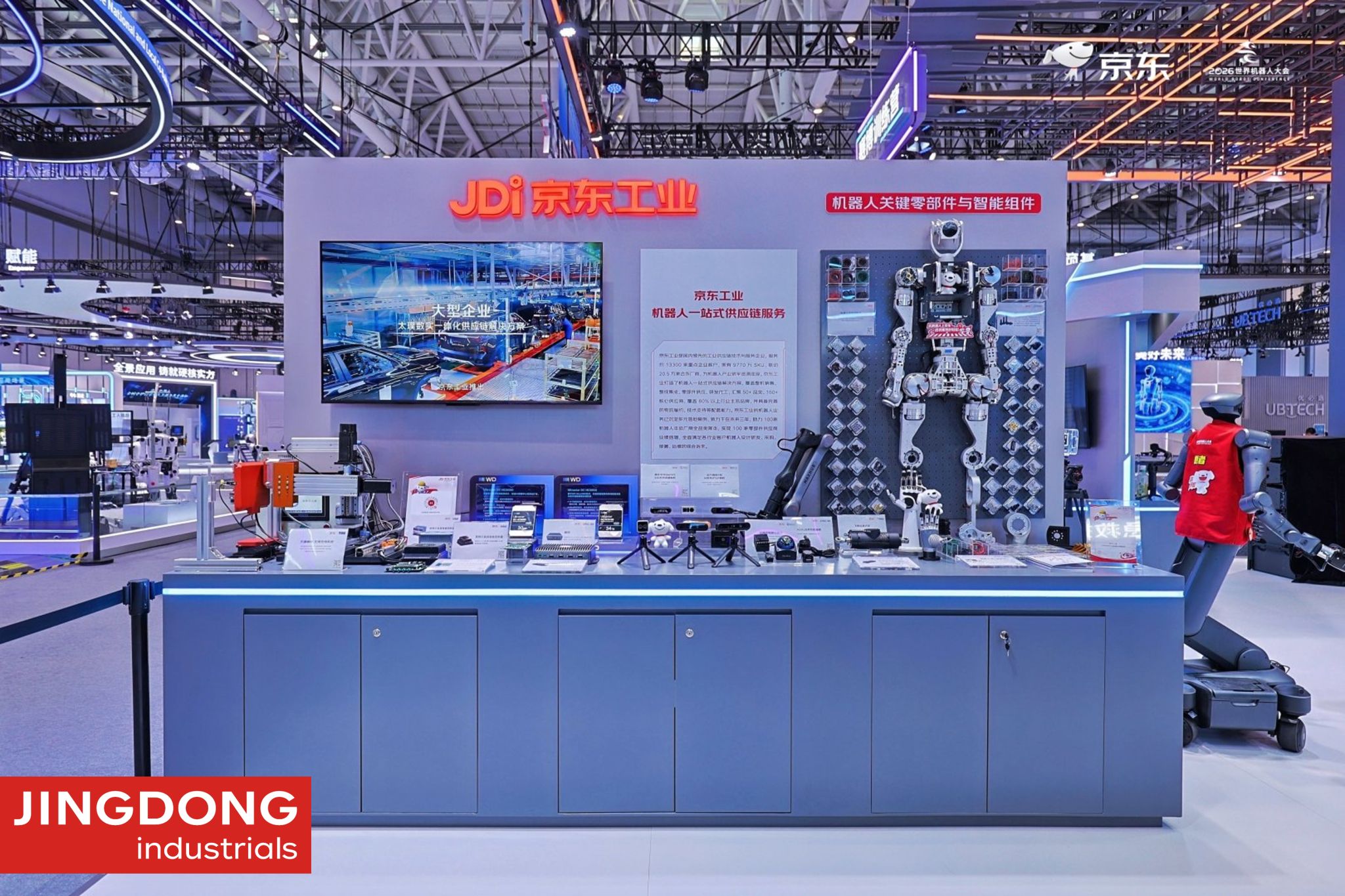
JINGDONG Industrials has launched an alliance connecting robot manufacturers with component suppliers, supporting its goal to become the world’s largest supplier of robotics components.

JINGDONG Retail plans to commit RMB 10 billion in resources by 2028. It aims to become the world’s largest robotics retail channel by helping 100 robotics brands each achieve RMB 1 billion in independent sales and reaching 10 million users.

Logistics already provides a significant proving ground. JINGDONG Logistics aims to build the world’s largest-scale application of embodied robots and advance autonomous operations across the entire logistics process.

The increasing use of robotics will also require support after deployment. JINGDONG Logistics currently operates eight repair centres in China and plans to extend its robotics after-sales capabilities and support the creation of more than 100,000 jobs for robotics service engineers, over the next five years.


(press@jd.com)

Beyond the Chatbot: How JD Health Is Bringing AI Into Doctors’ Everyday Work

A doctor reviewing a complex case may need to search through medical literature, check the latest clinical guidelines, assess drug interactions, interpret test results and bring together years of patient information, often under significant time pressure.

This is where Zhiyi (知医) comes in. Developed by JINGDONG Health (also known as JD Health), Zhiyi is an evidence-based AI assistant built specifically for healthcare professionals. Its Chinese name fittingly brings together the ideas of “professional knowledge” (知) and “doctor” (医).

Launched in January 2026, Zhiyi brings AI into the everyday workflow of doctors in China, supporting clinical decision-making, medical research, patient management and other professional tasks. It has integrated more than 50 million medical papers, clinical guidelines and authoritative journal resources, together with information from more than 160,000 pharmaceutical product instructions. The platform has already served over one million doctors and supported more than 20 million clinical decision-making interactions.

From Finding Information to Understanding the Evidence

Searching for medical information is one thing. Turning it into useful evidence for a particular patient or clinical situation is much harder.

Zhiyi is designed to help doctors move beyond simple search. Its Deep Thinking mode can break down complex questions, assess different levels of evidence and provide structured references for doctors to consider, including in cases involving multiple conditions or medications.

A good example is oncology. Zhiyi has integrated the China Anti-Cancer Association (CACA) Guidelines for Holistic Integrative Management of Cancer, which cover 29 cancer types and 72 diagnostic and treatment technologies. By making this body of specialist knowledge searchable and actionable through AI, Zhiyi can help doctors access relevant evidence when they need it, rather than requiring them to navigate lengthy reference materials separately.

Zhiyi also offers more than 200 medical calculators, covering areas such as disease assessment, risk stratification, medication dosage and cardiovascular risk, with AI providing evidence-based interpretation of the results. Its research assistant extends these capabilities into academic work, supporting literature reviews, patient education materials and presentations.

The aim is simple: reduce the time doctors spend navigating information so they can focus more of their expertise on understanding the patient and making clinical decisions.

Making AI Fit the Way Doctors Actually Work

Clinical information rarely arrives as a perfectly structured prompt.

It may be a laboratory report, prescription, medical image, PDF document or information collected across previous consultations. Zhiyi’s multimodal capabilities allow doctors to upload and analyze different types of clinical materials, reducing the need for manual entry and page-by-page review.

More importantly, Zhiyi is designed to show doctors where its conclusions come from. Its dynamic evidence-location capability can identify the original text supporting a clinical point, allowing doctors to trace AI-generated information back to the underlying evidence.

That distinction matters in healthcare. A useful medical AI assistant should not simply produce an answer; it should help a professional understand the evidence behind it.

When “Sounds Right” Isn’t Good Enough

Generative AI can produce convincing answers. In medicine, however, convincing is very different from reliable.

JD Health has therefore built dedicated evaluation systems around Zhiyi. Its MedScope framework evaluates AI outputs across evidence quality, content accuracy, appropriate expression and practical usefulness, supported by evaluation sets spanning 46 major clinical specialties.

A separate MedSafety framework evaluates 26 categories of high-risk medical scenarios, including medication contraindications and complication warnings. High-risk outputs that cross defined safety boundaries do not pass the evaluation.

This reflects an important principle behind JD Health’s approach: AI is there to support medical professionals, not to replace their experience, judgment or responsibility.

One AI Foundation, Different Healthcare Supports

Zhiyi is part of a broader AI healthcare architecture JD Health has been developing.

Underneath it is Jingyi Qianxun (京医千询), JD Health’s proprietary medical large language model. Rather than positioning the model itself as the final product, JD Health is applying its capabilities to specific healthcare workflows, including evidence retrieval, clinical support, patient follow-up and medical research. Zhiyi is one example of how that underlying AI capability is translated into a practical professional tool.

On the patient-facing side, Dawei (大为), JD Health’s AI doctor, applies AI to another part of the healthcare journey. JD Health has also launched more than 1,500 AI agents based on specialist doctors, alongside solutions developed for hospitals and specific disease areas.

Together, they illustrate a broader strategy: rather than building one AI assistant for every healthcare problem, JD Health is developing specialized AI tools around the needs of different users and healthcare scenarios.

Taking Medical AI Beyond Major Hospitals

Perhaps one of the most meaningful tests of medical AI is whether it can make high-quality tools more widely accessible.

In August, JD Health formed a strategic partnership with ‌PICA Health (Yunqueyi), one of China’s largest digital platforms serving primary-care doctors. Zhiyi has been integrated into the PICA Health app, making its upgraded capabilities, including Deep Thinking, medical calculators and research assistance, available free of charge to the platform’s registered primary-care doctors serving. PICA Health connects around three million registered primary-care doctors serving China’s grassroots.

The significance is not simply putting AI into more hands. A doctor working in a smaller community can use the same AI tool to access medical literature, clinical guidelines and evidence-based decision support that would otherwise be more difficult or time-consuming to obtain.

And this is where JD Health brings another capability into the picture: supply chain infrastructure.

JD Health’s pharmaceutical supply chain reaches more than one million villages in China, while same- or next-day delivery coverage has reached 87.1% across county-level areas covered by its network.

This creates an interesting connection between medical intelligence and healthcare access: AI can help doctors find and interpret the right evidence, while supply chain capabilities can help turn a clinical decision into access to the medicines and healthcare products patients need.

Building AI Around Healthcare, Not Healthcare Around AI

There is no shortage of discussion about how powerful the next generation of medical AI models will become. JD Health’s experience with Zhiyi suggests that model capability is only part of the equation.

Healthcare AI also needs trusted medical evidence, safety mechanisms, integration into real clinical workflows and a way to reach the doctors and patients who can benefit from it.

That is why Zhiyi is particularly illustrative of JD Health’s broader approach. The technology begins with a medical large language model, but extends into authoritative resources such as the CACA Guidelines, professional tools for doctors, partnerships such as PICA Health, patient-facing services such as Dawei, and JD Health’s wider healthcare and supply chain infrastructure.

Doctors’ experience, judgment and responsibility remain at the center. The role of AI is to help those capabilities go further by making trusted knowledge easier to reach, complex information easier to navigate and everyday clinical work more efficient.

The more meaningful question for healthcare may therefore be not whether AI can become a doctor, but how AI can help every doctor do more for every patient.


(vivian.yang@jd.com)


When AI Adapts to People: JD.com’s JoyInside Brings AI Home

JoyInside, JD.com’s AI solution for smart devices, has been named on Fortune China’s Best Designs 2026, recognising its approach to bringing AI into everyday products and creating more intuitive, responsive experiences in the home.

The annual list, released on September 3, recognises designs that address real human needs, solve complex problems, and demonstrate both commercial potential and broader social value. This year, Fortune China highlighted the growing convergence of AI and the physical world as a notable shift shaping product design.

For JoyInside, the idea is straightforward: technology should adapt to people, rather than asking people to adapt to technology.

Traditional smart-home experiences often depend on users giving precise commands to individual devices. JoyInside is designed to make these interactions more natural. Through everyday conversation and contextual understanding, connected devices can better interpret what users need and coordinate their responses across different home scenarios.

JD.com demonstrated this concept through its AI Home at the 2026 World Artificial Intelligence Conference (WAIC) in Shanghai. Across a full home setting spanning the living room, kitchen, study and bedroom, visitors could experience how AI connects with physical products. A smart mattress, for example, can adjust based on the user’s physical state, while a connected beverage machine can interpret a casual comment such as “I’m a little thirsty” and respond accordingly.

The technology is already moving beyond demonstration environments. JoyInside has established technology partnerships with nearly 200 leading brands across smart homes, kitchen appliances, healthcare devices, intelligent toys, and other categories. During JD.com’s 618 Grand Promotion this year, nearly 100 AI-enabled home products powered by JoyInside were introduced to customers.

These collaborations show how JoyInside can be applied to different everyday needs. A J.Zao smart mattress combines sleep monitoring with personalised insights, while an AI-enabled wheelchair connected with the JINGDONG Health (also known as JD Health) ecosystem supports features such as real-time location, electronic safety zones and one-touch assistance, helping families stay connected with elderly members.

For brands, JoyInside also provides a way to integrate AI capabilities into existing products without having to build every layer of the technology independently. By working across brands and product categories, JD.com is building an open AI Home ecosystem where appliances and devices can become more responsive to individual needs and work more naturally together.

This reflects a broader direction in JD.com’s approach to AI: the value of a model is ultimately measured by what it can do in real workflows and everyday life, not simply by its size or technical specifications.

JD.com is exploring this intersection between AI and the physical world across a range of real-world environments. In the home, JoyInside brings AI into appliances, health devices and toys. In logistics, JINGDONG Logistics (also known as JD Logistics) is applying embodied AI to tasks such as handling and moving goods in warehouse operations.

These applications draw on JD.com’s more than two decades of experience in retail, supply chains, logistics and services, where AI can be tested against real operational needs and continuously improved through practical use.

For JoyInside, the Fortune China recognition reflects a simple design philosophy: start with a real human need, then determine how AI can make the experience better. As more brands connect products to the ecosystem, JD.com aims to make AI less about what happens behind a screen and more about useful, intuitive experiences people can see and feel in everyday life.


(vivian.yang@jd.com)

AI-Powered, ESG-Embedded Industrial Supply Chain Innovation Earns JINGDONG Industrials 2026 Sedex Technoical Innovation Award

BEIJING, 27 August 2026 — JINGDONG Industrials, a leading industrial supply chain technology and service provider under JD.com, has won the Technical Innovation Award among the 2026 Sedex Supply Chain Awards, recognising its use of AI and technical solutions to embed ESG capabilities into industrial supply chain operations. The company was also nominated for the Social Impact Award.

JINGDONG Industrials was the only industrial supply chain technology and service company to receive the Technical Innovation Award this year during Sedex China Annual Conference. Sedex is one of the world’s leading platforms for responsible and sustainable supply chains, used by businesses globally to assess, manage and improve environmental, social and ethical performance across their value chains.

From Supply-Demand Matching to Carbon Management: AI Tackles Real Supply Chain Challenges

Industrial supply chains often face a common set of challenges: mismatches between supply and demand that create resource waste, fragmented ESG data that is difficult to manage, and compliance risks that can be hard to identify early.

JINGDONG Industrials addresses these challenges by combining its Taipu digital-physically integrated industrial supply chain solution with JoyIndustrial, its proprietary industrial supply chain large language model. Built on data covering more than 97.7 million industrial product SKUs and experience across over 40 industrial sectors, JoyIndustrial uses a multi-agent architecture to support intelligent decision-making across industrial supply chain scenarios.

Together, these capabilities support three key areas: intelligent supply-demand matching, end-to-end carbon management, and AI-enabled compliance and risk management. The approach is designed to embed ESG into day-to-day supply chain operations, rather than treating sustainability as a standalone reporting exercise.

1,780 Tonnes of Carbon Reduction: Turning Technology into Measurable Impact

The impact is already measurable. Through smarter supply-demand matching and logistics optimisation, JINGDONG Industrials helps customers reduce unnecessary transportation and resource waste.

The company has also partnered with suppliers to scale the use of PCR (post-consumer recycled) packaging through its technology solutions. From May to December 2025, these initiatives contributed to an estimated 1,780 tonnes of carbon reduction, with the underlying technologies now adopted across more than 3,000 enterprise customers.

On compliance, its AI-powered risk management engine covers 100% of identified risk scenarios and achieves a reported 96% risk-interception rate, helping customers detect supplier compliance risks earlier and strengthen quality management across the supply chain.

“The recognition from Sedex reinforces our conviction that digitalisation and sustainability must advance in tandem across the industrial supply chain,” said a spokesperson for JINGDONG Industrials. “Our focus is on turning data and AI into practical tools that help businesses improve efficiency, manage risk, and make more informed sustainability decisions.”

Building a More Responsible Industrial Supply Chain Ecosystem

As of the first half of 2026, JINGDONG Industrials served approximately 13,000 key enterprise customers, including 60% of China’s Fortune 500 companies and more than 40% of the Global Fortune 500 companies operating in China.

Its responsible sourcing practices also extend upstream. The company has established lifecycle compliance management covering approximately 230,000 suppliers, with all onboarded suppliers required to sign anti-commercial-bribery agreements. JINGDONG Industrials has also obtained international certifications, including ISO 45001, ISO 27001, and ISO 27701.

These capabilities are becoming increasingly relevant as industrial companies navigate ever more complex sourcing, sustainability, and compliance requirements. JINGDONG Industrials is expanding its international presence across Europe, Southeast Asia, the Middle East, and Latin America, extending its digital procurement and supply chain capabilities to more global customers and partners.

The company continues to work with upstream manufacturers on product carbon-footprint management, giving customers more quantifiable data to support lower-carbon procurement decisions. By embedding sustainability into everyday sourcing and supply chain operations, JINGDONG Industrials aims to make responsible procurement more practical and scalable across the industrial ecosystem.


About JINGDONG Industrials

JINGDONG Industrials (HKEX: 7618) is a leading industrial supply chain technology and service provider under JD.com, dedicated to transforming how enterprises procure and manage industrial products.

Leveraging JD.com’s supply chain, logistics, and digital capabilities, JINGDONG Industrials provides digital procurement and supply chain solutions across a broad range of industrial products, including MRO (maintenance, repair, and operations), industrial materials, tools, and equipment. Its customers span industries including manufacturing, energy, and construction.

JINGDONG Industrials is also expanding its international operations across Europe, Southeast Asia, the Middle East, and Latin America, working with customers and partners to build more efficient, resilient, and responsible industrial supply chains.


(vivian.yang@jd.com)