Topic

JD Logistics IPO: Average Monthly Expense for Employee Exceeds Average Income of First-tier Cities

by Hui Zhang

In its IPO prospectus filed with Hong Kong Stock Exchange (HKEx) on Feb. 16, JD Logistics disclosed a number of key figures, one of which relates employee benefits. The filing showed the average monthly expense for a frontline employee reaching RMB 8,300 yuan, which exceeds the median income of China’s first-tier cities such as Beijing and Shanghai.

According to the prospectus, JD Logistics spent RMB 17.9 billion yuan on compensation for 240,000 employees involved in warehouse management, sorting, picking, packaging, shipping and delivery in the first three quarters of 2020 alone. Roughly calculated, the average monthly expense for each frontline employee is nearly RMB 8,300 yuan. According to data from Chinese Academy of Social Science and Sina Finance, the median income of Beijing and Shanghai are RMB 6,906 yuan and RMB 6,378 yuan respectively.

JD Logistics is also one of the few companies in the industry that provides insurance benefits for all of its employees as well as more than 30 other kinds of benefits and subsidies such as commercial insurance and transportation. During Chinese New Year 2021 holiday, JD Logistics further increased its subsidies for frontline employees working during the holiday to RMB 200 million yuan.

41-year-old Qiang Zhao is one of the employees who has benefited from JD’s compensation policies. He was among the first batch of employees who joined JD after the company started to build its own logistics network in 2007. He started his career at JD as a picker in a warehouse near Beijing’s Fenghuangling area and then went back to Siping of Jilin province to be in charge of a delivery station. Zhao still remembers that when he first joined the company, his biggest wish was to make enough money to buy a house and a car, which have both come true over the course of his career with JD. He bought a house in his hometown of Siping in 2012, and bought another one in Shenyang and a car in 2016.

41-year-old Qiang Zhao is one of the employees who has benefited from JD’s compensation policies.

Qiang Zhao

Looking back on the past fourteen years, Zhao said he has learned a lot. Before joining JD, he did not even know how to use a computer. After joining JD, he got the opportunity to attend training courses to learn how to use front-end technology, such as intelligent delivery vehicles, to improve working efficiency.

“Working in JD, it feels like there are always new things to learn and new changes every day. As long as you want to and learn, JD provides [opportunities] to you without hesitation,” said Zhao.


(zhanghui36@jd.com)

JD Movie Sees Strong Start for China’s Box Office 2021

by Vivian Yang

Sales of movie tickets on JD during the Chinese New Year holiday increased by 146 times YOY as compared to the same period in 2020; and by 11 times as compared with the week before the holiday, according to statistics revealed by JD Big Data Institute on Feb 18.

“Once COVID-19 was under control, people came back to cinemas in droves during the New Year holidays. Last spring, we could not go to the cinema due to the pandemic, and now it’s time to make it up,” according to the institute’s latest lunar new year consumption report.

As a result of this increased demand, JD launched its JD Movie Cards 2021 promotion for Chinese moviegoers ahead of the festival, containing four options of 6,12, 24 and 50 tickets at discount prices for the whole year that can be used in over 9,000 cinemas across China through JD’s online ticketing platform.

By early morning of Feb. 18, China’s box office during the holiday period had taken in RMB 8 billion yuan ($1.24 billion USD), setting a new record despite the restrictions on cinema occupancy.

Seven new releases are playing during the holidays, with Hi Mom and Detective Chinatown 3 taking the leading positions to finish their runs with sales of over RMB 3.5 billion yuan and RMB 2.7 billion yuan respectively, followed by A Writer’s Odyssey (RMB 538 million yuan), Boonie Bears: The Wild Life (RMB 406 million yuan), New Gods: Nezha Reborn (RMB 240 million yuan), The Yinyang Master (RMB 210 million yuan) and Endgame (RMB 150 million yuan).

The booming start bodes well for China’s post-COVID movie market – after it overtook the US to become the world’s top movie market in 2020.

Last July, JD was among the first movers to re-open online movie ticketing after 6 months of cinema closure. In response to the crisis, a real-name ticketing system was urgently developed by JD’s team to enable audiences to return to cinemas quickly and safely.


(vivian.yang@jd.com)

JD Data: Spring Festival 2021: When New Situations Meet Old Traditions

by Ella Kidron

This year’s Spring Festival consumption is indicative of highly adaptive consumers eager to enjoy old traditions amid new circumstances. A report released by the JD Big Data Research Institute underscores this phenomenon.

According to the report, during the  Lunar New Year’s Eve(which fell on Feb. 11 this year) meal and assorted snacks gift boxes, convenience food, BBQ ingredients and more increased 90% as compared with last year during the same period*.

It is no surprise that demand for ready-made New Year’s Eve meals increased substantially in China’s biggest cities as many urbanites opted to stay in the city in which they work this year. This meant that in some cases they were fending for themselves, or celebrating with fewer family members. Sales of such ready-made products in Beijing, Shanghai and Guangzhou increased 4.7 times, 3.2 times and 4.3 times respectively. Similarly, with more people residing in these cities during the holiday, auto services, professional development courses, and scenic area tickets increased 3-6 times.

As is the case every year, alcohol was in high demand this year. The category saw an increase of 2-3 times YOY, among which baijiu was most popular among north and southwest Chinese consumers, while imported spirits and beer were preferred more by consumers in the country’s southern Guangdong province.

The reduction in travel during this year’s holiday has been met with a marked 58% increase in remote orders (orders where the recipient and sender city are different). The top recipient provinces and regions of such orders were Hubei, Jiangsu, Henan, Beijing and Shaanxi. Whereas 2020 was highlighted by consumers spending an unprecedented amount of time in the house, this year’s reduction in travel didn’t keep consumers from going outside. Products including action cameras (such as GoPro), badminton equipment, and tents increased 4.7, three and 30 times respectively.

Of particular note this year, Valentine’s Day fell in the middle of the Chinese New Year holiday period, adding an extra touch of romance to gifting. This resulted in a drastic change in consumption structure, with jewelry, beauty, watches and other gifts as a proportion of the whole rising significantly. The amount of women’s karat gold necklaces and yellow gold pendants bought by male consumers between the last week before the New Year, and Valentine’s Day increased 6.2 times compared with the same period last year. The amount of gold bead necklaces (believed to lead to good luck for the wearer) and silver necklaces bought by female consumers for their male counterparts increased 3.5 times. Beauty products were also highly popular Valentine’s Day gifts.

“Total retail sales of consumer goods during the Spring Festival period demonstrate both the ongoing pickup of offline as well as the continued growth of online retail,” said Fei Lu, senior analyst at the JD Big Data Research Institute. “Trusted online platforms are not just serving to accelerate the pace of the consumption recovery, but even more so to expand new consumption frontiers.”

*Note “same period” refers to the same period on the lunar calendar last year, also known as the Spring Festival period in 2020.


(ella@jd.com)

JD Logistics Prospectus: Robust Steady Growth and Continuous Investment in Technology

by Yuchuan Wang

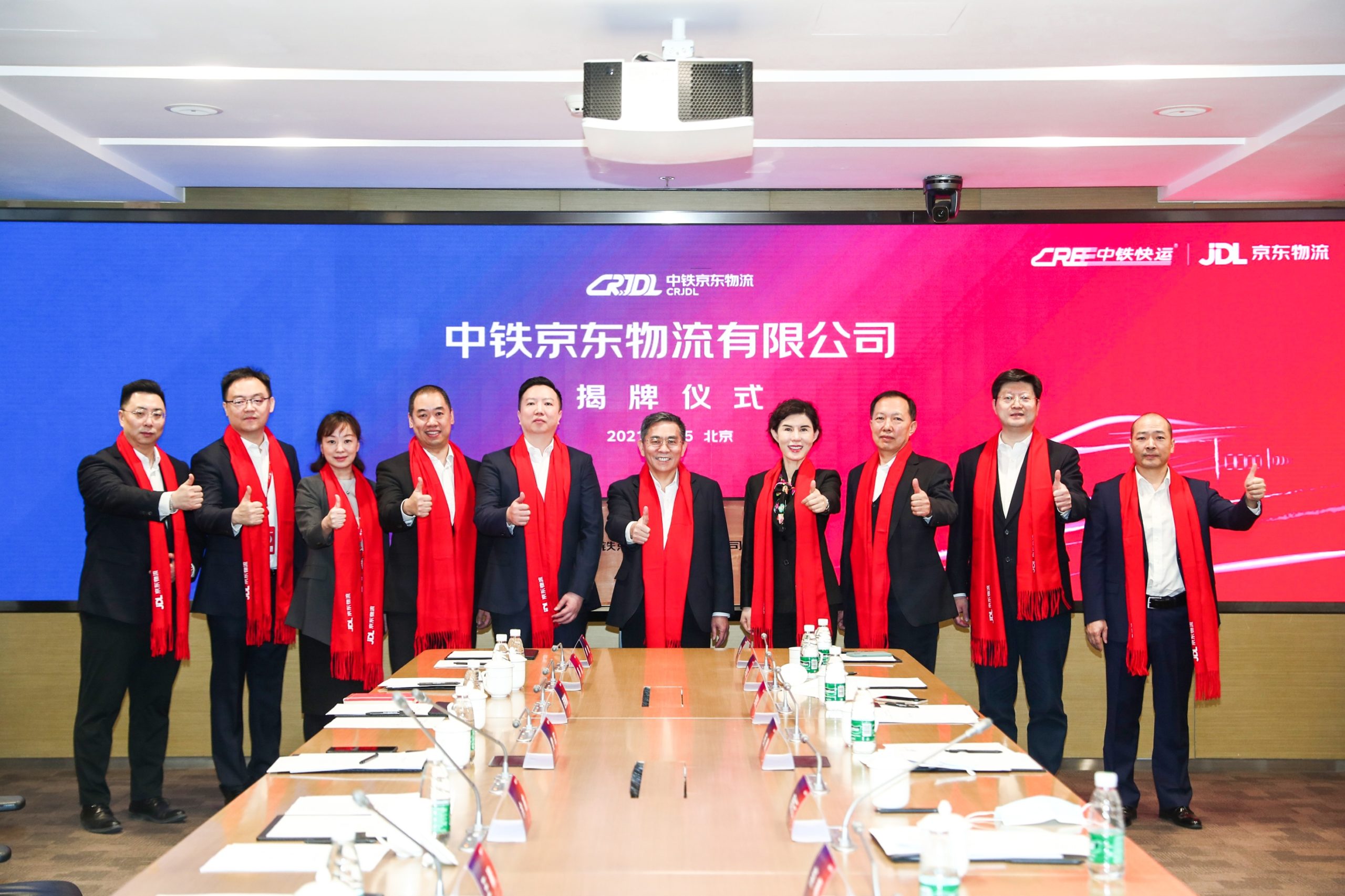
On Feb. 16, JD Logistics (JDL), China’s leading technology-driven supply chain solutions and logistics services provider, officially filed its IPO prospectus with Hong Kong Stock Exchange (HKEx).

According to the prospectus, despite the impact of the COVID-19 outbreak, JD Logistics’ revenue increased by 43.2% from RMB 34.6 billion yuan for the nine months ended Sep. 30, 2019 to RMB 49.5 billion yuan for the nine months ended Sep. 30, 2020. As of Sep. 2020, the company had cash and cash equivalents of RMB 9.8 billion yuan.

Started as the internal logistics arm of JD.com in 2007, JD Logistics has created one of the best experiences for over 400 million JD customers and improved the efficiency of its clients’ supply chain management. Since 2012, JD Logistics has helped JD.com maintain its inventory turnover consistently below 40 days, despite millions of SKUs (stock-keeping-units), and reduce its fulfillment expense ratio from 7.2% in 2016 to an industry-leading 6.5% in the nine months ending Sep. 30, 2020.

In 2017, JD Logistics began to open up its solutions and services. Since then, the company has seen revenue contribution from external customers as a percentage of total revenue increase from 29.9% in 2018 to 38.4% in 2019, and further increase to 43.4% in the nine months ended Sep. 30, 2020.

Technology is at the core of JD Logistics’ development, allowing the company to attract new customers as well as to further penetrate existing customers. As of Dec. 31, 2020, JD Logistics is entitled to over 4,400 patents and computer software copyrights (including applications thereof), of which over 2,500 relate to automation and unmanned technologies.

Housing a logistics network which covers nearly all of the population in China, JD Logistics currently has over 250,000 employees, operates over 800 warehouses, and serves over 190,000 business clients.

JD Logistics plans to use the fund raised to invest in the expansion and upgrade of its logistics networks, and develop advanced technologies to be used in supply chain solutions and logistics services including the research of fundamental technologies such as 5G, cloud computing, IoT and more to drive long-term service innovation.

Click here to read the prospectus filed with HKEx.


(yuchuan.wang@jd.com)

JD Logistics Prospectus: Continuous Technology Investment to Drive Long-term Innovation

by Yuchuan Wang

On Feb. 16, JD Logistics (JDL) filed its IPO prospectus with the Hong Kong Stock Exchange (HKEx), in which the word “technology” (including variations like technologies, techniques and technological) is stressed and mentioned more than 500 times.

Technology is at the core of JD Logistics’ development, and the company has invested RMB 4.6 billion yuan in technology research and development in the consecutive 11 quarters ending Sep. 30, 2020, which accounts for 3.4% on average of total revenue. According to the prospectus, JD Logistics will continue to invest in technologies such as automation, data analytics and algorithm capabilities to drive long-term service innovation.

As early as in 2014, JD Logistics started to run the first smart and large-scale logistics infrastructure: Asia No.1 fulfillment center in Shanghai. As of Sep. 30, 2020, JD has been operating 28 such facilities in China. In 2019, JD Logistics put in use China’s first 5G-powered smart logistics park in Beijing and partnered with China’s three leading mobile operators, namely China Mobile, China Telecom and China Unicom. So far, the 28 JD Asia No.1 fulfillment centers are all covered by 5G networks.

In addition, JD Logistics is a pioneer in adopting robots in its logistics network. Over 5,000 robots have been deployed in 100 of JD’s 800 total warehouses. The company also announced in Oct. 2020 that it will increase its fleet of logistics robots to 100,000 in the next five years. Furthermore, right after the outbreak of COVID-19 in early 2020, JD deployed its L4 autonomous delivery vehicle in Wuhan to ensure contactless delivery, and announced in October that it would help Changshu, a top 5 county-level city by GDP in China, build a smart city based on smart delivery vehicles. By the end of 2020, JD Logistics had 2,500 patents for automation and unmanned technologies.

Currently, JD Logistics has applied advanced technologies such as big data, AI, 5G, blockchain and IoT on every node of the supply chain, enabling automated and digitalized services and decision-making for both internal and external clients. For example, the Shanghai Asia No.1 fulfillment center is able to deal with over 1.3 million orders per day, which greatly improves the supply chain efficiency and service for merchants selling on JD.com. In 2020, JD Logistics served more than 190,000 business clients across a wide array of industries, such as fast moving consumer goods (FMCG), apparel, home appliances, home furnishing, electronics, automotive and fresh produce.

JD Logistics expects to further increase its investment in technology research and development to expand the company’s technology team, enhance technology capabilities and develop solutions and services to better serve customers.


(yuchuan.wang@jd.com)

JD Logistics IPO Prospectus: 4,400 Patents And More Core Differentiations

by Ling Cao

According to the JD Logistics prospectus filed on Feb. 16 at the Hong Kong Stock Exchange,JDL has continuously invested in technology, and now holds the advanced proprietary technology that empowers the entire supply chain. As of Dec. 31, 2020, JDL was entitled to over 4,400 patents and computer software copyrights (including applications thereof), of which over 2,500 are related to its automation and unmanned technologies.

From 2018 to the nine months ending September 30, 2020, its research and development expenses were approximately RMB 4.6 billion in total.

Since 2017, when JD Logistics (JDL) made the strategic decision to open up its capabilities and resources, the revenue contribution from external customers as a percentage of total revenue increased from 29.9% in 2018 to 43.4% in the nine months ending September 30, 2020, demonstrating its status as an open supply chain solutions platform with synergistic partnerships.

Additionally, revenue from integrated supply chain customers accounted for 79.1% of the total revenue of RMB 49.5 billion yuan, making it the largest integrated supply chain logistics services provider, the prospectus showed.

From its technology-driven philosophy to nationwide network building, JDL has brought enterprise customers strong operational efficiency driving high quality service, such as optimizing the inventory turnover rate, as well as making accurate sales forecasts. JDL has reduced JD’s fulfillment expenses ratio from 7.2% in 2016 to 6.5% in the nine months ending September 30, 2020.

Since its establishment in 2007, JD Logistics aims to solve the problem of a lack of high quality logistics service providers, which had previously affected JD’s customer experience. Now with approximately 90% of total online retail orders processed for JD through JDL’s networks being delivered on the same day or the day after the order was placed, JDL is renowned among Chinese customers, and has formed a superior brand image and customer experience. According to the State Post Bureau, the customer satisfaction of JD Express was among the country’s Top 3 from 2018 to 2020.

David Daokui Li, the director of the Center for China in the World Economy (CCWE) at the School of Economics and Management of Tsinghua University shared, “The differentiation of JDL is its supply chain integration, which has formed a new model promoting production and supply chain development powered by consumption. The supply chain development has become the core force to promote the real economy. On the one hand, this promotes the production to be more consistent and accurate, and on the other hand, customers can get what they want faster. The digitalization and intelligence will help promote the high-efficient growth of China’s economy.”


(ling.cao@jd.com)

JD Awards Vans for 10 Couriers as Year-end Bonus

by Yuchuan Wang

In recognition of frontline couriers, JD has awarded a special year-end bonus to over 10 couriers in China, with Wuling Sunshine (五菱之光) vans, ahead of the Chinese New Year holiday. The special bonus is to honor those couriers who have collected the most third party orders in the second half of 2020.

On Feb. 9, Junkui Zhu, a JD courier from Xi’an received the van. The delivery station where Zhu works is located near a wholesale market, selling glasses and watches. Every day around 5 pm is the busiest for Zhu to collect merchants’ orders, he has nearly 100 clients in this area. “They just need to give me their goods and they don’t need to worry about the logistics, and can rest assured,” said Zhu.

Junkui Zhu, JD Courier, Xi’an

Junkui Zhu, JD Courier, Xi’an

Wenjun Liu is another courier that received a van. He works in a JD delivery station in Jiaxing, Zhejiang province, which is China’s largest woolen sweater manufacturing base. Liu has decided to use the van to expand his order collection business. “Each courier can be an entrepreneur. As long as I choose the right path and make the right effort, I’ll succeed.”

Marking the ninth consecutive year providing nonstop delivery during the Chinese New Year holiday, JD will provide RMB 200 million yuan subsidies for frontline employees such as couriers and warehouse staff working during the holiday. This year, JD has also expanded its CNY delivery policy such that customers in 30 provinces, municipalities and autonomous regions, nearly 300 cities and 1,500 counties and districts can receive orders during the holiday as fast as usual.


(yuchuan.wang@jd.com)

Prepared Food and Ready-to-Cook a Key Trend of this Year’s CNY

by Ella Kidron

Ready-to-cook Chinese New Year specialties are receiving a fair amount of attention this year. Many Chinese consumers are preparing for an unconventional CNY celebration, having opted to spend the holiday in the cities where they work rather than traveling.

Learn more about Chinese New Year dishes: Happy Chinese New Year Episode 1: https://www.youtube.com/watch?v=l-8vMAorqLg

As data released by the JD Big Data Research Institute on Feb. 9 indicates, sales of prepared versions of Chinese New Year dinner must-haves are significantly higher than before. Sales of a one-person serving of the traditional delicacy Buddha Jumps over the Wall have increased four times. Some consumers have gone all out – sales of set meals of auspicious CNY dishes are up 3.5 times.

Learn more about Chinese New Year dishes: Happy Chinese New Year Episode 2: https://www.youtube.com/watch?v=9OVyw_k2gP0&t=73s

Since Laba Festival, searches for Chinese New Year’s Eve meals (年夜饭 in Chinese) have continued to rise, with search volume more than doubling that of last year (according to the lunar calendar). The meal enjoyed on the eve of Chinese New Year is known for including a rich abundance of dishes, each of which is meant to bring prosperity, happiness or other good fortune to the diners.

For example, large meatballs (often referred to as Four Happiness Meatballs, which signify family reunion and completeness) sold increased a whopping 17 times. Prepared pig’s feet increased 300%, as the pig represents wealth and that each year will be better and better. Prepared fish, which signifies surplus as the word for fish and surplus sound the same in Mandarin, increased 122% and eight treasure rice, which signifies a bountiful harvest, increased 148%.

Learn more about Chinese New Year dishes: Happy Chinese New Year Episode 3: https://www.youtube.com/watch?v=ubtEiOLhQDc&t=6s

Interest in time-honored Chinese brands to ring in CNY has not waned. Brands including Daoxiangcun, Tianfuhao and more doubled the amount sold. In particular, products from time honored brands purchased by the post-95 generation have increased 365%.

Many consumers, even those who are going to roll up their sleeves, are opting for a bit of help in the kitchen this year. Ready-to-cook products increased 160% YOY. With less travel between cities this year than previous years, one-to-two person servings of traditional dishes have seen sales increase 3.5 times. Fish Filets in Hot Chili Oil(水煮鱼), self-heating hot pot and Buddha Jumps over the Wall are the most popular. Despite the massive increase in prepared food, there are also plenty of families eager to get creative in the kitchen. Sales of air fryers, pressure cookers and crockpots, and electric whisks increased over 150% YOY.

Learn more about Chinese New Year dishes: Happy Chinese New Year Episode 4: https://www.youtube.com/watch?v=xyQANhJ7Q9s&t=46s


(ella@jd.com)